
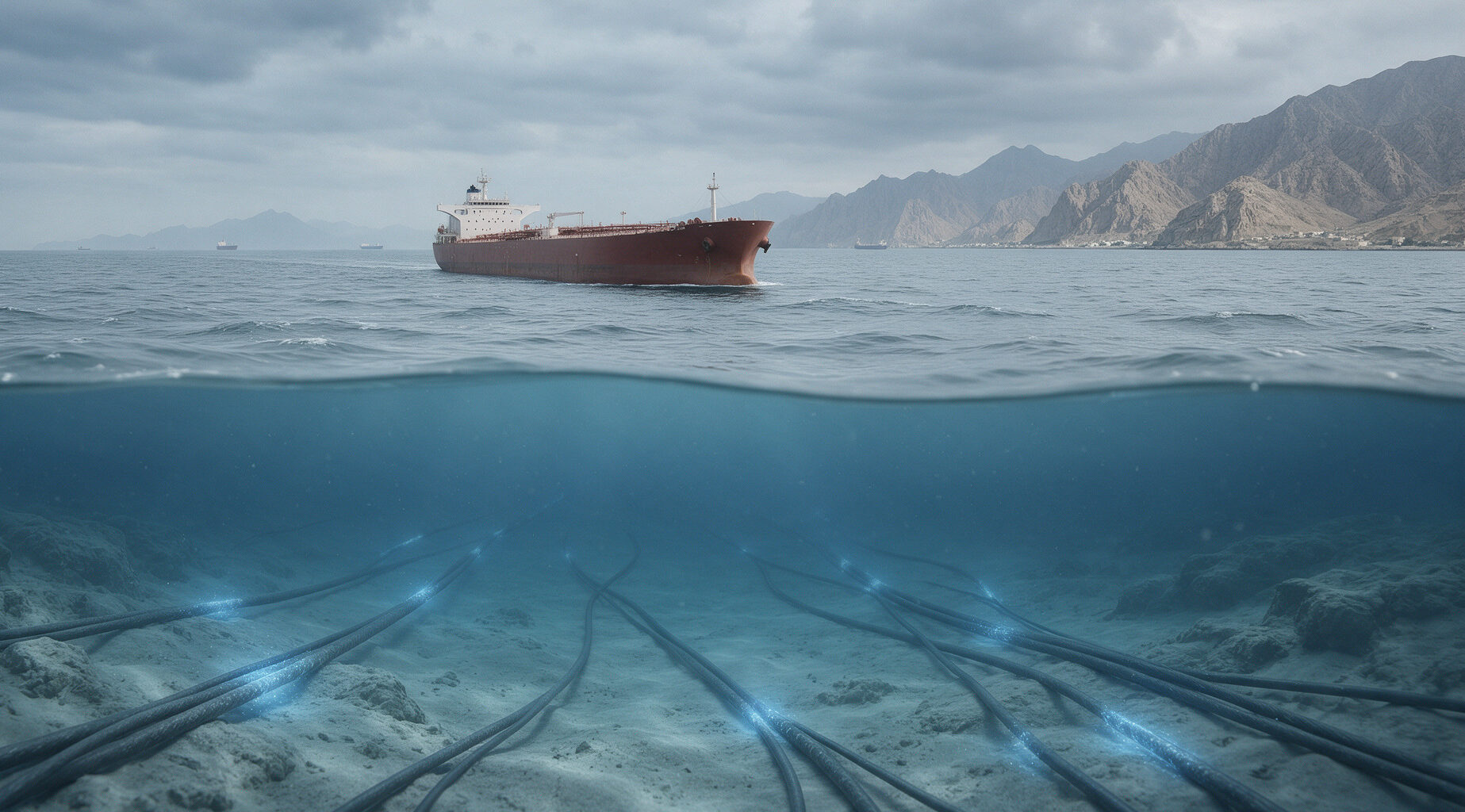
Iran’s Islamic Revolutionary Guard Corps warned Monday that it would identify new military targets and introduce new weapons, drawing attention to undersea internet cables crossing the Strait of Hormuz as tensions with the United States continued.
Speaking at Tehran’s Sacred Defense Museum, Guard spokesman Hossein Mohebbi said seven major communications cables passed beneath the waterway. He described them as vital to international commercial traffic and said: “We just want them to know that new targets will be unveiled. New weapons will be unveiled.”
Mohebbi did not explicitly say Iran had decided to attack the cables. His remarks, reported by Iranian state television, followed a warning this month from Mohsen Rezaei, secretary of Iran’s Supreme National Security Council, that communications cables, data centers, and artificial intelligence facilities associated with American interests could be targeted if fighting resumed.
Such attacks could disrupt banking, telecommunications, and cloud computing services in Gulf countries. The Strait of Hormuz is also a major shipping route for oil exports, making threats to its infrastructure an international concern.
Telecommunications research firm TeleGeography identifies the Asia-Africa-Europe 1, FALCON, and Gulf Bridge International networks among the cable systems crossing the strait. Gulf countries have some land-based communications links, although these might not accommodate traffic displaced by extensive damage. Most Europe-Asia data traffic uses other routes.
The US and Israel launched military operations against Iran on February 28, prompting Iranian missile and drone attacks across the Middle East. A June understanding between Washington and Tehran reduced broader hostilities, but attacks on commercial shipping and disagreements over navigation through Hormuz have continued.
The warnings come as Gulf governments invest billions of dollars in data centers and artificial intelligence infrastructure. Repairing damaged cables could prove difficult in waters affected by military operations, where specialized repair vessels would face security risks and restrictions on movement.