
Editor’s note: this story was translated from the original VOA Kurdi article.
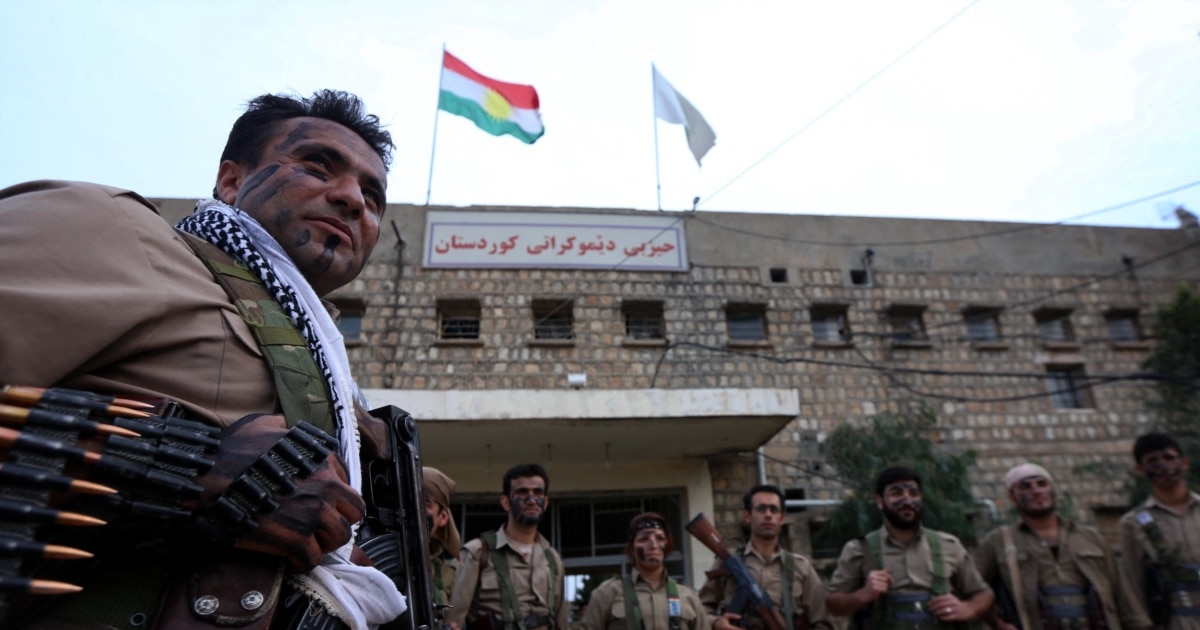
With a lull in the U.S. Iran conflict and the September completion of the withdrawal of American forces from Iraq, Iran appears to be increasing pressure on Iranian Kurdish opposition groups.
The actions against Kurdish groups based in Iraq’s autonomous Kurdistan Region are a test of Baghdad’s independence and analysts are warning Tehran retains considerable influence over Iraqi political decisions.
Iranian news agencies reported that Iraqi and Iranian officials agreed during talks on Monday to relocate members of Iranian Kurdish opposition groups from the Kurdistan Region. Iranian Ambassador to Iraq Mohammad Kazem al-Sadegh said Tuesday that both countries had agreed to expel groups Tehran describes as separatist terrorists or hand their members over to Iran.
Iraqi officials confirmed the meeting, attended by representatives of the Kurdistan Regional Government, but made no mention of an agreement to expel or extradite opposition members.
Iraq’s National Security Advisory Agency said the discussions, chaired by National Security Advisor Qassim Aboudi, focused on resolving outstanding issues under a bilateral security agreement.
The conflicting accounts highlight the political sensitivities surrounding Iranian Kurdish groups, which have maintained bases in northern Iraq for decades.
Hazhar Barnji, U.S. representative of the Kurdistan Democratic Party of Iran (KDPI), told VOA that the party had received no official notification of any relocation decision.
“To date, we have not received such official communication or indication from either the Iraqi federal government or the Kurdistan Regional Government,” Barnji said.
He said the party respected Iraqi sovereignty and international law, while its principal political activities remained focused on Iranian Kurdistan.
Tehran’s enduring influence
Washington-based Iraqi political figure Entifadh Qanbar said Iran’s influence over armed factions continued to constrain Baghdad’s decision-making despite American efforts to weaken Tehran’s regional reach.
“In reality, Iraq is currently governed by armed groups and the will of those forces,” Qanbar told VOA, arguing that Iraqi Prime Minister Ali al-Zaidi had little ability to restrain them.
“Iraq will not emerge from Tehran’s control unless a fundamental political change takes place,” he said.
Political analyst Isam Fayli told VOA that Tehran’s concerns extended beyond border security to fears that Kurdish opposition movements could gain broader support inside Iran and emerge as a more significant political challenge.
Fayli warned that Iraq handing opposition members to Iran could raise serious legal and humanitarian concerns. He suggested international assistance in finding safe resettlement arrangements, citing the relocation of members of the exiled Iranian opposition group Mujahedin-e Khalq.
Sheikh Ghaith al-Tamimi, head of the Iraqi Citizenship Project, said Iraq’s own history demonstrated the limitations of military approaches to Kurdish political demands.
He said Baghdad’s security cooperation with neighboring countries must respect constitutional and international obligations rather than become an instrument for settling another government’s political disputes.
The changing U.S. military presence, Tamimi argued, presents a crucial test of whether Iraqi institutions can make independent security decisions or remain vulnerable to foreign influence and powerful armed factions.
For Iranian Kurdish opposition groups, the immediate question is whether Tehran’s reported agreement with Baghdad will translate into concrete action, given that previous agreements between the two governments have failed to result in the expulsion of these groups from Iraqi Kurdistan.