
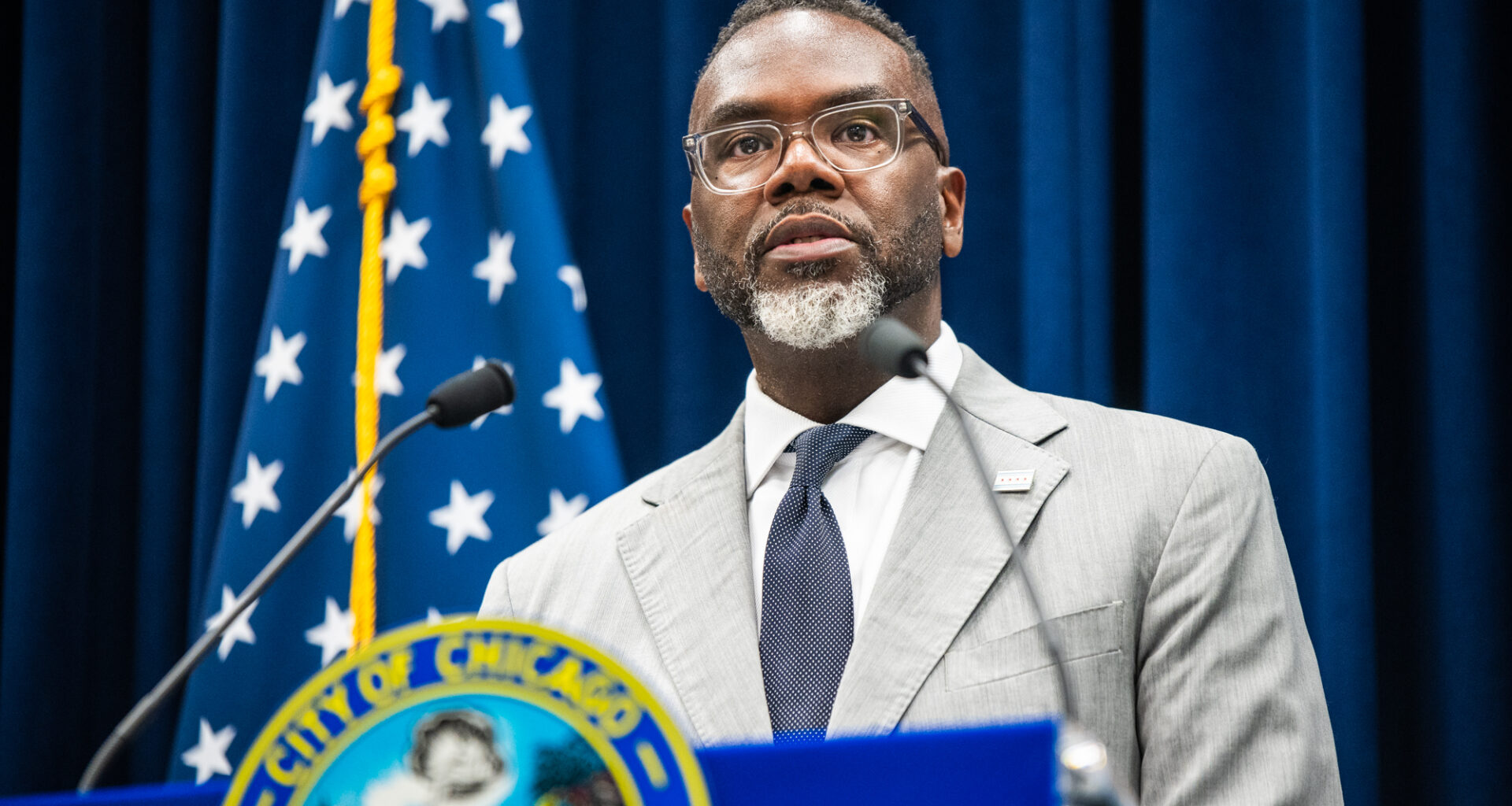
CHICAGO — Mayor Brandon Johnson is proposing a $17.6 billion budget that would expand neighborhood services, mental healthcare and youth employment programs while relying on hundreds of millions of dollars in new taxes to balance the budget.
The spending plan, released Wednesday, calls for $664 million in additional revenue, $131.5 million in new investments and nearly $120 million in cuts.
Expanded neighborhood services would include more crews to tackle rat infestations, tree trimming and illegal dumping. The proposed budget also increases funding for the city’s libraries and homeless services, expands the city’s mental health crisis response team, and opens one new mental health clinic.
To pay for these investments while closing the city’s $882 million budget deficit, Johnson is once again proposing a corporate head tax, along with increases to taxes on leased software, computer equipment and sports betting.
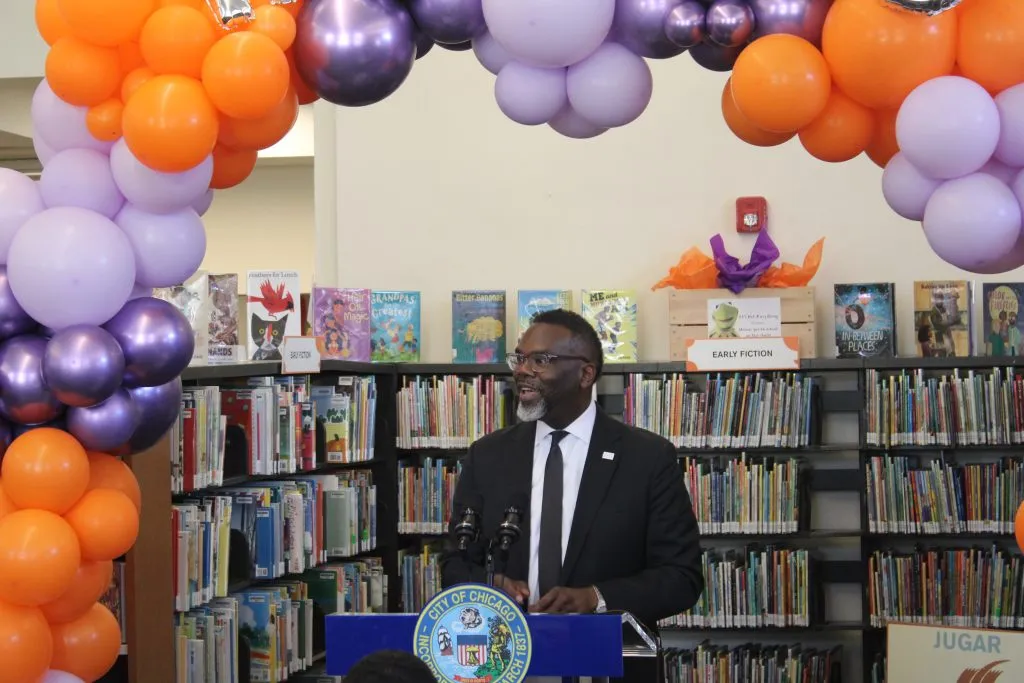 The 81 Club is a partnership between city libraries and CPS that automatically registers the district’s more than 315,000 students, with students’ school ID cards doubling as a library card. Credit: Michael Liptrot/Block Club Chicago
Cost reductions include $34.4 million in personnel savings from eliminating and freezing vacant positions across city departments. Other savings would come from reducing departmental expenses, renegotiating contracts and shifting costs to other funding sources, according to the Mayor’s Office.
Johnson gave his budget address Wednesday morning to a packed City Council chambers. The address was a production with teleprompters and large professional bright lights and a camera set up to capture his words.
The budget, which was dubbed “Chicago’s Fair Share,” was framed as an investment in children’s futures and a shared responsibility to make sure every child, across all 77 neighborhoods, has a fair chance to thrive by supporting youth jobs, affordable housing, libraries and more. The biggest pitch of that included asking large corporations to pay their fair share.
“We know what happens when inequality deepens and when we abandon our responsibilities to one another. And we should never accept the notion that asking those with the greatest means to pay their fair share, and that somehow that will come at the economic expense of economic growth,” Johnson said to a round of cheers.
Despite cheers from mayoral allies and residents in the audience, Johnson’s remarks were not as well received by a majority of council members.
A 29-member coalition, which opposed Johnson’s proposed 2026 budget, quickly rebuked the proposed budget, saying it went against its opposition to the head tax, one of three nonstarters the coalition sent to Johnson in a letter last month. Johnson’s budget does not contain a property tax hike or rely on money from Springfield that hadn’t been allocated, which were the other two non-starters for the alderpeople.
“This does not reflect collaboration. It’s tone deaf. It is not learning from the mistakes that were made last year, when this council had to take the extraordinary step and make history by passing its own budget without the mayor,” said downtown Ald. Brendan Reilly (42nd). “… He should work with us, and together we should pass a responsible budget.”
The coalition was also opposed to the increased tax proposed on leased software and computer equipment. Ald. Nicole Lee (11th) pointed out that under the city’s existing municipal code, the Personal Property Lease Transaction Tax is set at 15 percent and cannot be increased before 2028. The provision was adopted during last year’s budget negotiations, but City Council could amend the ordinance to allow an earlier increase.
“Not really sure what’s going on here, but to provide some predictability and stability for the business community in an environment where we don’t have that kind of predictability, that is intentionally why we put that in last year’s budget,” Lee said.
The PPLT increase is expected to raise about $234 million, if approved. Alders from the coalition did not offer specific alternatives to the mayor’s proposed taxes but argued the budget did not do enough to cut costs. They pointed to uncollected debt, potential savings identified in a previous report and spending on new programs as areas the city should rethink.
But during a media briefing Tuesday night, Johnson argued his administration has already made significant cuts in recent years and that further reductions would come at the expense of city services.
“You’re not going to cut your way to a fair budget. You’re just not,” Johnson said.
The coalition said it would review the budget before deciding whether to propose amendments or introduce its own spending plan.
Ald. Walter Redmond Burnett (27th), an ally of Johnson who is not part of the coalition, said he has not decided whether to support the proposed head or PPLT taxes.
Burnett, whose ward includes the booming Fulton Market business district and several major employers, said he understands the need for additional revenue but is concerned about the impact higher taxes could have on businesses. Reilly and his other Downtown colleagues, Alds. Bill Conway (34th) and Brian Hopkins (2nd), are part of the coalition opposing the taxes.
“I think the definition of insanity is doing the same thing over and expecting different results,” Burnett said. “We have to bring people to the table and figure out a way to make it work for everybody.”
The city legally has until Dec. 31 to pass a balanced budget, but a showdown to the final hour — similar to last year — seems imminent for some alders who think passing a budget during an election year will complicate its timeline.
“So it is best for everyone to speak to each other as a council, as a local city government, to get to the numbers necessary to pass it. And that’s going to require not just talking past each other, but listening to each other to see what we can all stomach and support,” said Ald. Andre Vasquez (40th), who said he supports some but not all of the proposal. “See y’all Dec. 31.”
Here are the main takeaways from the proposed budget:
A New Tax On Your Packages — And Other Proposed Increases
Some of the new proposed taxes that would hit Chicagoans more directly include a 15-cent tax on packages delivered to residents. The tax is meant to target waste created by online shopping, with exemptions for medications, medical supplies or restaurant takeout containers.
Retailers would collect the tax, which is expected to be passed to the consumer and generate $9 million in 2027, according to the Mayor’s Office.
To bypass the approval needed in Springfield to implement new taxes on services, the city is relating the tax to waste rather than to delivery services. Acting Budget Director Jonathan Ernst compared the proposed tax to the city’s existing bag tax, which it is modeled after.
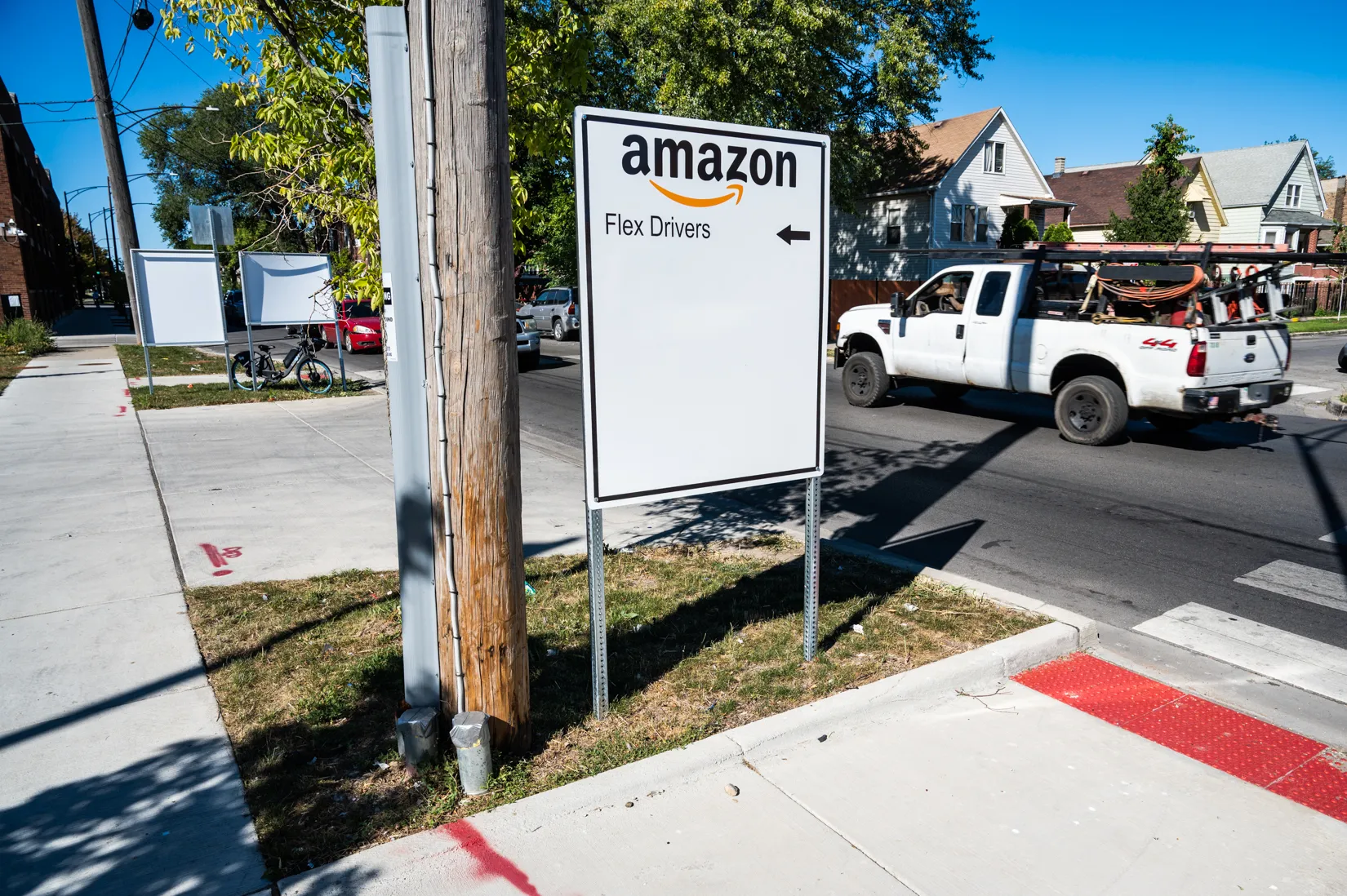 The Amazon warehouse in West Humboldt Park, 1260 N. Kostner Ave., on Aug. 31, 2023. Credit: Colin Boyle/Block Club Chicago
The city also expects to bring in $12.8 million through the expansion of its Smart Streets traffic enforcement program, which tickets drivers for blocking bike and bus lanes. There’s also an additional $6 million from a proposed vehicle debt amnesty program covering unpaid parking, red-light camera, speed camera and other compliance tickets.
The city expects to generate the most tax revenue by raising the Personal Property Lease Transaction Tax to 20 percent, increasing the sports betting tax to 20 percent and reviving the controversial corporate head tax, which would charge businesses with at least 125 full-time-equivalent employees $25 per employee each month.
Johnson unsuccessfully pitched a head tax last year, which was overridden by a bloc of alders who passed their own spending plan in response. The newest version proposed Wednesday would affect about 2.8 percent of Chicago businesses, with a tax credit available for businesses and offices located in areas on the South and West sides.
What Chicagoans Could See From Expanded City Services
The Department of Streets and Sanitation would see an increase in resources, including doubling the number of quality-of-life crews tasked with addressing illegal dumping, overgrown vegetation and other neighborhood concerns, according to the Mayor’s Office.
The department would add 10 forestry crews to help with tree trimming and storm cleanup, along with five additional rodent control crews to tackle rat infestations across the city’s 50 wards.
The investments come after a series of severe storms this spring and summer that strained the city’s ability to respond to downed trees and other damage, according to the Mayor’s Office.
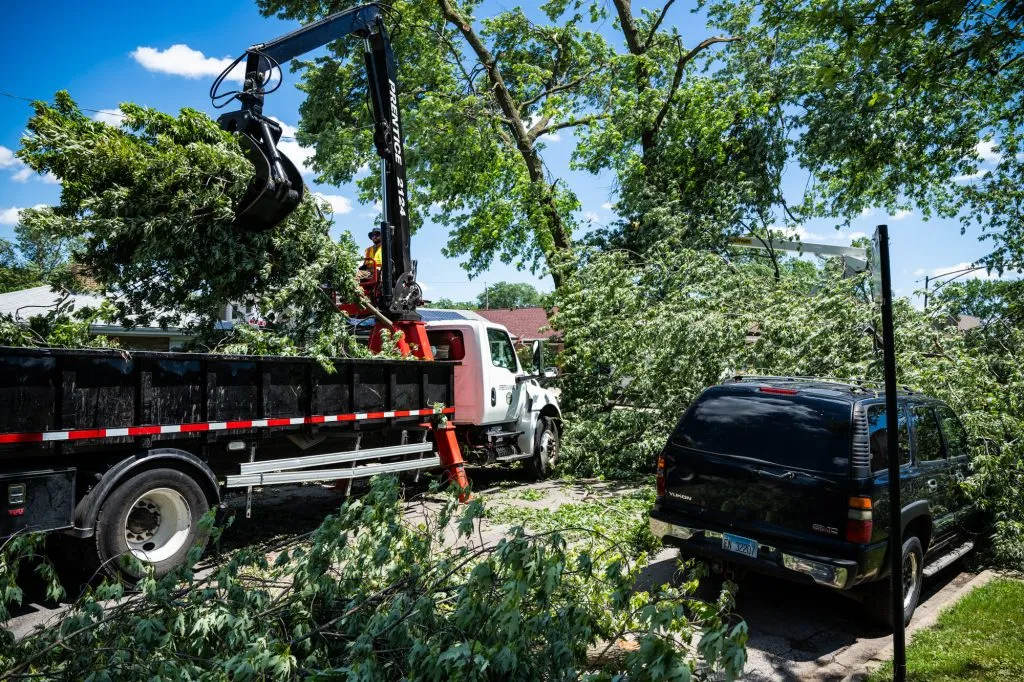 City workers respond to downed trees and damaged homes in the Pullman neighborhood on June 12, 2026 after heavy storms. Credit: Colin Boyle/Block Club Chicago
The budget also calls for expanding the city’s Crisis Assistance Response and Engagement program, which sends teams of mental health professionals and first responders to certain behavioral health emergencies, from five to seven days a week.
The administration also plans to open one new mental health clinic in 2027.
Other investments include nearly $31 million in additional funding for Chicago Public Libraries, $24 million for youth employment, $7 million for violence prevention and the deployment of 390 additional street outreach workers.
The administration also proposed establishing a Department of Community Wellness, which would build on the work of the Office of Gun Violence Reduction.
Debt and Cuts
Johnson’s administration is seeking City Council approval for $480 million in borrowing authority to cover “extraordinary settlement costs, largely stemming from decades-old police misconduct cases.”
Of that amount, $260 million would cover a global settlement involving cases tied to former Chicago Police Detective Reynaldo Guevara, with payments spread across 2027 and 2028. Another $120 million would cover settlements from 2026, while $100 million would go toward other anticipated settlements.
The city also has approximately $132 million set aside in its 2027 operating budget for settlements and judgments.
Johnson defended the decision to borrow money, saying the city is trying to manage the financial burden of misconduct cases dating back decades.
“It provides us with a little bit of room to do some short-term borrowing to deal with a long legacy challenge,” Johnson said Tuesday.
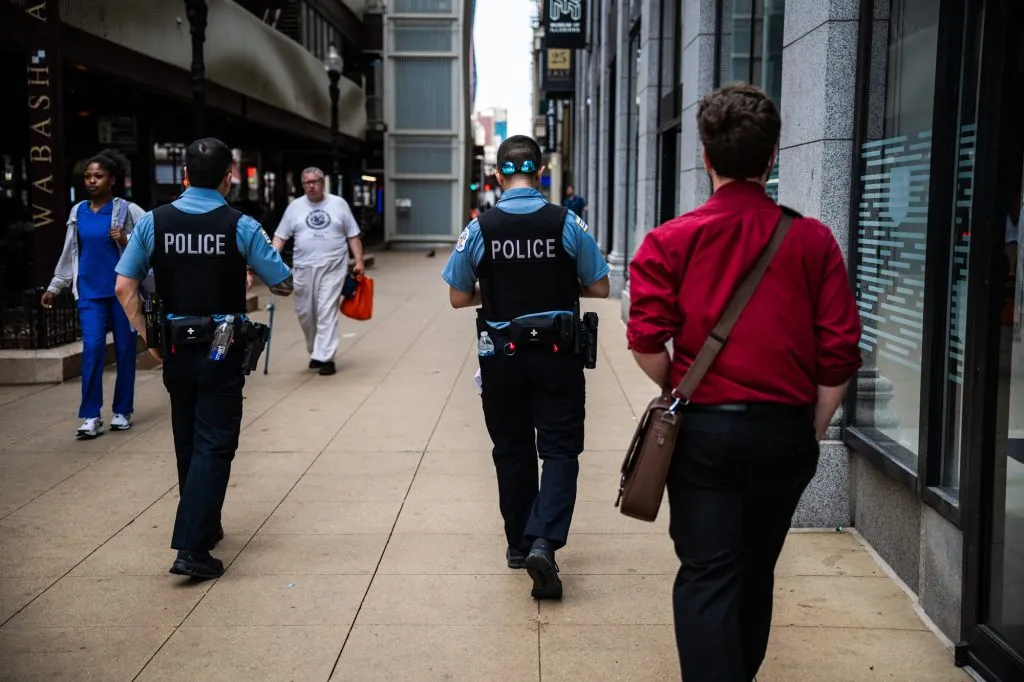 Chicago Police officers patrol on foot along Wabash Avenue in the Loop on May 18, 2026. Credit: Colin Boyle/Block Club Chicago
The proposal follows a contentious fight at City Council earlier this month where Johnson vetoed an ordinance requiring a three-fifths vote to approve future borrowing.
Meanwhile, Ernst said the personnel savings would come from a combination of eliminating vacant positions and continuing hiring freezes across city departments.
The administration froze approximately 500 vacant police officer positions and another 200 positions across other departments in its 2026 budget. Some of those freezes would continue next year, though fewer positions would be affected, Ernst said.
“It’s a mixture of positional elimination and also sort of freezing of positions,” Ernst said.
Ernst declined to identify which departments would be affected or provide a breakdown of how many positions would be eliminated versus frozen.
______________________________________________________________________
Support Local News!
Subscribe to Block Club Chicago, an independent, 501(c)(3), journalist-run newsroom. Every dime we make funds reporting from Chicago’s neighborhoods. Already subscribe? Click here to gift a subscription, or you can support Block Club with a tax-deductible donation.
Listen to the Block Club Chicago podcast: