
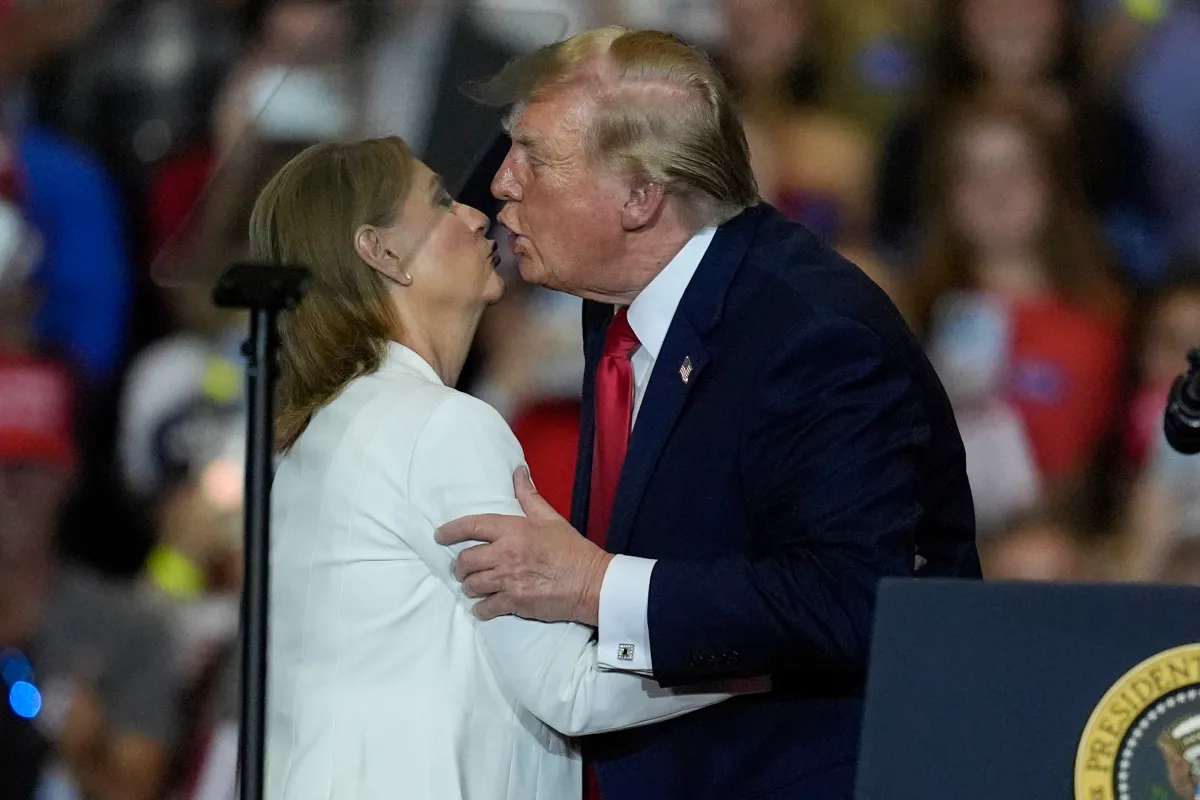
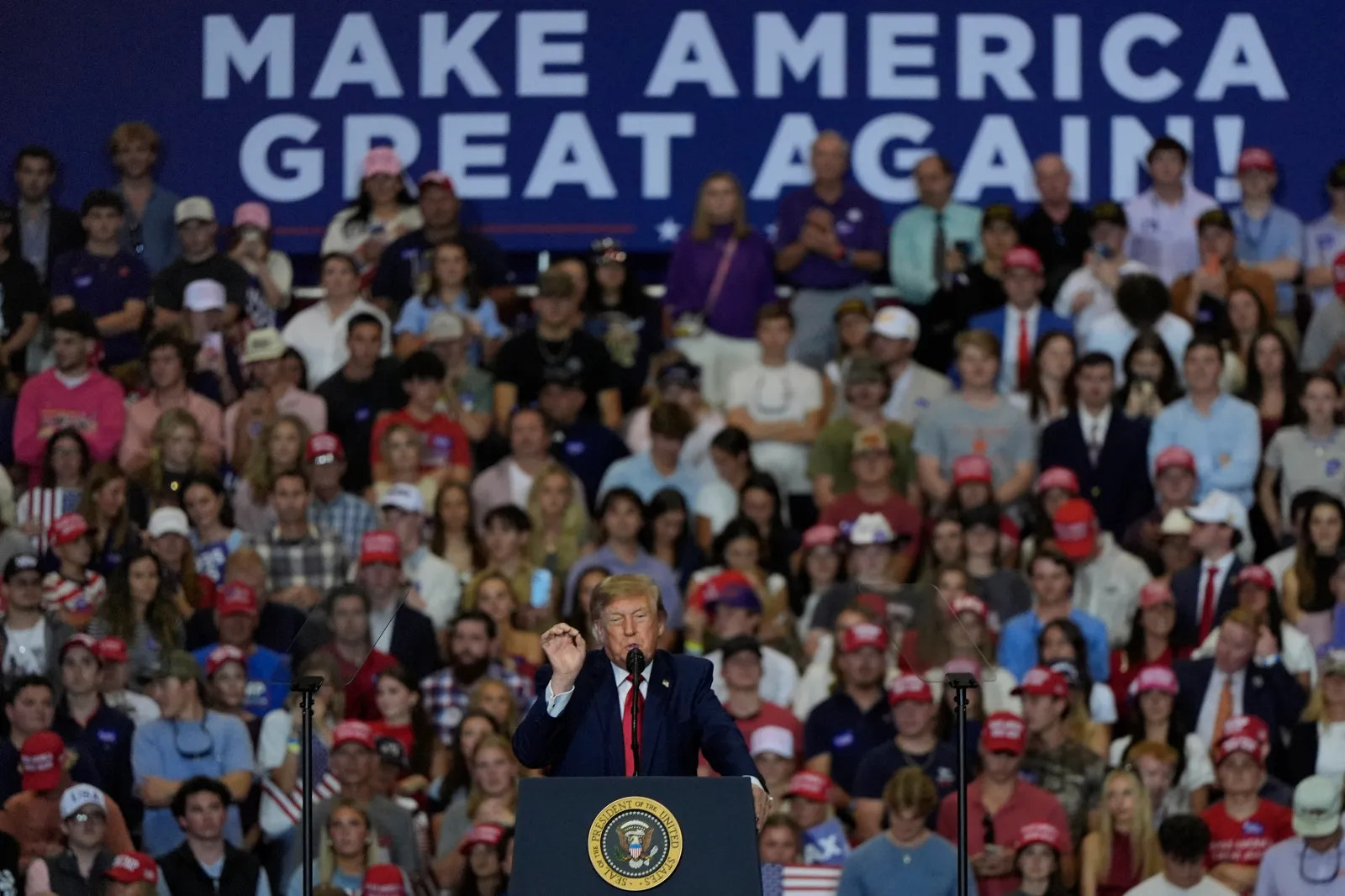
As President Donald Trump endorsed Republican candidate Darline Graham during a rally on Wednesday in South Carolina, more than a dozen protesters were removed from the T. Ed Garrison Arena in Pendleton.
Trump repeatedly praised security and local law enforcement for removing the protesters who interrupted the event, at one point calling it “beautiful to watch” when a demonstrator was escorted away. He later suggested his usual refrain, saying the protesters were organized and financed by outside groups, though he offered no evidence.
“That guy, he was in the process of shouting, and they nabbed him and they ripped him away,” Trump said. “Your law enforcement is fantastic.”
Read More on Politics
Amid the interruptions, Trump portrayed Democrat Annie Andrews as an extremist, repeatedly criticizing her support for transgender rights and gun-control measures while arguing she was out of step with South Carolina voters.
Trump said Graham would preserve conservative policies in the state by opposing progressive social policies and supporting his broader agenda in Washington. Graham later took the stage and thanked Trump for his endorsement, saying he would “always be part of the Graham family.”
“You’re gonna win big, Darline. You’re gonna win big,” Trump said.
The rally came five days after Trump froze the Russia sanctions law her late brother, Senator Lindsey Graham, spent the last year of his life trying to pass.
While Trump touted the economic gains of his broader tariffs, he did not discuss the executive order pausing the Russian tariffs.
Graham, a Republican Trump helped put in the Senate, is locked in a closer race than anyone in her party expected in a state Trump won by nearly 18 points in 2024. She also helped pass the law that carries her brother’s name, and she has said she disagrees with the president’s decision to shelve it.
In an interview Saturday, she said she wanted to maintain pressure on Russia.
“The president and I share the same goal, which is to end the war, get gas and diesel prices down, and the sanctions bill is one of the tools we can use to do that. It’s up to him whether or not he chooses to use it,” she told The Associated Press. “Personally, I would choose to keep the pressure on Russia to end the war and get the gas prices low, because I don’t trust [Vladimir] Putin and I don’t trust Russia.”
Newsweek has reached out to the Graham campaign for comment.
A Law Named for Lindsey Graham
Lindsey Graham died suddenly on July 11 at 71, from an aortic dissection. A four-term senator and one of Trump’s closest foreign policy allies, he had just come back from Kyiv and announced a deal with the White House to move his sanctions bill forward. He first introduced it in April 2025 and liked to call it an “economic bunker buster” aimed at Russia and the countries buying its energy.
Colleagues renamed the measure in his honor after his death. As the Lindsey O. Graham Sanctioning Russia and Iran Act of 2026, it cleared the Senate 86-11 on August 7 and the House 262-159 on September 16. Trump signed it two days later.
Under the law, the president can slap tariffs of up to 100 percent on the five biggest buyers of Russian oil or natural gas. Russian President Vladimir Putin, officials in his government, oligarchs and Russian banks also face sanctions.
Governor Henry McMaster appointed Darline Graham, a former commissioner on the South Carolina Commission for the Blind, to the seat after Trump lobbied for her. She worked to get the bill through the Senate.
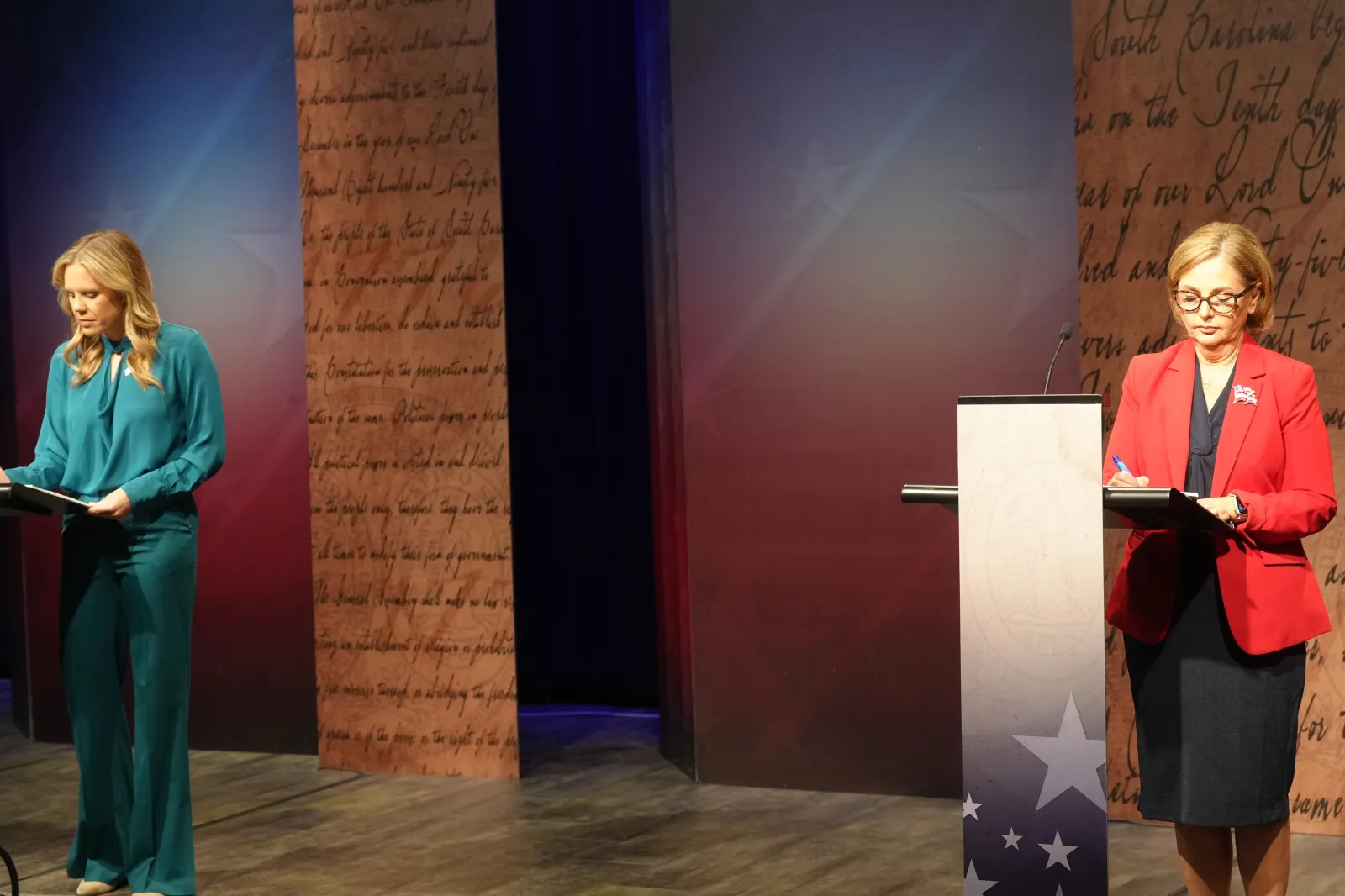
During a debate this month, she said it “gives the president tools he can use if he so chooses to end the war through economic sanctions,” and she has described its passage as one of her proudest accomplishments.
When asked about the criticism the president has faced over his approach to Russia, the White House told Newsweek to refer to Trump’s Truth Social post Wednesday morning. In the post, Trump said people who had called for immediate sanctions on Russia later apologized after learning he was negotiating the release of American teacher Stephen Hubbard, arguing that new sanctions would have derailed the talks.
“Numerous people, who requested that sanctions be immediately imposed on Russia, have called to apologize to President Trump in that they didn’t know that he was negotiating the release of Stephen Hubbard, a truly big and important deal for the U.S. If sanctions would have been placed, certainly those negotiations would have come to a complete and total halt,” the post read.
Trump Sets the Sanctions Aside
Trump waived the sanctions late Friday, in an executive order that cited national security concerns and set no end date. Most of the law’s provisions were supposed to kick in that Sunday. The order does not undo Russia sanctions imposed under earlier executive orders, Newsweek reported.
He had already struck a diesel deal with Putin to import Russian fuel, an attempt to bring down gas prices that have jumped during the war in Iran. Trump announced that agreement on October 9.
“Lindsey would be appalled,” Texas Republican Senator John Cornyn said, according to the AP. Cornyn lost his primary runoff in May to Texas Attorney General Ken Paxton, whom Trump endorsed. North Carolina Republican Senator Thom Tillis was more direct on social media: “What part of enforcing a law passed 86-11 by the Senate does the President and his advisors not understand?”
Congress is on recess until after Election Day, so there is little lawmakers can do for now.
At the White House on Tuesday, Trump kept the pressure on Kyiv instead. “Ukraine has to want to settle this war,” he said.
Graham has kept her criticism mild. She told reporters she and the president “share the same goal,” ending the war and lowering gas and diesel prices, and called the sanctions law “one of the tools he can use to do that.” Whether he does is his call. “It’s up to him whether or not he chooses to use it,” she said. She plans to bring it up with Trump while he is in the state.
Jaime Harrison, the former Democratic National Committee chair who lost to Lindsey Graham in 2020, answered with one word on social media: “#Weak.”
Danielle Vinson, a political science professor at Furman University, doubts the waiver will cost Graham much. “Anyone bothered by that is probably already voting for one of the other candidates,” she told Newsweek.
It “might confirm for some people that she’s not really willing to stand up to Trump or hold him accountable,” Vinson said, “but I’m not sure that matters much to Republican voters in South Carolina (it hasn’t hurt other politicians in the state).”
 A Closer Race Than Expected
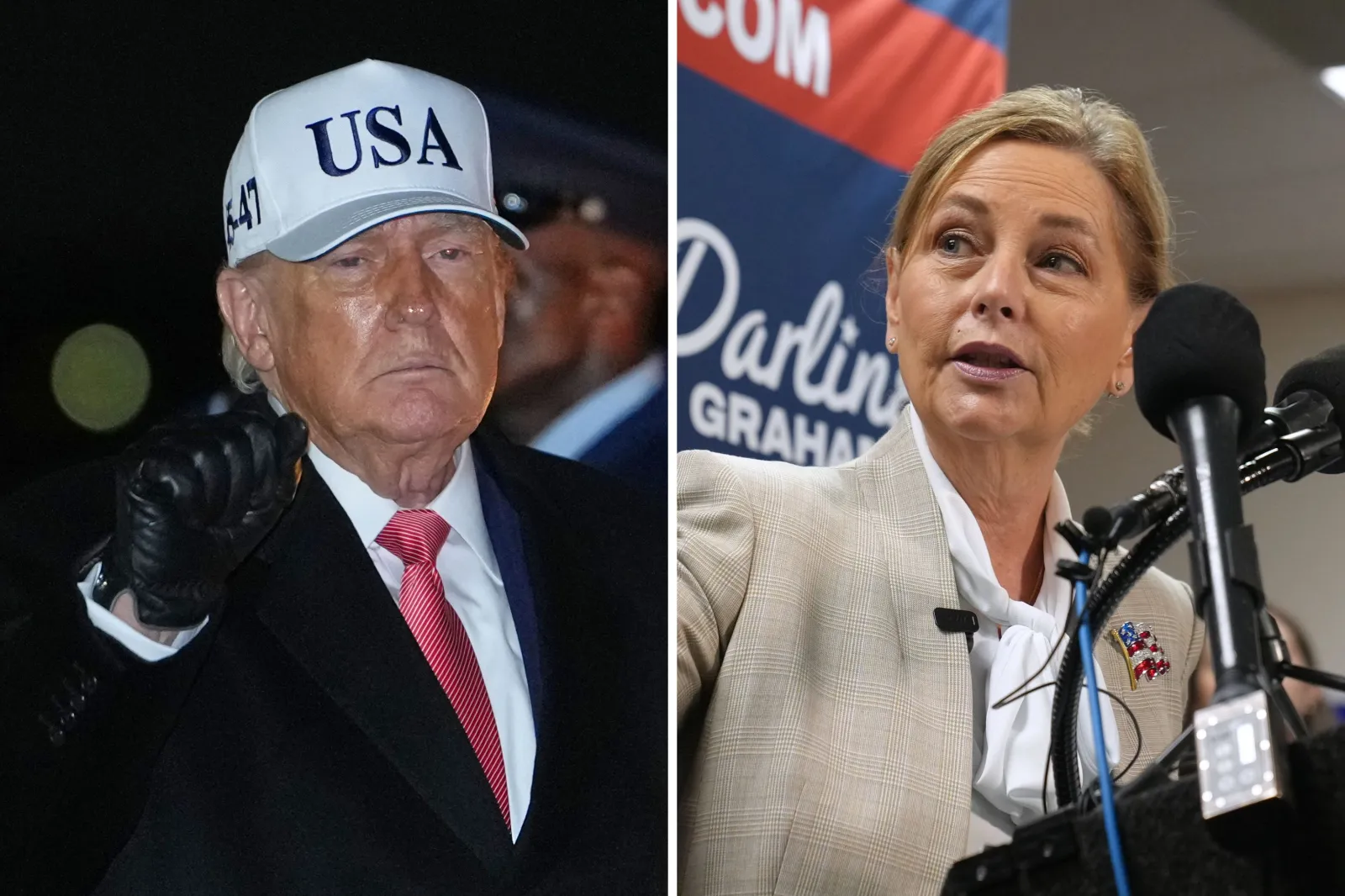
Wednesday’s rally marked Trump’s second trip in two months to prop up Graham, and he held a tele-rally for her on Thursday.
Andrews, a pediatrician who has yet to hold office, is making another run at a seat. Libertarian Kasie Whitener is also on the ballot. Whoever wins is expected to be the first woman elected to the Senate from South Carolina.
On Monday, the Republican firm Trafalgar Group released a survey of nearly 1,100 likely voters: Graham 49 percent, Andrews 46 percent, margin of error plus or minus 2.9 points. Robert Cahaly of Trafalgar told Queen City News the race has swung toward Graham as voters’ negative views of Andrews have grown.
Rasmussen Reports found Graham ahead 49 to 45 in early October. InsiderAdvantage had it 46 to 45 at the end of September, and Impact Research, a Democratic firm, put Andrews up 42 to 39 in early September.
Justin Vaughn, a political science professor at Coastal Carolina University, has told Newsweek that Andrews is a “credible candidate” and that Graham has had “relatively little time to consolidate support.” He added, “But I would be cautious about taking a very close poll at face value.”
The Cook Political Report moved the race from “Likely Republican” to “Lean Republican” on Tuesday. It had already dropped the seat from “Solid Republican” in September. Other nonpartisan forecasters rate it likely or lean Republican, according to Reuters. Andrews said in a statement to Newsweek after an earlier ratings change that forecasters are “catching up to what we’re seeing on the ground.”
Money tells part of the story. Outside Republican groups have spent $9.7 million in South Carolina since October 1 backing Graham or attacking Andrews, Reuters found in federal filings, compared with $240,000 next door in North Carolina, where Democrat Roy Cooper leads Republican Michael Whatley.
Prediction markets, however, are calmer about Graham than the pollsters are. Kalshi had her at about 83 percent to win this week, Andrews around 17. Polymarket was close behind at roughly 85 percent for Graham.
Graham’s Record Under Scrutiny
Andrews has hammered Graham on experience since the start. In an August runoff debate against Representative Ralph Norman, Graham fumbled a question on Taiwan and the South China Sea and admitted, “National security is not my thing.”
Andrews brought that up again at their October 11 debate and labeled Graham “the White House’s ambassador to South Carolina,” someone who would not cross Trump. The waiver hands her a new talking point on exactly that.
Graham describes the split as ordinary, the kind of disagreement her brother also had with Trump. “I am proud of it to help get across the finish line,” she said of the law Saturday. “It meant a lot to Lindsey.”
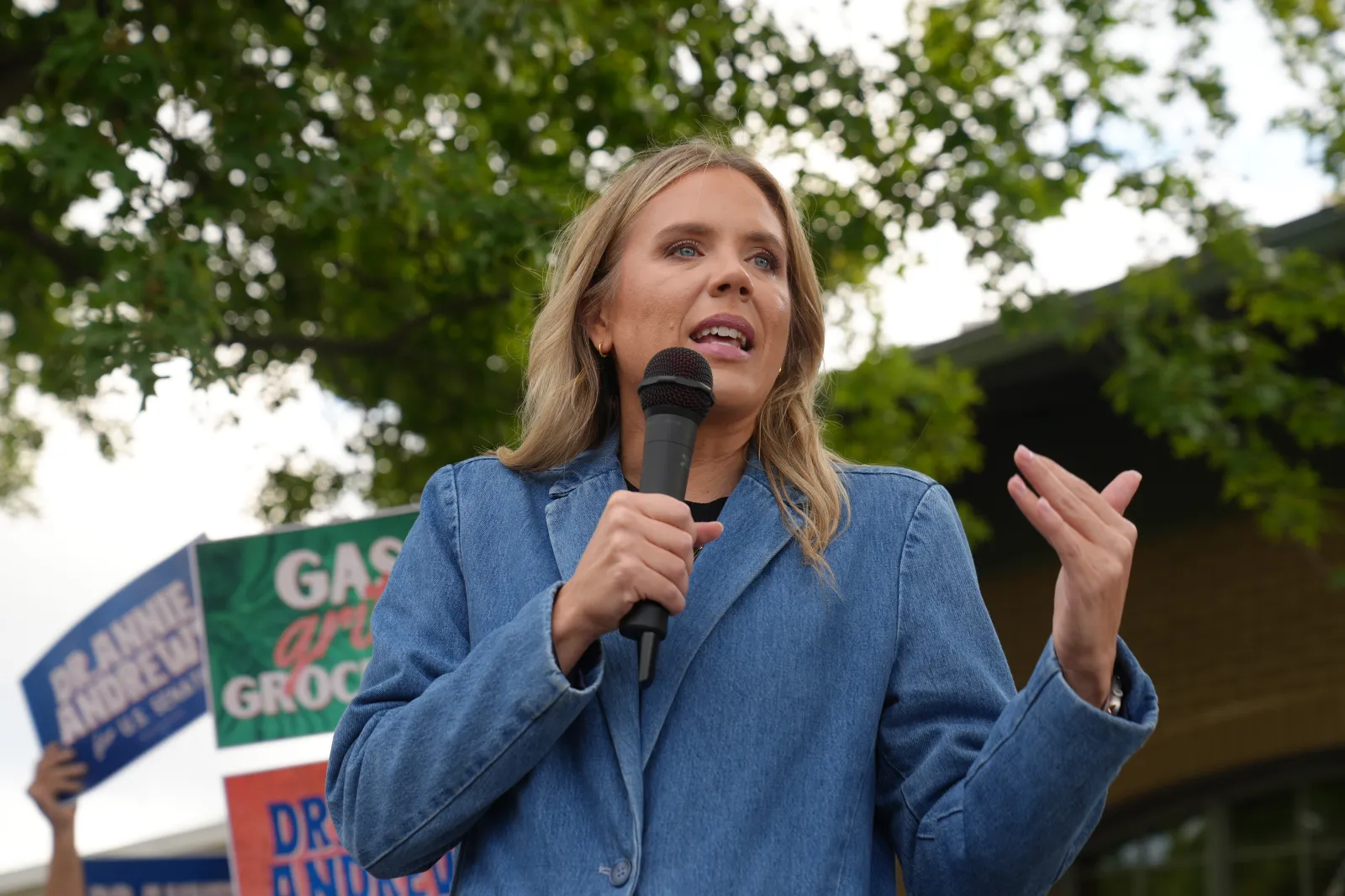
“The fact that he’s coming down to South Carolina days before the election tells you how close the election is,” South Carolina Representative Nancy Mace, a Republican, told Reuters. In her view, turnout is the whole game. “If there’s apathy from the base, and they don’t show up, Republicans don’t win.”
Vinson recalled that six years ago, polls had the Democrat within 3 points of Lindsey Graham before he won by 10. This cycle may be different. “Pollsters usually adjust to avoid repeating the same mistakes, and high prices combined with a novice senator that voters don’t really know means the polls probably are reflecting reality,” she said.
“I think Graham probably holds a lead, but how close or tenuous that lead really is remains unclear.”
What Happens Next
No Democrat has won a Senate race in South Carolina since Ernest “Fritz” Hollings took his final term in 1998, and Lindsey Graham beat Harrison by more than 10 points six years ago.
Nationally, things look worse for the GOP than they did a month ago. Trump’s approval stood at 31 percent in a Reuters/Ipsos poll published Monday, the lowest of his presidency. Democrats need a net gain of four seats to flip the Senate, where Republicans hold 53.
Early voting started October 19. Election Day is November 3.
Newsweek’s reporters and editors used Martyn, our AI assistant, to produce this story. Learn more about Martyn here. Contact Newsweek editors on this story: Jason Lemon, Gray R. Thomas, Edward T. Cummins