
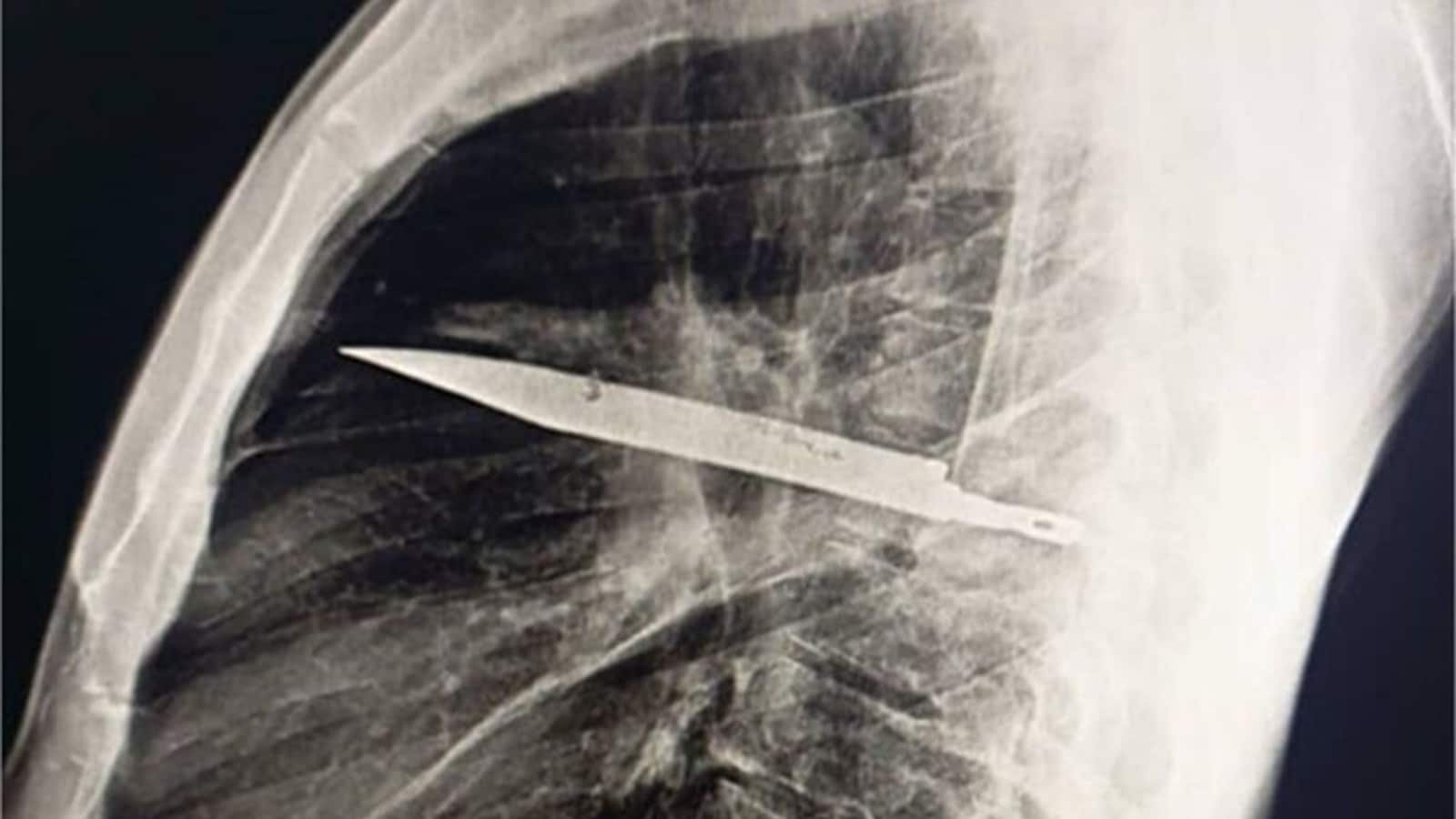
According to a case study published in National Library of Medicine on May 31, 2025, a 44-year-old man, who was ‘otherwise healthy’, sought medical care after his right nipple began leaking pus – and an X-ray revealed a knife lodged in his chest from an attack eight years earlier. Researchers said doctors were able to remove the knife and highlighted the need for imaging and follow-up treatment. Also read | This CT scan belongs to ‘a 73 year old woman in whom doctors discovered a 30 year old calcified fetus’ aka stone baby
 As per the medical report, a right thoracotomy was performed, and the foreign body was successfully removed. The patient had an uncomplicated postoperative recovery. (Pic courtesy: National Library of Medicine) What actually happened?
This case of a Tanzanian man highlights the importance of proper medical care and follow-up treatment and illustrates how in low-resource areas, especially, access to medical care and follow-up treatment may be limited, leading to delayed diagnosis and treatment.
The fact that the knife remained lodged in the man’s chest for eight years without causing more severe symptoms is remarkable. Sharing details of the case, doctors reportedly said, “A 44-year-old male Tanzanian presented to our facility with a 10-day history of pus discharge below the right nipple. He denied any chest pain, difficulty breathing, cough, or fever.”
They added, “The patient recalled being involved in a violent altercation 8 years ago, during which he sustained multiple cuts to his face, back, chest, and abdomen. Following the incident, he sought first aid at a primary health facility, where his wounds were sutured; however, no radiological investigation was conducted at that time as hemostasis was achieved, despite no suspicion of foreign body retention in the part injured, there were no facilities for radiological investigations. He had an uneventful course over the next 8 years until his current presentation.”
Imaging and diagnosis
This case also raises questions about the potential long-term effects of retained foreign objects in the body and the importance of seeking medical attention for injuries, even if symptoms seem minor or resolve on their own.
The case report stated: “Imaging performed during the current presentation revealed a retained knife blade within the right hemithorax. A right thoracotomy was performed, and the foreign body was successfully removed. The patient had an uncomplicated postoperative recovery.”
It added, “This case underscores the potential for significant delayed complications from untreated penetrating chest trauma, particularly in settings with limited access to definitive surgical care. Improved trauma management protocols, including enhanced initial evaluation and follow-up, are essential to prevent such long-term morbidity in resource-constrained environments.”
Note to readers: This article is for informational purposes only and not a substitute for professional medical advice. Always seek the advice of your doctor with any questions about a medical condition.