
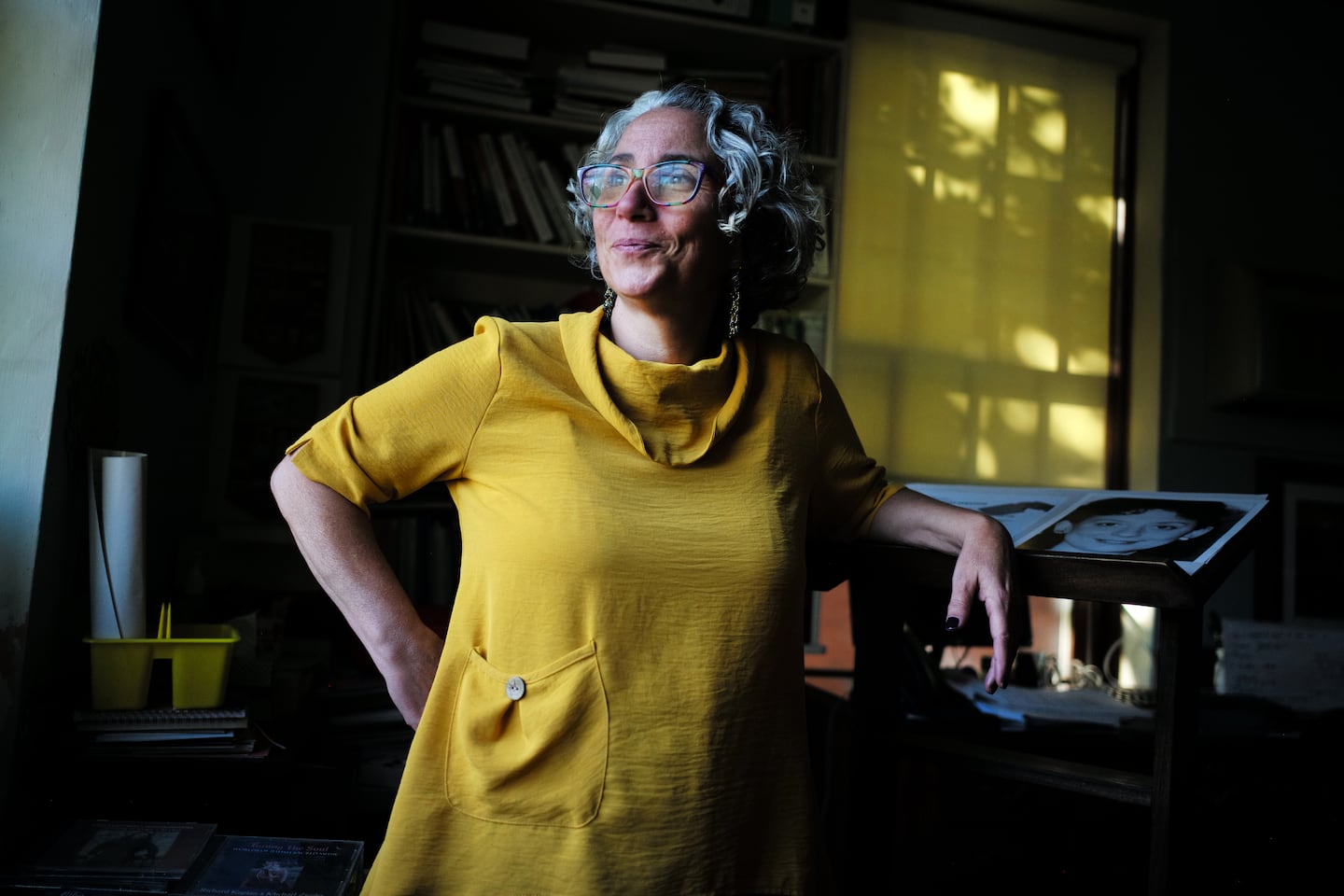
A dual citizen of the United States and Israel, Berechman will have plenty of company. An estimated 50,000 Israeli citizens from overseas are expected to return from the United States and elsewhere to cast ballots, according to the American-Israel Democracy Coalition, a US-based nonpartisan organization.
In what is projected to be a tight race, the votes of Berechman and others living abroad could impact the vote amid the backdrop of widespread destruction in Gaza; the war against Iran and incursions into Lebanon; curbs on judicial independence; and aggressive Jewish settlement and violence in the occupied territories.
“I’m going to Israel because I have to for Israel’s future,” said Berechman, who holds Israeli citizenship through his father. “This is the most consequential election of Israel’s history, in my opinion. You’re either voting for a democratic Israel or, if Netanyahu wins, endless war.”
 Eitan Berechman, 22, from Newton, will travel to Israel to vote in the upcoming election.
Pat Greenhouse/Globe Staff
In a country still reeling from the Oct. 7, 2023, attacks by Hamas militants from Gaza, which killed 1,200 Israelis, the election carries enormous implications.
Israeli government officials have criticized progressive groups for trying to influence the vote by encouraging travel by Israeli expatriates. Those overseas citizens account for 810,000 of the country’s population of 7.3 million, according to the country’s Central Bureau of Statistics.
But Israeli citizens living anywhere, including children born abroad to at least one Israeli parent, are entitled to vote. The catch is they have to be physically present in Israel on election day to vote; absentee ballots are not permitted.
Senior Rabbi Claudia Kreiman of Temple Beth Zion in Brookline is flying to Israel for a whirlwind trip in which she will cast her ballot Tuesday and return to the United States later that day.
“It is one vote, and what do I know if this vote will make a difference?” said Kreiman, who opposes the Netanyahu government. “But I want to believe that my vote, with the other 50,000 people traveling, will make a difference.”
At least six other congregants from Temple Beth Zion are traveling to Israel, Kreiman said.
Kreiman, who moved to Israel from Argentina as a young woman, lost her mother in a terrorist attack on a Jewish cultural center in Buenos Aires in 1994. That tragedy by a suicide car bomb, which authorities linked to the Islamist group Hezbollah, changed the direction of her life.
“One of the first questions I asked myself was what kind of future do I want?” said Kreiman, who has family in Israel. “What can I do in the world so things like this don’t happen? I made a conscious choice that it would be one of building bridges.”
Israeli citizens who choose to live abroad often have education and financial resources that allow them to relocate and find jobs elsewhere, said Ora Peled Nakash, cofounder of the American-Israel Democracy Coalition.
Many of them skew toward liberal or progressive politics, although ultra-Orthodox communities in the United States are more likely to support the Netanyahu government.
Peled Nakash said the coalition has been raising awareness among Israeli expatriates for more than a year that they are entitled to return to Israel and vote.
“People mistakenly thought that not being a resident of Israel, it would impact your eligibility to vote,” she added.
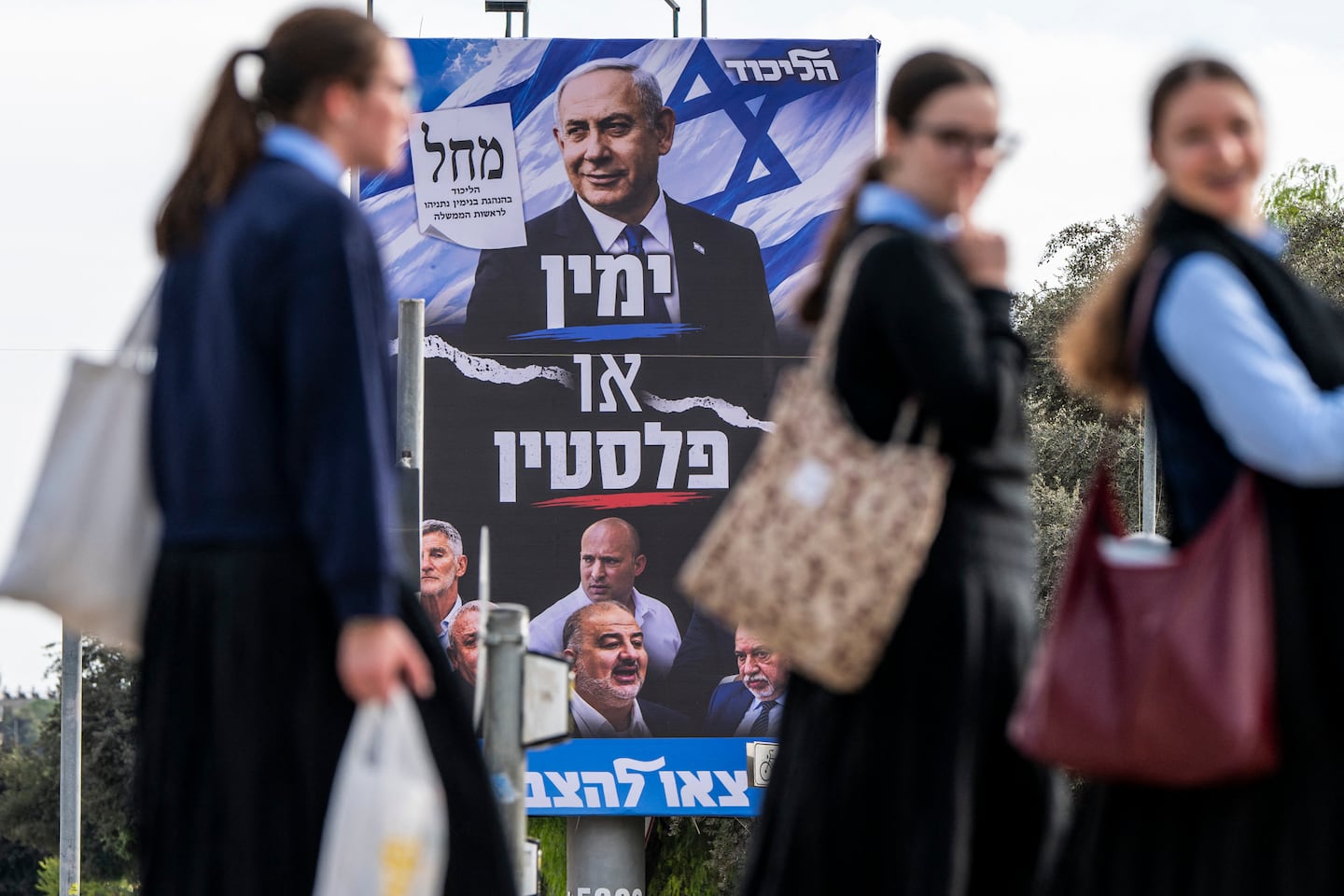 An electoral campaign billboard for Israeli Prime Minister Benjamin Netanyahu’s Likud party in Jerusalem.JEWEL SAMAD/AFP via Getty Images
The election could be decided by the thinnest of margins, analysts say. Four years ago, Netanyahu’s right-wing coalition won 48.4 percent of the vote but managed to obtain 64 of the Parliament’s 120 seats.
Gadi Eisenkot, a former Israeli general and Netanyahu’s main opponent, has rejected Palestinian statehood but pledged to crack down on settler violence in the Israeli-occupied West Bank and engage with the Trump administration over rebuilding Gaza.
Robert Leikind, director of the American Jewish Committee New England, said he is not surprised by the large number of Israeli citizens traveling to vote.
“Because they’re Israelis, because they’re Jews, people are deeply invested in the well-being of the society and its survival,” Leikind said. “What’s at stake in the minds of people isn’t just one policy or another. It’s the health and stability and future survival of the country.”
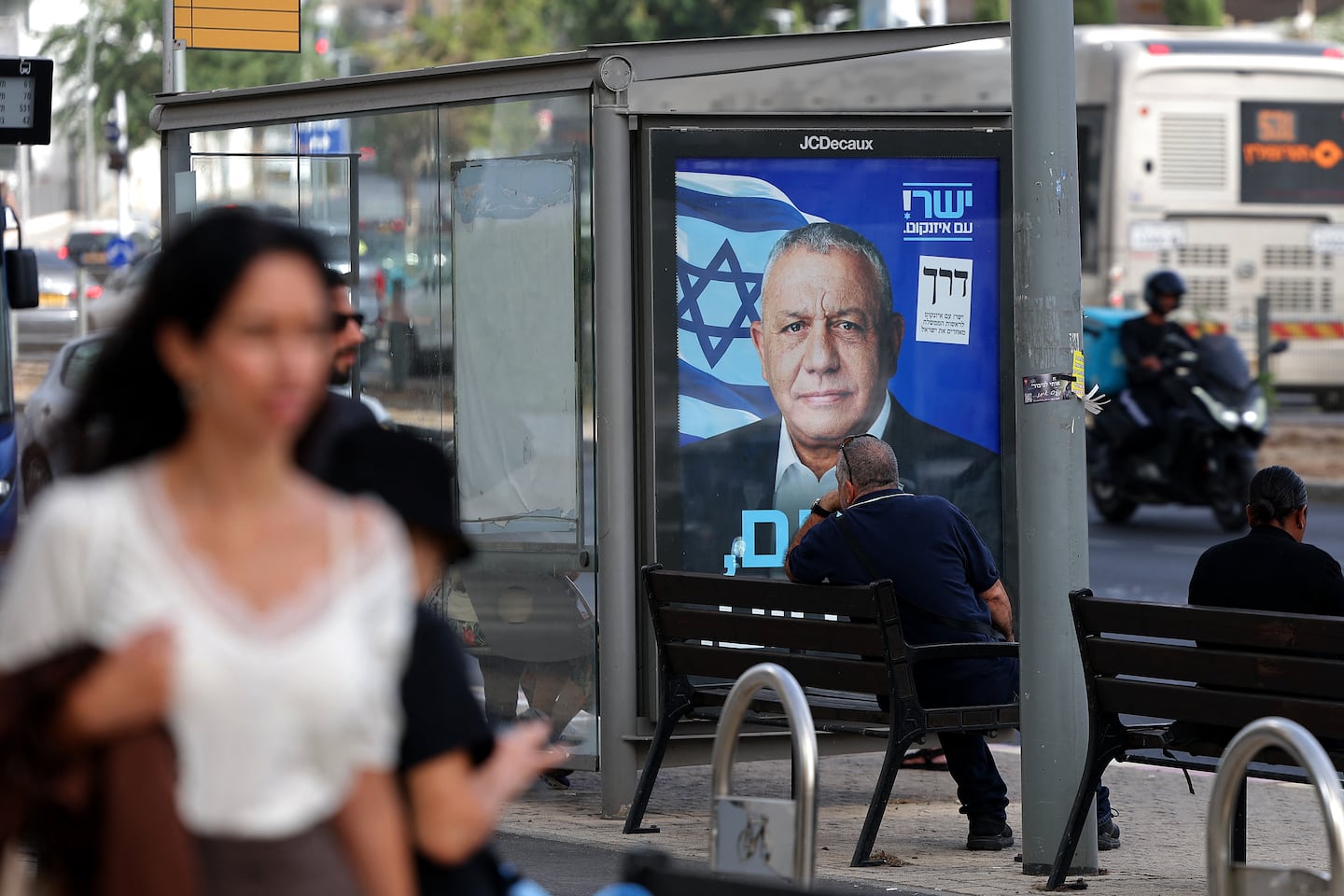 An election poster bearing a portrait of former military chief and leader of the centrist Yashar party, Gadi Eisenkot, with a message in Hebrew reading “Choosing the righteous way” in Ramat Gan.JACK GUEZ/AFP via Getty Images
Dror Avieli of Newton said that he bought plane tickets for two sons living in California and Wisconsin to join him and vote in Israel, and that even his ex-wife would be traveling. A third son already lives in Israel.
“It’s an amazing feeling, a mix of excitement and fear. Excitement to see a change in the results and seeing Bibi out, and fear if it is not happening,” Avieli said, using Netanyahu’s nickname.
For some dual citizens, however, the election is unlikely to change conditions inside Israel no matter what government emerges.
“Although my sister and mother from Israel have begged me to fly and vote, and offered to pay for the trip, I have chosen not to do that,” said Noam Shoresh, director of computational biology and epigenomics at The Broad Institute at MIT and Harvard University.
“I don’t think Israel as a society, as a Jewish-Israeli society, will change and end the oppression of Palestinians on its own,” added Shoresh, who lives in Newton. “The only way this will happen is from outside pressure, mainly from here.”
Even a center-left government would give political cover “to say they want peace” but continue the occupation, Shoresh said. “They want quiet at the cheapest possible price.”
Another dual citizen who does not intend to vote is Hani Murad, a Palestinian American and psychologist from Newton.
“The bottom line is that none of the Israeli political parties accept that Israel should be a country for all of her citizens,” said Murad, who was born in the northern Israeli city of Nazareth and immigrated to the United States 40 years ago.
Murad said members of his family in Israel will vote, but many Palestinians question whether participating in the election means they are granting legitimacy to the process.
“As Palestinian citizens of Israel,” said Murad, who has worked in the Middle East for the United Nations, “the vast majority of us do not see the Israeli governments representing or advocating for our aspirations to live in safety, peace, and security.”
Still, thousands of Israelis have decided to make an expensive journey for only a few days to participate in what many of them consider the most important election in Israel’s history.
“I see it as a turning point that will determine the direction Israel takes,” said Kreiman, the Brookline rabbi. “I really feel democracy is on the line, and we can do something to change it. What happens in Israel will affect all of us.”
Brian MacQuarrie can be reached at brian.macquarrie@globe.com.