
East Lansing, Michigan —
On a recent crisp college football Saturday, Michigan State senior Zach Larson sat in a lawn chair sipping a can of Modelo that he said cost nearly twice as much as it did when he was a freshman.
Tailgating near the student union in a backwards cap, hoodie and Oakley sunglasses, Larson lamented the rising prices of everything around him — beer, tuition, the gas for his truck — and a president he said wasn’t focused enough on the challenges facing his generation.
The frustrations have transformed Larson’s politics. Once a self-described “hard-right” conservative who voted for Donald Trump in 2024, Larson now considers the president a “tyrant” and said he’s likely to cast a ballot for Democrat Abdul El-Sayed in Michigan’s closely watched Senate race.
“Seeing the economy in this state, it’s very hard to be a conservative,” said Larson, a 21-year-old criminal justice major, “and I wouldn’t call myself that anymore.”
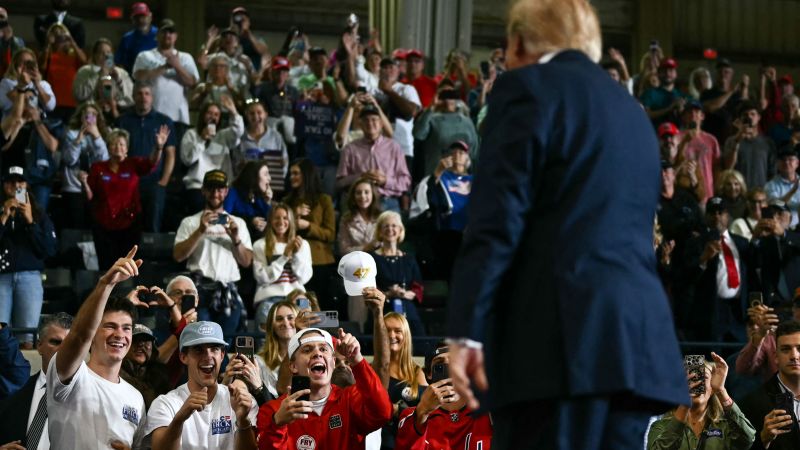
Two years ago, young men like Larson helped propel Trump back to the White House. Their exuberant embrace of the Republican ushered in a vibe shift that turned support for Trump into a cultural statement. It seemed to mark the dawn of a new political era that would be, in the parlance of online bros, “for the boys.”
Now, with control of Congress at stake, Republicans in tight races across the country are struggling to keep those same young men in their corner. Polls suggest widening disillusionment with Trump among a generation increasingly pessimistic about its future. Among men under 30 likely to vote, 58 percent say they prefer Democrats to just 32 percent for Republicans, according to a new survey of young adults from the Harvard University Institute of Politics, a stunning shift after a roughly even split of their vote in 2024. Early voting data suggests that Republicans are suffering from lagging turnout in several key states, particularly among younger voters.
To understand the political whiplash, CNN spoke with two dozen young men around Lansing, Michigan, where a Big Ten campus, the state capital and two General Motors plants put college students, young professionals and blue-collar workers into close proximity. The region has drawn intense attention from statewide candidates for governor and Senate and is home to a highly competitive House race.
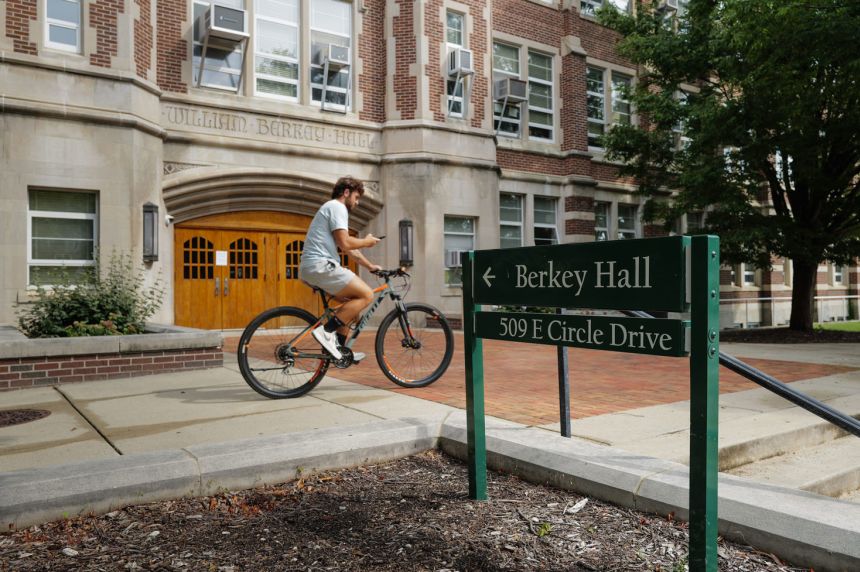
Their frustrations ranged from the war with Iran to Trump’s embrace of artificial intelligence and to the proliferation of data centers. Some remain ambivalent to politics; a few weren’t ready to give Democrats a pass. But nearly all described mounting anxiety about the cost of getting by and fears that the American dream was moving out of reach.
Caleb Christie, a 19-year-old construction management major at Michigan State, said Trump’s election offered hope to his generation that the traditional milestones of adulthood — a stable career, a home, a family — might become more attainable.
“That’s shifted over his presidency, where we’re not seeing those things come to fruition,” Christie said. “So I think a lot of people are hesitant and are taking more time to think about what they really value and what they want out of politics in America.”
At nearby Lansing Community College, 19-year-old Andrew Jubeck said his parents have encouraged him to follow his passions — botany and biology — but that increasingly feels financially risky.
“If we do what we want,” he said, “how are we going to be able to afford to live?”
Not everyone, though, is ready to blame Trump.
“No president was universally liked,” said George Hoppe, a 19-year-old business major at Michigan State. “It’s a hard job. He’s doing what he’s got to do.”
Why young men are moving away from Trump and Republicans
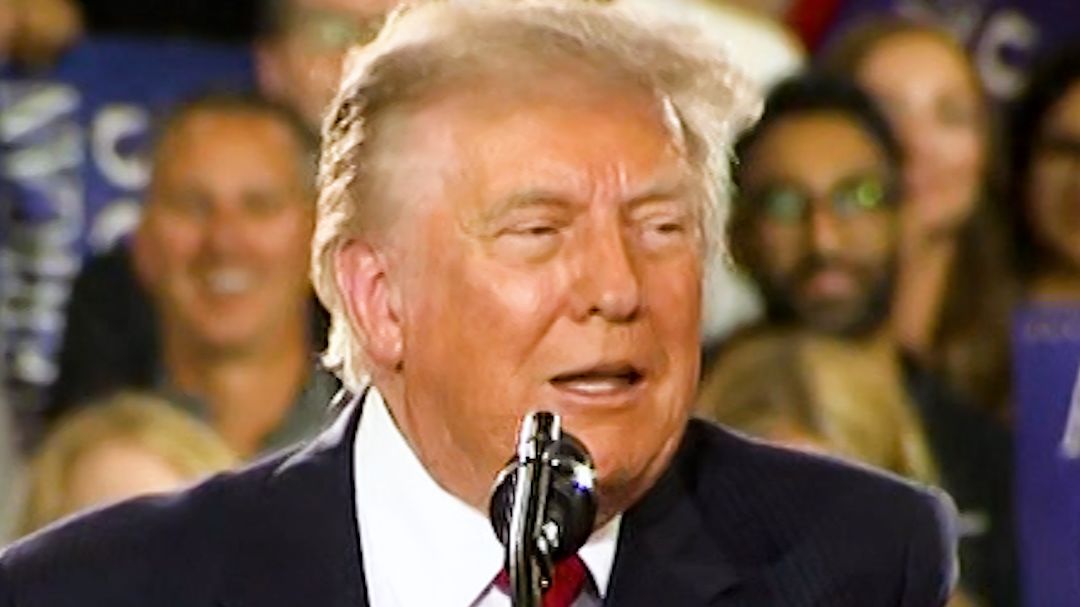
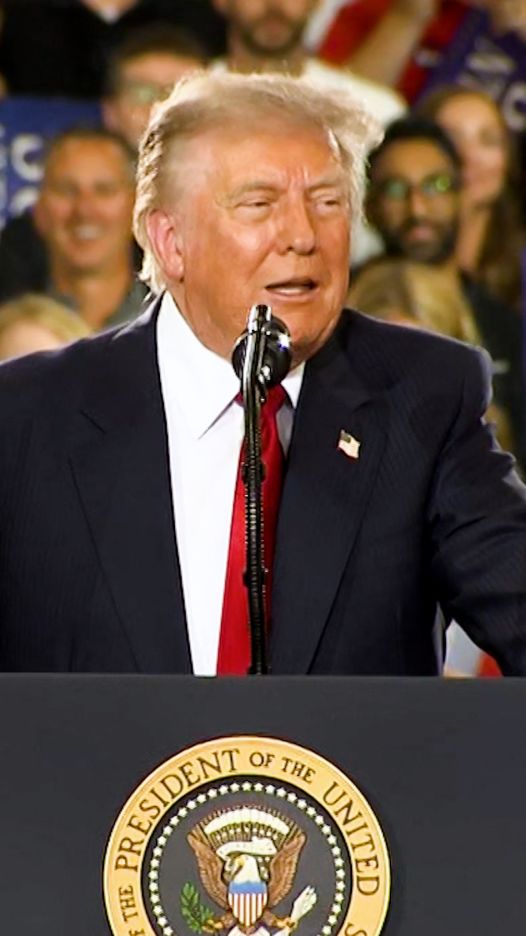
Polls show a stunning shift happening with young men, who were a key part of President Trump’s coalition in 2024, ahead of the November midterm elections. CNN’s Steve Contorno speaks with young men about the issues driving the shift in Michigan, where a critical Senate race is playing out.
Why young men are moving away from Trump and Republicans
1:40
In 2024, economic hardships and lingering resentments over pandemic disruptions fueled disillusionment in young men. Trust in public institutions and the older generations leading them eroded. Trump and his campaign seized on the angst.
At Trump’s direction, Republicans approved a new platform promising to “bring back the American dream” for young people. He campaigned to “quickly bring down all prices,” declared “young people will be able to buy a home again” and insisted he wouldn’t send another generation of young men into a foreign war.
Trump reinforced the message through a fast-growing ecosystem of online male influencers — comedians, professional athletes, podcasters and pranksters — whose politics reflected the disenchantment of their young audiences.
But the conditions that made young men receptive to Trump haven’t improved and, in some ways, have worsened. The median age of a first-time homebuyer has jumped to 40 years old while nearly six in 10 adults under 25 live with their parents. Fewer young people are working than when Trump took office, and those who are increasingly say they need side hustles to get by. There are now 21 confirmed deaths of US servicemen as a result of Trump’s war with Iran and hundreds more wounded.
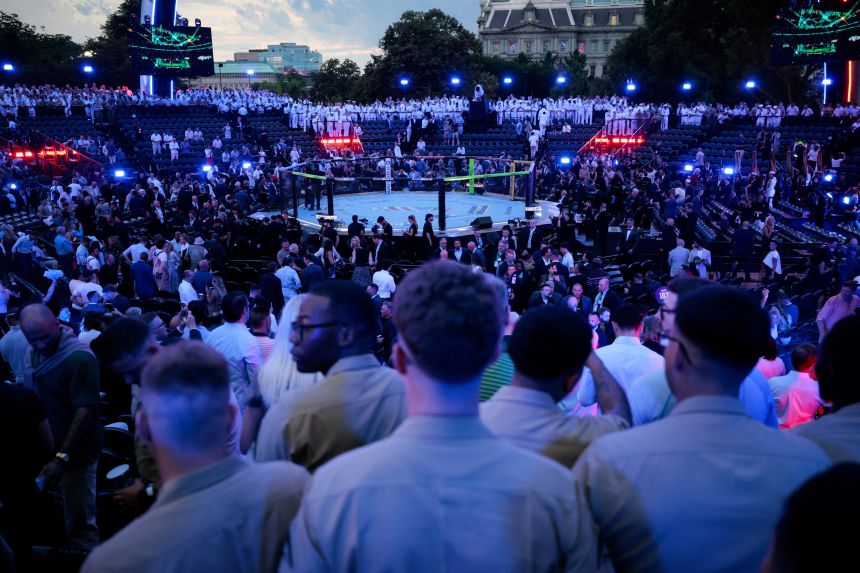
Trump’s efforts to hang onto their support — a UFC fight on the White House lawn, regular appearances at sporting events and a bombardment of advertisements during college and professional football games — don’t seem to have moved the needle.
“Kids are demoralized on our side,” a Republican operative close to the White House said. “There’s no point in hiding the ugly truth.”
Meanwhile, some of the influencers who helped Trump reach young men have also grown skeptical. Popular podcaster Joe Rogan criticized Trump over the war with Iran, while other personalities have shown greater openness to Democrats or pivoted away from politics altogether.
But Isaiah Fuller, president of the United Autoworkers Union Local 602 in Lansing, isn’t yet convinced young men are abandoning Trump en masse. He said his younger members have become increasingly vocal in opposing the union’s endorsements and they remain entertained by Trump’s antics, even when his policies collide with union priorities.
“They get to see their wildest dreams lived through somebody who feels they’re untouchable,” Fuller said. “We have a lot of younger workers that don’t have the same views as we do as an organization, so they don’t understand that they’re shooting themselves in the foot.”
At Michigan State, the student response to uncertainty has undergone a shift, said Karin Hanson, director of the university’s career services network. Rather than withdrawing, as she has seen past generations do, students are adapting to a realization that “not one person is going to save us.”
“They’re not shutting down,” she said. “And they’re very open to plan A, B, C, and D.”
For Jospeh Burke, a 21-year-old senior studying data science and biochemistry, plan B is a dramatic career pivot: the priesthood. Looking ahead at the rise of artificial intelligence and an out-of-reach housing market, seminary school has begun to look appealing.
“I’m kind of just looking for something that has secure options,” Burke said.
Matthew Holland, an 18-year-old at Lansing Community College, doesn’t yet have a backup plan if AI continues to eliminate the web design career he once envisioned. But he knows whom he doesn’t trust to protect workers: the Trump administration.
“They are doing as much as they can to rack in profits using AI,” he said, “and trading out labor in favor of AI.”
Anton Gegaj, president of the Michigan State College Republicans, said he thinks the economic angst is overblown and typical of most generations. He pointed to Trump’s new $100,000 fee on H1B visas, aimed at encouraging companies to hire US workers rather than foreign ones, as a step toward creating opportunities that would benefit young people.
“When Trump focused on that, it was great,” Gegaj said.
He acknowledged, however, that Trump lost many of his peers on campus when the military took action against Iran and gasoline prices shot up.
“It really was just the Iran war,” Gegaj said, “and if it ended quickly, young people would come back to him.”
As young men began souring on Trump, El-Sayed sought to make college students a key constituency in his Democratic Senate primary, packing rooms on campuses across Michigan.
In April, he appeared at Michigan State alongside Hasan Piker, a progressive influencer with millions of online followers whose criticism of Israel has drawn accusations of antisemitism. The event attracted scrutiny — and hundreds of students, many of them young men.
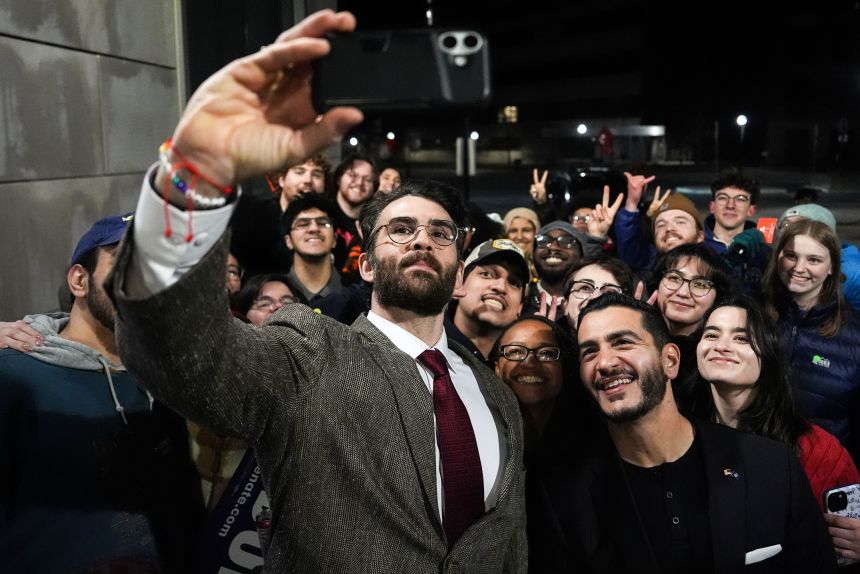
“It generated a lot of controversy, but never have I ever had so many young men reach out to us at once, and they all told us that was so cool,” said Aastha Singh, president of MSU College Democrats, which helped to organize the event. “I feel like especially in our club, you could see that was a big shift.”
Christie, the construction management major, praised El-Sayed for speaking to young people’s basic needs. Jubeck, the Lansing Community College student, said El-Sayed’s online presence rivaled what he’s seen from MAGA influencers and he wished more Democrats would emulate it. El-Sayed, for example, has posted videos of his workouts as his campaign juxtaposes his spin on masculinity against Trump’s bravado.
“I see on TikTok all the time what the White House is posting, and the AI generated content that involves Trump, and I just think that’s very immature,” he said. “At the same time, I don’t think the Democratic Party is fighting that the correct way.”
But Michigan State freshman Simon Justin, who opposes Trump, said he’s wary of the growing appeal of socialist candidates and policies among young progressives. While he worries that a college degree is too expensive and won’t offer his generation the same opportunities it once did, he remains convinced that capitalism is the best path forward.
“I’m not a socialist. I don’t think that works. I think that would be essentially a lead into tyranny for America,” he said.
Mike Rogers, the Republican nominee for Senate, has repeatedly criticized El-Sayed for appearing alongside Piker. But the former Congressman’s campaign also privately acknowledges the difficulty reaching young voters increasingly drawn to figures like Piker and a surging democratic socialist movement.
Some conservatives have responded to Gen Z’s economic worries by calling them lazy and entitled. An online debate over a college student’s complaint about a $20 burrito grew so animated that Vice President JD Vance weighed in to defend young people.
Rogers hasn’t joined the growing criticisms of young men from his party and has stepped up his outreach in recent months. He has appeared at college football tailgates while his campaign sent a moving billboard to Ann Arbor attacking El-Sayed’s past criticism of football. “Abdul El-Sayed thinks your national championship is racist and toxic,” it said. (El-Sayed, for his part, has touted his high school football credentials and accused Rogers of having “beta energy.”)
This weekend, College Republicans from across the country will descend on Michigan to help knock doors.
“Unfortunately, they are doing a good job on campuses,” Rogers said at a recent campaign event. “It’s a little scary, but we’re working on it.”
This article has been updated with additional information.