
The dramatic shift in public opinion regarding U.S. relations with Israel, particularly among Democrats, has become apparent in the thirty-four Senate races this fall. The majority of Democratic nominees this cycle are seeking to distance themselves from the traditional pro-Israel groups that had previously backed them, rejecting the longstanding Democratic position of supporting billions of dollars’ worth of unconditional military aid to Israel.
This is smart politics: A May 2026 NBC News poll found that 67 percent of Democrats are more sympathetic toward Palestinians than Israelis, with only 13 percent viewing Israel positively. An August 2025 Quinnipiac poll found that 77 percent of Democrats believed Israel was committing genocide. And a May 2026 New York Times/Siena poll showed that 74 percent of Democratic voters opposed providing additional economic and military aid to Israel, with only 8 percent of Democrats strongly supporting it.
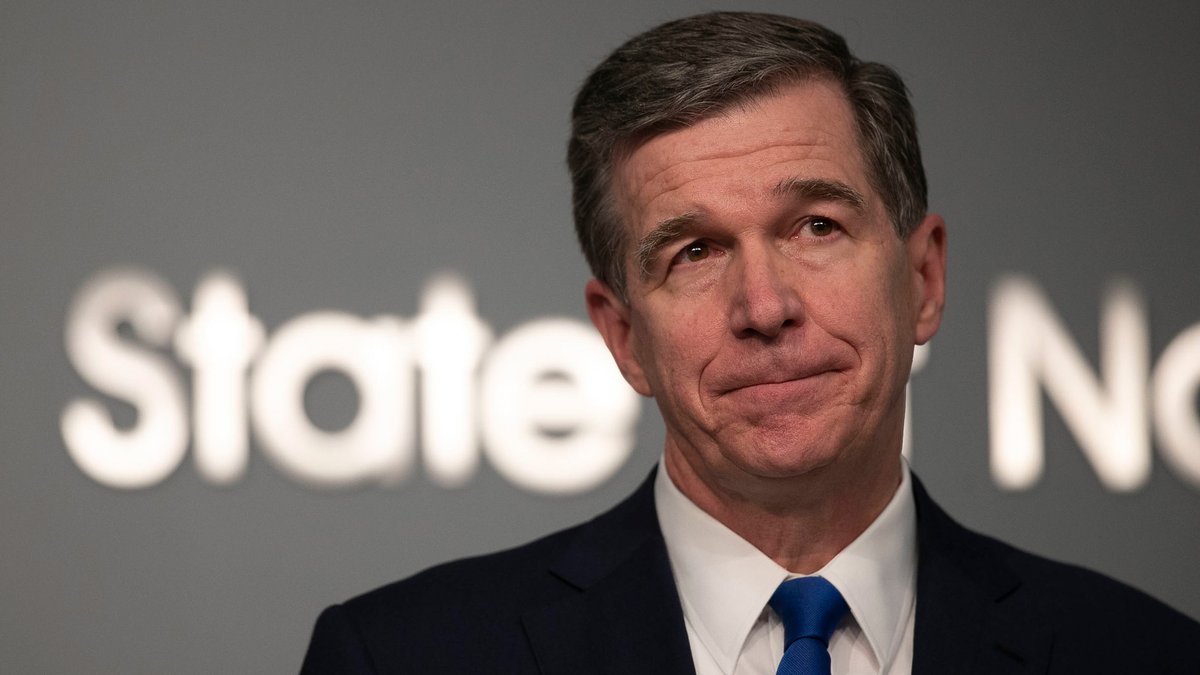
One measure of this shift is that the once-influential Democratic Majority for Israel (DMFI) is finding fewer candidates to endorse. In 2022, the political action committee endorsed nine Democratic Senate nominees; in 2024, the endorsements were down to six. This year, there are only two: Representative Chris Pappas in New Hampshire and former Governor Roy Cooper in North Carolina.
Two additional Democratic Senate candidates endorsed by DMFI—Representative Haley Stevens in Michigan and Representative Angie Craig in Minnesota—lost their primaries to progressive opponents who explicitly challenged their support for the Israeli government and their reception of millions of dollars in campaign contributions from hardline pro-Israel groups.
Throughout his four terms in the U.S. House of Representatives, New Hampshire’s Pappas was one of Israel’s biggest Democratic supporters. Facing a strong progressive challenger, Karishma Manzur, in September’s Democratic primary, however, Pappas began moderating his stance. In July, he voted “present” on an amendment to restrict additional arms sales to Israel rather than casting an anticipated negative vote. He has also called Israeli Prime Minister Benjamin Netanyahu’s policies “indefensible and unsupportable” and said the situation constituted “an important moment for a reset” with respect to the U.S. policy toward Israel.
Cooper, who faced no serious challenger in the primaries, appears by contrast to be resisting demands to distance himself from his longstanding support for the Israeli government, saying he was “grateful” to receive DMFI’s endorsement. Despite DMFI supporting the Israeli occupation, condemning the International Court of Justice and the International Criminal Court, and opposing a Gaza ceasefire, he praised the group “for the work they do to advocate for peace and prosperity both at home and abroad.”
Cooper’s support for Israel’s wars and occupation predates his Senate campaign. As governor, he signed a Republican-sponsored bill punishing companies and individual contractors not only for boycotting Israel, but for simply boycotting Israeli settlements or companies directly supporting the occupation. Even J Street and other liberal Zionist groups—which oppose the Boycott, Divestment, and Sanctions (BDS) movement overall—recognize such legislation as an effective endorsement of the Israeli occupation and colonization of the West Bank and have come out in opposition.
Cooper also signed into law another Republican-sponsored resolution to suppress pro-Palestinian activism by using the controversial definition of antisemitism, put forward by a group known as the International Holocaust Remembrance Association, which labels certain criticisms of Israel or Zionism as a form of bigotry subject to civil rights statutes.
Both of these bills were strongly opposed by the American Civil Liberties Union, progressive Jewish organizations, and various liberal groups.
Cooper’s position on Israel does not reflect that of residents in his state. Not long after October 7, 2023—seeing Israel’s disproportionate targeting of civilians and their infrastructure—sizable numbers of North Carolinians joined Americans nationwide in calling for the Biden Administration to withhold offensive military aid.
In response, despite not being a member of Congress, Governor Cooper declared: “I stand with Israel and its right to defend itself from barbaric violence and Congress needs to supply the funding requested by President [Joe] Biden.”
Soon after Cooper announced his candidacy for Senate in 2025, liberal Senate Democrats unsuccessfully tried to block Trump’s proposal to send additional offensive weapons to Netanyahu. Cooper’s campaign then released a statement saying that he “does not believe we should withhold aid from a critical ally like Israel,” citing the need “to defend themselves against countries like Iran,” which Israel, with U.S. support, had recently attacked.
Cooper takes this position despite widespread opposition from within his own party. The North Carolina Democratic Party, at its annual convention this summer, voted 407-89 to include a call for a complete arms embargo on Israel in the party platform. Apparently, Cooper doesn’t appear to care what Democratic voters think; he’s confident they will vote for him anyway, given the importance of getting a Democratic majority in the Senate amid his race against MAGA Republican Michael Whatley.
These stances raise questions about what kind of senator Cooper would be in the likelihood he is elected in November. He would almost certainly join the shrinking minority of Democrats—including John Fetterman of Pennsylvania, Chuck Schumer of New York, Jacky Rosen of Nevada, and Adam Schiff of California—in allying with Trump and congressional Republicans on matters dealing with Israel and Palestine.
It’s hard to tell exactly why the sixty-nine-year-old Cooper is so attached to Israel, and whether it reflects a worldview hostile to human rights and international law overall.
Cooper backing the Trump Administration’s provision of unconditional offensive military aid during a genocide raises thorny questions. Would he have supported Nixon arming Pakistan during the genocide in Bangladesh, or Reagan arming Guatemala during its genocide against indigenous peoples? Would he have supported Reagan’s backing of South Africa in the face of its illegal occupation of Namibia and its apartheid system?
Cooper’s hostility to those boycotting the Israeli occupation and settlements raises similar questions. Would he have supported historical efforts to punish those engaging in boycotts of non-union lettuce and grapes, segregated buses, or companies engaging in union busting and utilizing sweatshops? And would he have supported Republican-backed legislation to enable a state crackdown on those opposing the Vietnam War or intervention in Central America?
This does not necessarily mean Cooper will be another Jesse Helms, the rightwing Republican senator who chaired the Senate Foreign Relations Committee for six years at the turn of the twenty-first century. For one thing, Cooper has focused almost exclusively on domestic issues during his campaign. His opposition to the Iran War is expressed primarily in the context of how it has contributed to inflation, a reflection of his focus on affordability.
Moreover, Cooper seems to be going out of his way to avoid talking about Israel and Palestine. His campaign refused to respond to repeated emails and phone calls for this article.
In short, Cooper knows that his position is an unpopular one. He knows that like-minded pro-Israel hawks are a rapidly shrinking group within the Democratic Party. This past spring, forty out of forty-seven Senate Democrats voted for an unsuccessful effort to block a supplemental arms sales package to Israel.
And that is why, despite frustrations with holdouts like Cooper, we have reason to be optimistic.