
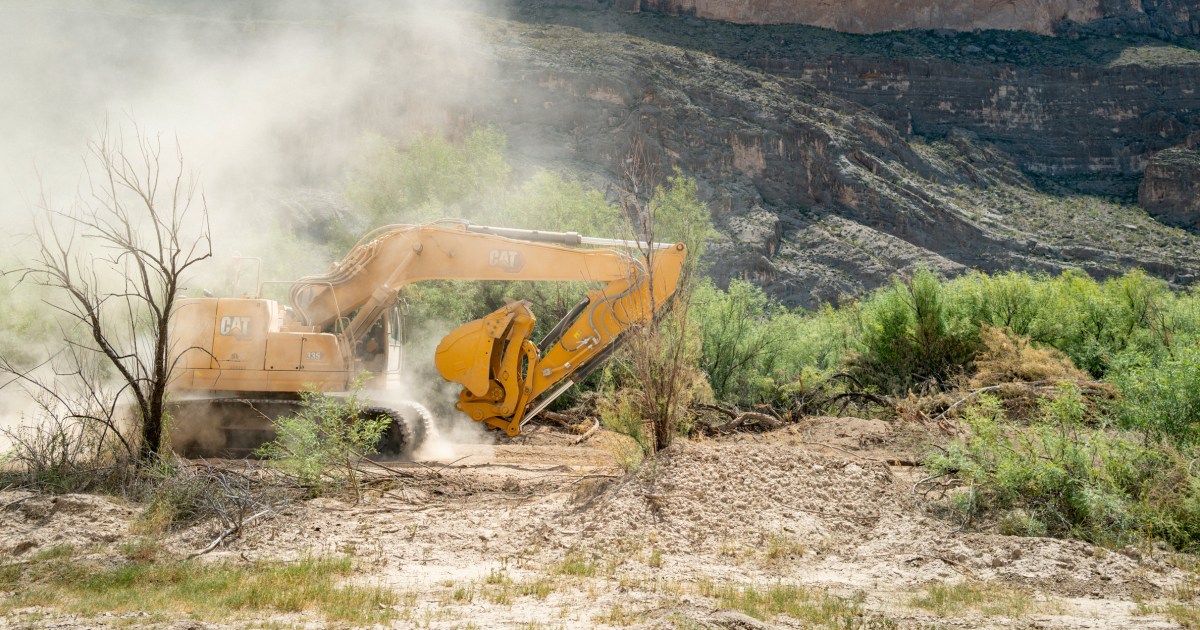
Scott said he can’t get into specific details on what the agency’s plans are for the park due to the numerous ongoing lawsuits, but he reiterated that the project won’t include tall steel walls.
He also said that the agency’s stated goal of protecting the country and knowing what’s coming in and going out is “non-negotiable.”
He said the region’s formidable natural barriers were not enough to prevent people from entering the country illegally through other more navigable points. And he expressed concern that cartels that control smuggling from Mexico into the U.S. would exploit any opening.
CBP has come under fire for immigration enforcement tactics
Scott leads an agency of 67,000 employees responsible for controlling who and what comes into the country through official border crossings like airports or seaports and stopping illegal smuggling and migration outside those official border crossing points.
The agency came under heavy scrutiny last year when its officers were sent into cities deep inside the country to help carry out Trump’s immigration crackdown alongside Immigration and Customs Enforcement.
As protests against an operation rocked Minneapolis, a Border Patrol officer and a CBP officer both fired shots in an encounter that killed a U.S. citizen, Alex Pretti. The shooting eventually prompted the Trump administration to wind down high-profile city-based crackdowns. A CBP officer who was the face of the missions, Gregory Bovino, who led a helicopter raid at a large apartment building and used chemical agents to confront demonstrators, retired earlier this year.
Scott said while CBP still helps ICE, it’s now less involved in immigration enforcement far from the country’s borders because ICE has since hired more officers to its ranks. Scott wouldn’t comment on the investigation into the Pretti killing, saying that it was being handled by the FBI and was ongoing. And when asked about Bovino’s tactics, he said the officer didn’t report to him during the operations.
Scott spoke to the AP just outside the border with Canada, where he met with border security representatives from other countries to share information about threats and trends. During his trip, he visited an operations center where he said Canadian and American law enforcement work together.
That border has far fewer threats than the U.S. border with Mexico. Scott said cartels in Mexico are increasingly sending drones into the United States to move contraband and keep tabs on Border Patrol agents. In Mexico, the cartels have been using drones to attack each other or Mexican law enforcement.
The Department of Homeland Security, which includes CBP, recently announced temporary flight restrictions targeting unauthorized drone activity in a zone extending a mile (1.6 kilometers) north of the U.S.-Mexico border as a way to counter cartels.
“We want to make sure,” Scott said, “that threat does not come into the United States.”