
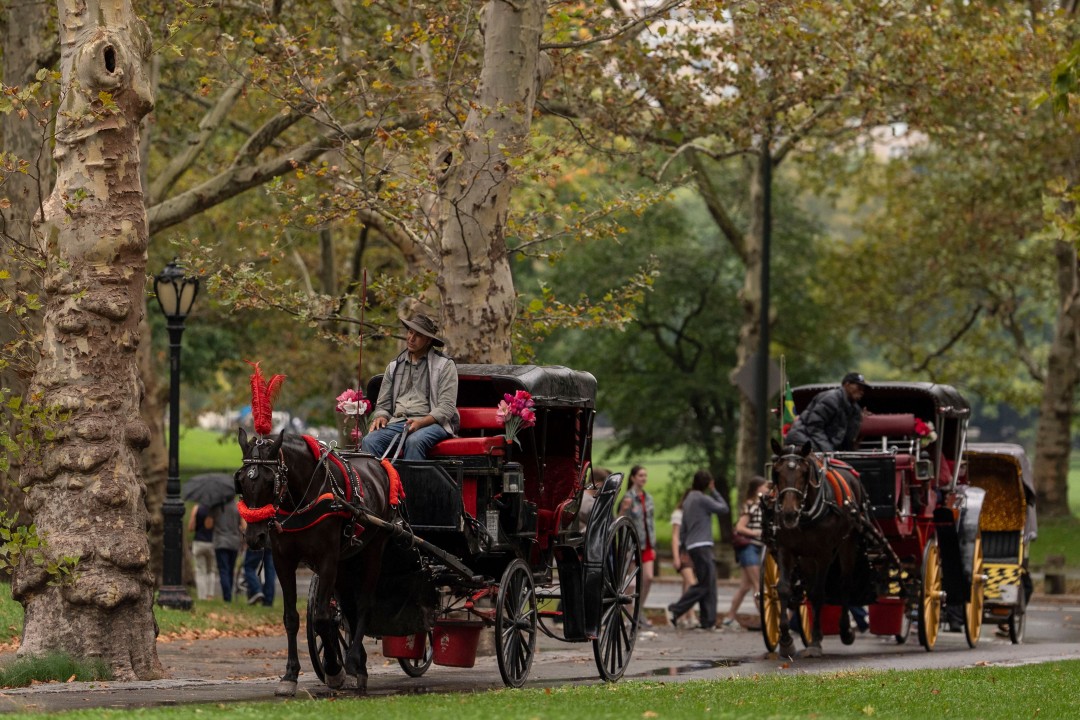
Horse-drawn carriages are on a countdown clock in New York City. The City Council on Thursday voted 40–7 to bar them from operating after June 2028, clearing the way for the end of an industry as old as Central Park itself and delivering a long-sought win to animal-rights advocates, the New York Times reports. Mayor Zohran Mamdani plans to sign the bill, though key questions remain: how to compensate medallion owners who paid up to $400,000, what work will replace jobs for roughly 150 drivers and dozens of stable workers, and where the 180 horses will go.
The Transport Workers Union Local 100 is promising an immediate court fight, calling the transition plans hollow and arguing that the bill doesn’t have any protections for workers. The push gained momentum after 18-year-old Indian tourist Romanch Mahajan died in a June carriage incident; his family has publicly pushed for the ban. “The hour of justice has finally arrived,” his uncle, Gaurav Mahajan, said at a rally Thursday.
Betsy Smith, the head of the Central Park Conservancy, also praised the bill, the AP reports. “In the modern era, carriages pose a serious—and even fatal—safety risk to Park visitors, carriage drivers, and the horses themselves,” she said. John Samuelsen, international president of the TWU, has repeatedly noted that Mahajan’s death was the first known passenger fatality since the carriage rides began, the Times reports. He has accused New York City Council Speaker Julie Menin of using a “contrived public safety crisis” to aid real estate developers eyeing land currently occupied by stables.
Another critic: President Trump, who complained that a “quintessential New York tradition” was ending for “political reasons.” “So sad to see the beloved Central Park Horse-drawn Carriage Industry ending after over a Century, based largely on one tragic accident,” he said in a Truth Social post. “When there is a car accident in the area, of which there are many, they don’t stop cars from entering the Park. So why would they stop the Carriages?”