
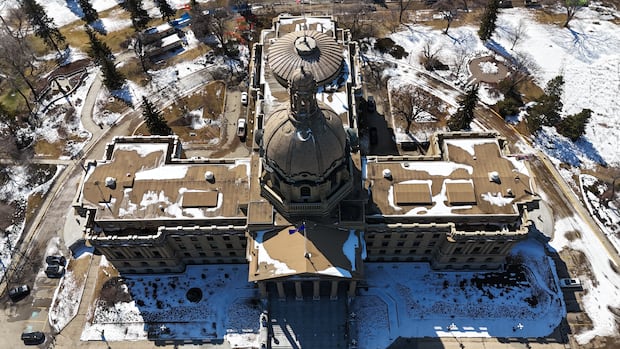
Just days after Albertans voted in the referendum, the United Conservative Party laid out its plans for legislation tied to data centres, event tickets, report cards and more as part of the upcoming fall sitting.
But what Albertans shouldn’t expect to see, the government said, are new laws tied to how they voted. As of Friday morning, the four referendum questions tied to immigration are leading, some with slim majorities.
Echoing Alberta Premier Danielle Smith’s comments earlier this week, Alberta government House Leader Joseph Schow said the government is “proceeding with caution” on immigration, which will involve work with the province’s federal counterparts.
“We expect to have some results in mapping around economic migration as early as next spring,” said Schow, who is also Alberta’s jobs, economy, trade and immigration minister.
WATCH | Feds ‘wide open’ to working with provinces on immigration: LeBlanc:
Feds ‘wide open’ to working with provinces on immigration: LeBlanc
Intergovernmental Affairs Minister Dominic LeBlanc says Albertans made an ‘important’ choice to stay inside a ‘united’ Canada. Asked about the other nine questions on the provincial referendum ballot, LeBlanc told Power & Politics that the federal government is looking to work ‘constructively’ with all provinces on having an immigration system that’s ‘orderly.’
Beyond immigration, the government previewed more than a dozen proposed pieces of legislation on Friday.
Details on the specifics of those bills are scarce at this stage, with Schow largely referring reporters with followup questions to the various ministries responsible.
The new legislation also signals the government’s priorities less than a year before the fixed provincial election date next October.
Asked by a reporter about whether that looming date influences what’s set to land in the weeks to come, Schow said the legislation is based on what the government is hearing from Albertans.
“Timing is less important … in terms of elections, as it is about how it affects Albertans,” he said.
Expected legislation
Some of what was promised on Friday includes:
A bill to ensure public-sector hiring decisions are based on “merit.”New protections for data centre development.Increased penalties for illegal dumping.Consumer protections for resale event tickets.Consumer protections for defective vehicles.New legislation tied to roadways, including the future of bike lanes.New legislation to protect Albertans from non-consensual distribution or threat of distribution of digitally-altered intimate content.
Asked about how the government intended to implement the plan for public-sector hiring, Schow deferred to the minister responsible.
In response to a request for comment, Heather Jenkins, a spokesperson for Alberta’s minister of justice, wrote that the government was seeking to ensure decisions are “based on neutrality, merit, competence, and fairness.”
“Focusing on merit and competence will support respectful workplaces and impartial and effective public institutions that attract and retain the most qualified candidates,” Jenkins wrote, promising more details once the legislation is tabled.
Earlier this year, the Alberta government kicked off a town hall tour on data centre development. Alberta is at the heart of Canada’s AI data centre boom, but polling has suggested that these facilities are unpopular in Alberta.
Last month, Janet Brown Opinion Research found in polling commissioned by CBC News that only seven per cent of respondents strongly support the development of AI data centres, while 31 per cent strongly oppose them.
WATCH | A hyperscale AI data centre boom is coming: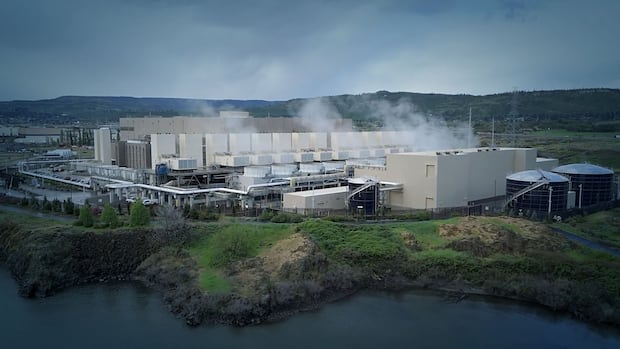
A hyperscale AI data centre boom is coming
A boom in hyperscale AI data centres in Canada is coming, promising economic opportunity and tech sovereignty, but as CBC’s Nora Young explains, there’s a growing resistance to the impact the massive, power-hungry facilities have on local communities.
Schow suggested that the data centre protections would take power bills, grid stability and water supply into account, while continuing to endeavour to attract new investment and new technologies to the province.
But he said he would not comment further on matters tied to the development of data centres themselves. CBC News has reached out to a spokesperson for Alberta’s technology minister for more detail.
The government also promised legislation that would “work to establish consistent standards for student report cards.”
A spokesperson for Education and Childcare Minister Demetrios Nicolaides said the legislation is coming forward because school boards “determine their own report card content, grading approaches, reporting frequency and formats.”
“As a result, report card practices can vary significantly across Alberta,” Garrett Koehler wrote in an email.
A spokesperson for the Alberta Teachers’ Association declined to comment, having not yet seen the regulations.
Schow added that the government plans to take action tied to lowering the cost of utility bills and to automobile insurance, which Schow described as some “final pieces” tied to the “Care-First” system planned to kick in at the start of 2027.
Nenshi says UCP focused on ‘culture war’ issues
Opposition NDP Leader Naheed Nenshi said the government’s agenda was in “shambles” in the wake of the referendum.
“You can either pivot and actually work on the things Albertans care about — the cost of living, jobs, health care, education — or you can double down on the culture war garbage,” Nenshi told reporters.
Nenshi characterized the proposal to ensure public-sector hiring decisions were based on “merit” as an effort to minimize the number of “ethnic” people and women hired for such positions.
“I would love a public service that’s based on merit … the civil service is absolutely full of patronage appointments,” Nenshi said.

Alberta NDP Leader Naheed Nenshi speaks to the media before casting his referendum vote at an advance polling station in Calgary on Oct. 13. (Jeff McIntosh/The Canadian Press)
Nenshi also suggested that some of the government’s initiatives were first raised as ideas by the Opposition.
“Capping reseller fees for tickets: that’s something that we presented in a private member’s bill that they rejected, not even six months ago,” he said.
“This is very hypocritical. They’re coming very late to the game.”
The Alberta Legislature is set to resume on Tuesday for its fall sitting.