
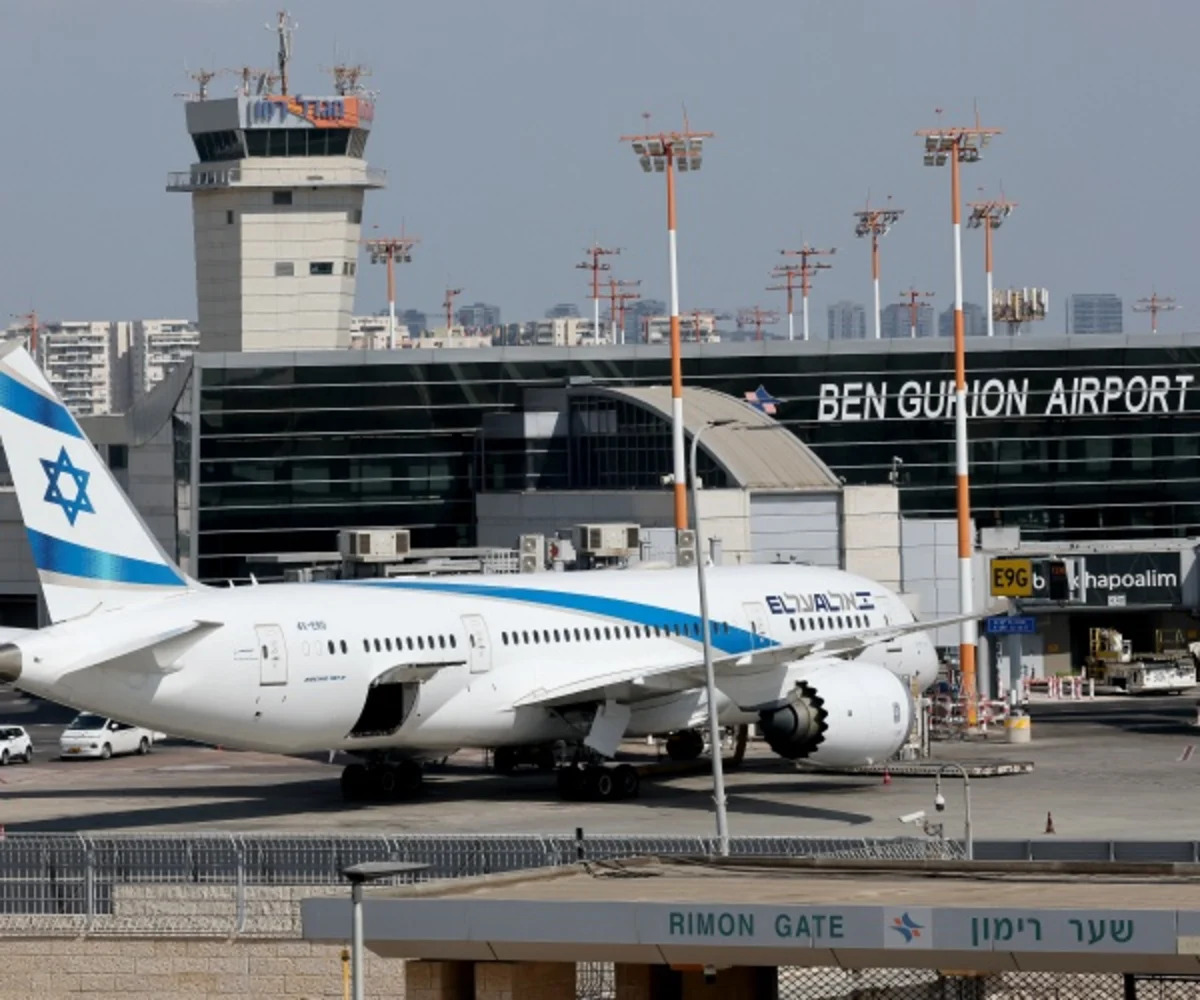

An Israeli airline El Al aircraft is parked on the tarmac at Ben-Gurion Airport near the city of Lod on October 2, 2026. (Photo by JACK GUEZ / AFP via Getty Images)
Tens of thousands of Israelis living overseas are returning home to vote in Tuesday’s parliamentary election, with many hoping to unseat Prime Minister Benjamin Netanyahu amid growing divisions over the Gaza war, national security, and military conscription.
More than 50,000 expatriates are expected to return to Israel for the Oct. 27 vote, according to an estimate from the AID Coalition’s Fly&Vote initiative. The figure is a projection, not a confirmed count of returning voters.
Israel generally does not permit citizens living abroad to vote by absentee ballot, requiring most expatriates to return to the country to participate. Exceptions include diplomats and certain other official representatives.
The mobilization comes as Netanyahu faces a challenge from former military chief Gadi Eisenkot, whose centrist Yashar party has led Likud in recent polling. A Zman Yisrael survey published Thursday projected 23 Knesset seats for Yashar and 21 for Likud, with each of the Jewish-led pro-Netanyahu and opposition blocs projected to win 51 seats, short of the 61 needed for a majority.
For some Israelis, the election is important enough to justify thousands of dollars in travel expenses.
Adam Pines, 47, who lives in Los Angeles, spent $2,900 on airfare and nearly $3,500 on accommodations to return to Tel Aviv, according to The Telegraph.
“I feel that Israel has lost its moral compass,” Pines told the British newspaper.
Pines, who had never previously flown home specifically to vote, blamed Netanyahu for failing to prevent the Oct. 7, 2023, Hamas attacks and expressed concern about Israel’s international reputation.
“Bibi demonstrated a failure in safeguarding Israel which led to the atrocities of Oct 7. That is a massive unprecedented failure of leadership, especially in light of all the reports that emerged about the attempts to alert Israel about the attack,” he said.
Netanyahu has rejected allegations that he ignored warnings of the impending attack.
The election is Israel’s first since the assault by Hamas terrorists and the subsequent wars that have reshaped the country’s political landscape. Disputes over the government’s security policies, the conduct of the Gaza war, and exemptions from military service for ultra-Orthodox men have become central campaign issues.
The return of expatriate voters has also sparked a legal dispute.
Netanyahu’s Likud party challenged the Fly&Vote initiative, arguing that discounted airfare and travel arrangements could constitute improper benefits intended to influence voters.
The initiative, operated by the U.S.-based AID Coalition, maintained that it was nonpartisan and did not subsidize tickets.
The case ended in a settlement this month. Organizers agreed not to subsidize airfare or arrange additional flights beyond six already advertised. Likud subsequently withdrew its petition.
Among those returning is Orit Eyal-Fibeesh, 55, who moved to Britain 24 years ago. She traveled to Israel with her husband and son, paying 1,000 British pounds per person for airfare.
Eyal-Fibeesh, a supporter of the Democrats party led by Yair Golan, also planned to participate in campaign activities.
“It would be safe to say that all of my friends … are flying to vote because we believe we have one last chance to save Israel from a really disastrous government,” she told The Telegraph.
Yuval Yashiv, a 62-year-old medical technology director who has lived in Britain for 34 years, is also returning after decades of abstaining from Israeli elections.
Yashiv said he previously believed it was inappropriate to influence Israeli politics while living overseas but now considers participation an obligation.
“It’s really critical, and we feel in a way, an obligation to our family and friends in Israel to do that, and for Jews and Israelis here, Jews around the world,” he told The Telegraph.
Yossi Mekelberg, an Israeli politics expert at Chatham House, told The Telegraph that the effort to bring expatriates home was unlike anything he had previously witnessed.
“It’s extremely unusual. I’ve never seen something like this, and I can tell you, it has never happened in the history of the country,” he said.
Mekelberg said Israelis traveling home for previous elections were more likely to be ultra-Orthodox voters whose parties traditionally supported Netanyahu.
“This time, you hear more and more of those who came because they support the opposition,” he said.
© 2026 Newsmax. All rights reserved.