
The US military has drawn up options for renewed attacks on Iran, according to the Washington-based website The Hill, raising the prospect of another round of major fighting in a war approaching its eighth month.
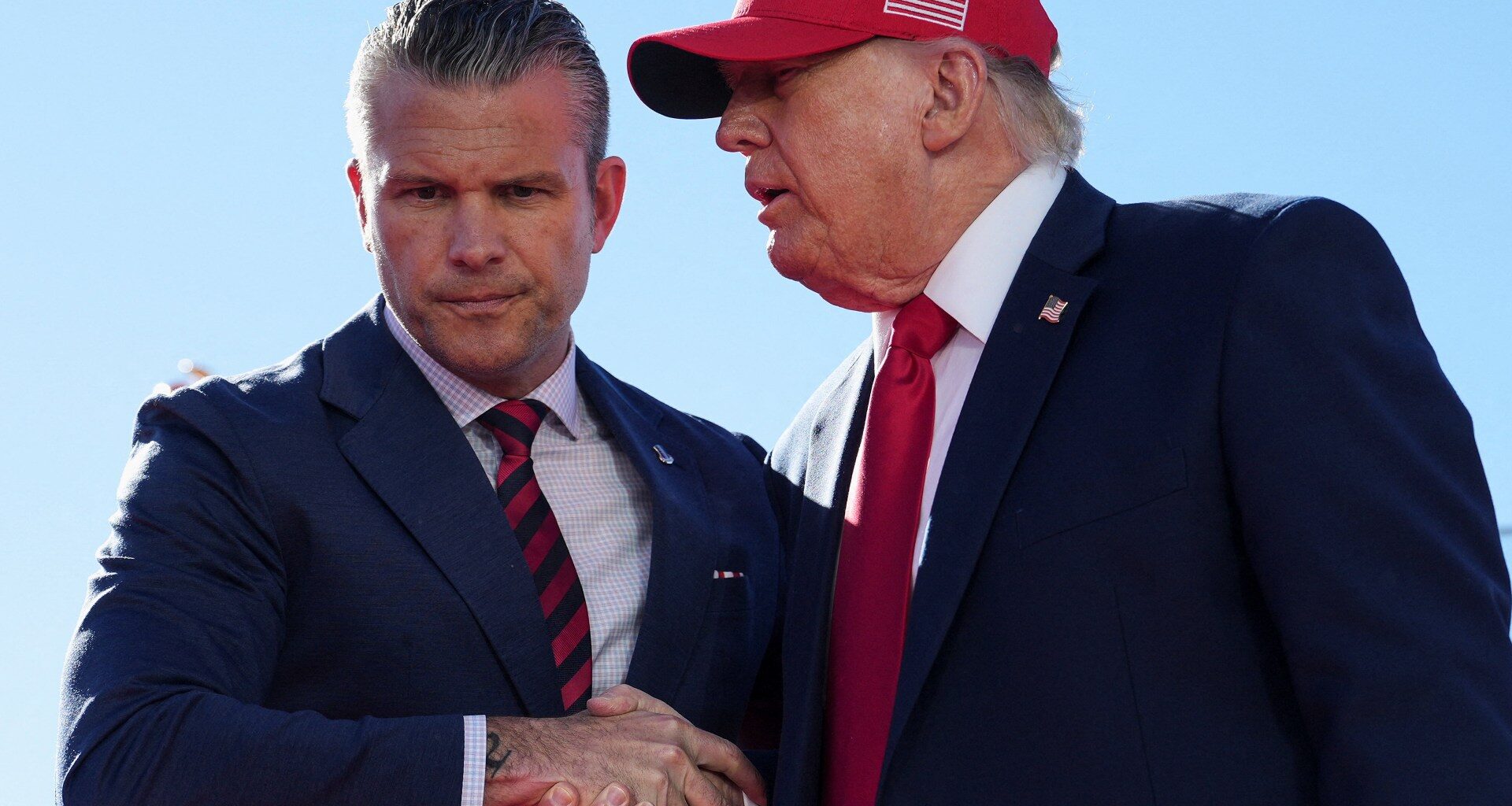
Central Command (CENTCOM), which oversees US forces in the Middle East, has plans ready for follow-up strikes if authorised by the White House, the outlet reported. It also said military planners had prepared several options for Defense Secretary Pete Hegseth.
Recommended Stories list of 4 itemsend of list
The report focused on possible attacks after the November 3 US midterm elections. But President Donald Trump suggested on Saturday that the United States could strike as soon as “tomorrow”, while also holding out the possibility of a “big, beautiful” agreement with Tehran.
Iranian President Masoud Pezeshkian, meanwhile, accused Washington of derailing negotiations but said efforts to reach an agreement should continue. With both sides warning of further attacks, could the conflict tip back into full-scale war? Here is what we know.
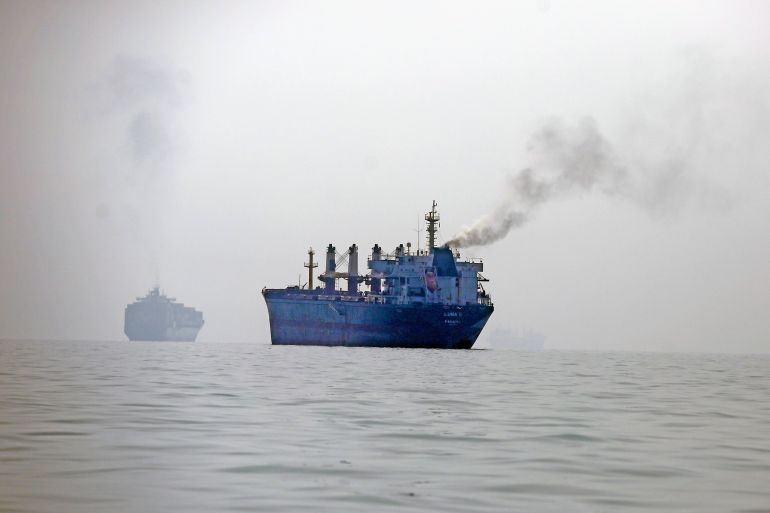 Oil tankers have increasingly come under attack from Iran. October has become the worst month for attacks on ships near the Strait of Hormuz since the US-Israel war was launched in February [File: Fatemeh Bahrami/Anadolu Agency]What are the plans?
The latest reporting suggests military preparations are advancing, although it remains unclear which options Trump might approve or when. Earlier this month, Axios reported that the Pentagon had instructed CENTCOM to complete preparations for a possible resumption of major combat operations. Its sources said a renewed campaign could target Iranian energy facilities, infrastructure and nuclear sites.
Those preparations do not amount to an order to attack. The decision ultimately rests with Trump, whose public statements continue to leave room for both military action and negotiations.
Meanwhile, on Wednesday, The New York Times reported that the US and Israel have drawn up joint plans for an attack on Iran after the midterm elections. The reports come alongside US warnings about alleged Iranian threats to American personnel overseas. An intelligence memo sent on Friday by Director of National Intelligence Jay Clayton to Secretary of State Marco Rubio said Iran had “substantially increased efforts to target US personnel”, with lethal plots reaching “advanced stages” in the Middle East and elsewhere.
The Department of State has ordered staffing reductions at several regional embassies amid the warnings. The publicly reported memo did not identify specific targets or establish when any alleged attacks might occur.
Trump has added to the uncertainty. At a rally on Friday, he said Washington “may do another little Epic Fury”, referring to the codename of the US-Israeli military operation against Iran that began on February 28. On Saturday, he declined to disclose the timing of any possible attack while suggesting one could come as early as Sunday.
Julie Norman, associate fellow at Chatham House, told Al Jazeera the preparations served both as short-term posturing and a possible longer-term military objective next month. “With Trump, I think he is always keeping options on the table, but I think this particular drawing up of plans is an immediate posturing deterrent, but also a very real option after the midterms,” she said.
It comes as the US is deploying a third aircraft carrier strike group, the USS Theodore Roosevelt, along with roughly 10,000 additional soldiers and the 13th Marine Expeditionary Unit to the Middle East by the end of November.
How has Iran responded?
Tehran has combined calls for further negotiations with warnings that renewed US attacks would bring a wider response. “We were having negotiations, the cowards [Americans] messed everything up,” Pezeshkian said in remarks broadcast on Saturday, before adding that efforts to conclude the agreement should continue.
Iran’s parliament speaker and chief negotiator Mohammad Bagher Ghalibaf will also miss the 12th BRICS Parliamentary Forum in New Delhi, according to the Iranian Embassy in India. The embassy cited “unforeseen circumstances” without elaborating.
On Sunday, Iran’s army also said it had shot down a US-developed LUCAS drone over the southern port city of Bandar Abbas, according to the semi-official Tasnim news agency.
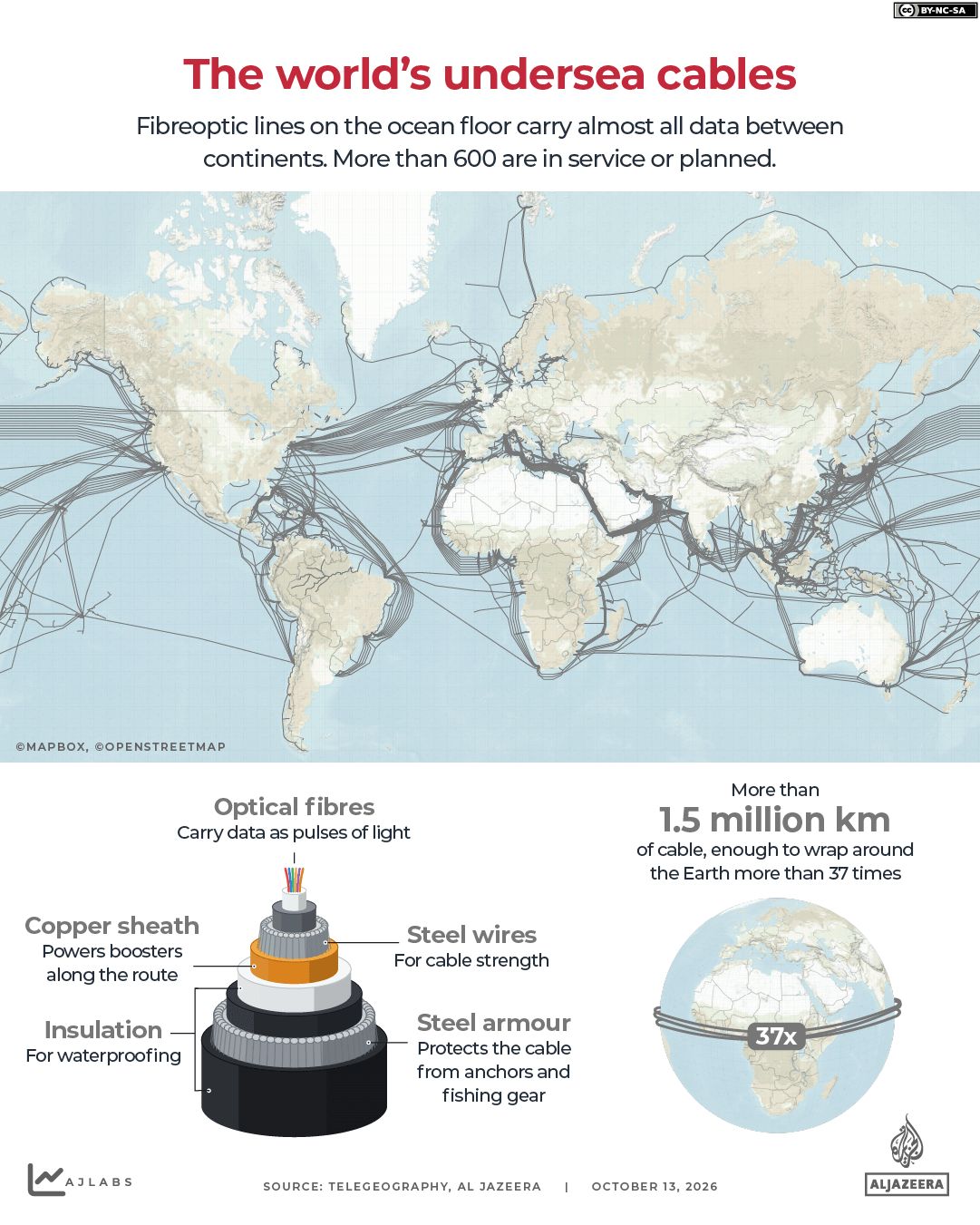
The Reuters news agency has reported, quoting Iranian security officials, that Tehran has drawn up plans to target undersea communications cables in the Gulf in the event of a resumption of US and Israeli attacks.
 (Al Jazeera)
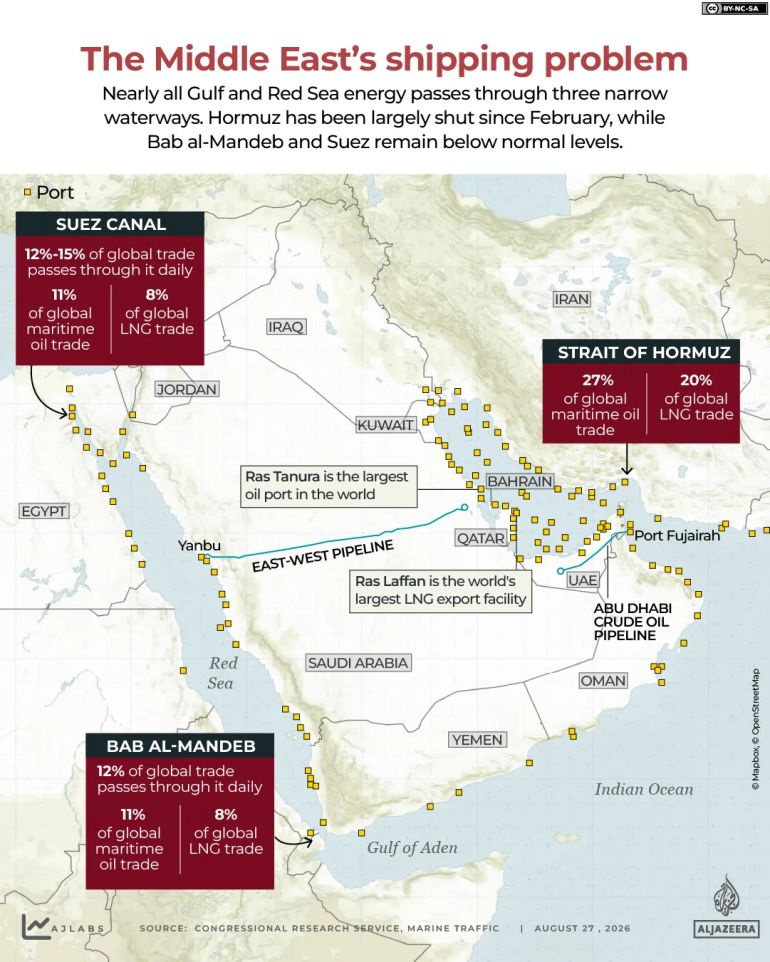
The incident followed Iranian claims that seven oil tankers had caught fire or sustained damage in and around the Strait of Hormuz earlier this week, while on Wednesday, Iran also announced what it describes as a shift towards an “offensive” military doctrine, warning that countries hosting bases used in US attacks could become targets.
“Our defence doctrine was previously defensive; we used to say that if a country attacks us, we will respond. Now we say that if a country attacks us, we will both respond and launch an offensive,” Islamic Revolutionary Guard Corps spokesman Hossein Mohebi said.
The warning raises the prospect of a confrontation spreading further across the region, with energy infrastructure and countries aligned with Washington potentially exposed. “Iran is also drawing up its own target lists to include energy infrastructure and US-aligned states,” Norman said.
“So I would say both parties are certainly very prepared for another round of escalation and projecting preparedness to each other.”
“In the meantime, there is a very high risk of miscalculation by either side, a very high risk of rapid escalation.”
October has become the worst month for attacks on ships since the war began in February, with more than 120 attacks reported so far.
Would another attack serve Trump’s interests?
The timing is politically sensitive, with Trump facing pressure to avoid renewed escalation before the US midterm elections, while Israeli Prime Minister Benjamin Netanyahu has been pushing for an attack as his support dwindles in the polls ahead of Tuesday’s election.
It comes after Netanyahu said overthrowing Iran’s government remains Israel’s “primary objective”.
Mohamad Elmasry, a professor at the Doha Institute for Graduate Studies in Qatar, said recent developments pointed towards renewed fighting rather than a diplomatic breakthrough. “There is a lot of signalling, a lot of posturing suggesting that we are headed for another round of fighting,” he told Al Jazeera.
He pointed to Hegseth’s recent visit to Israel, and Washington’s reported withdrawal of personnel from regional diplomatic and military sites. “All of that would suggest that the US and Israel are planning [another round of attacks] on Iran, either soon or very soon,” he said.
“One of the fears is this next round of fighting could actually be more dangerous, more catastrophic than the previous round.”
Norman added that while the US president may be eyeing up a strike on Iran after the midterms, “the big question for Trump from military advisers is – what would a further round of escalation bring that the other rounds didn’t?”
“What would these strategies do to force Iran to the negotiating table? And I don’t think there has been a clear answer to that.”
 [Al Jazeera]