
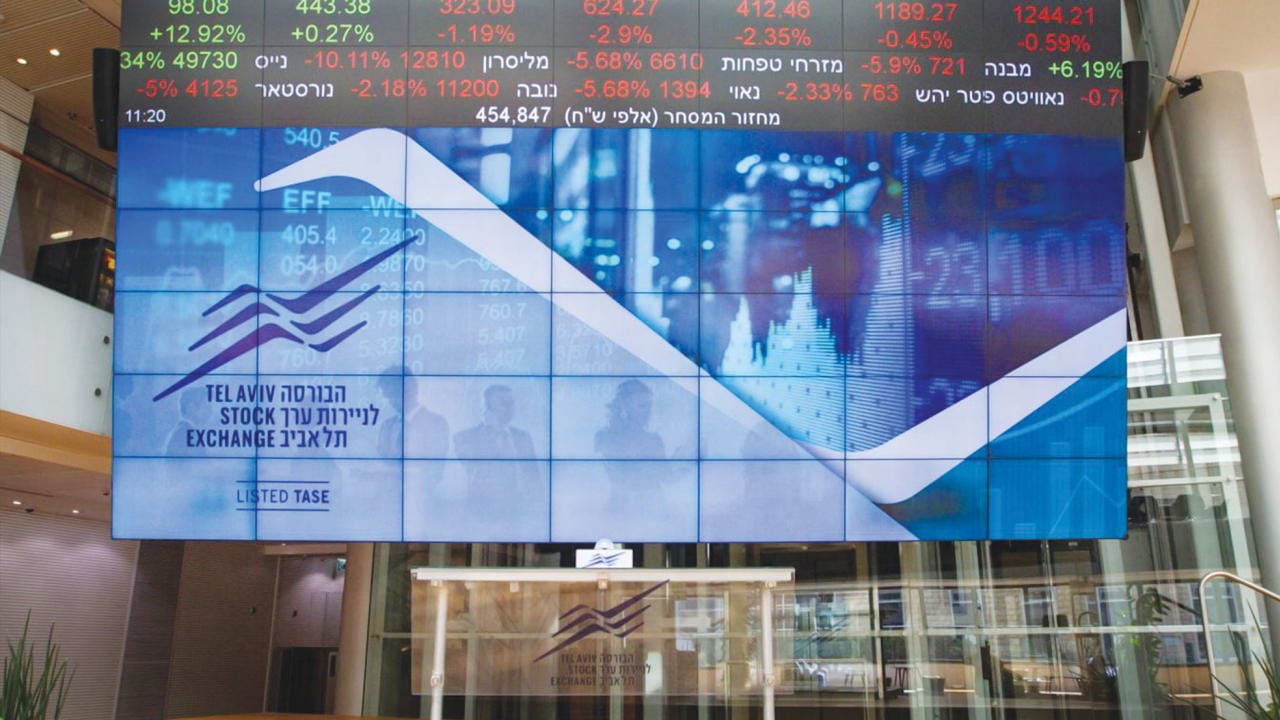
Israel’s markets have soared despite three years of war and political turmoil, but some investors see further upside if the opposition defeats Prime Minister Benjamin Netanyahu in Tuesday’s election, potentially easing regional tensions and political risk.
Opinion polls point to a tight contest, with neither Netanyahu’s ruling Likud bloc nor an opposition alliance centered on former military chief Gadi Eisenkot expected to secure the 61 seats in the 120-seat Knesset needed to govern.
That raises the prospect of lengthy coalition negotiations or even another election. Since the October 7 Hamas attacks in 2023, the Tel Aviv stock market has soared 130%, far outpacing Wall Street’s 80% gain, while the shekel has climbed 25%, one of the world’s strongest currency performances.
Analysts attribute some of that strength to Israel’s tech sector and the global AI boom, while defense spending, which has nearly doubled to around 8% of GDP, has also provided a boost.
With both Netanyahu and Eisenkot vowing to maintain pressure on Hamas and Iran, markets are focused on their broader policy differences. JPMorgan estimates the shekel could swing as much as 3% depending on the result.
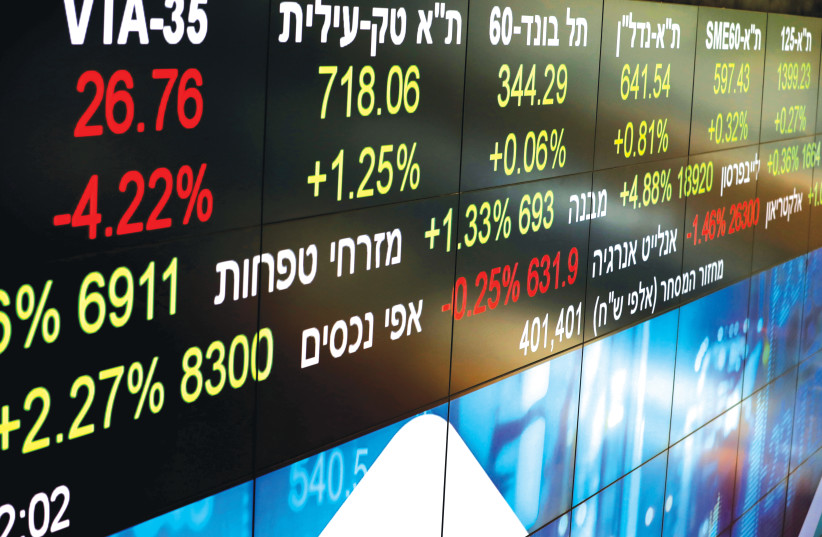 MARKET DATA at the Tel Aviv Stock Exchange. (credit: AMIR COHEN/REUTERS)Opposition victory could improve Israeli economic position
An opposition victory that improves relations with Western allies and halts a judicial overhaul that sparked mass protests in 2023 could strengthen the currency, JPMorgan said, while another Netanyahu-led government could weaken it.
Billionaire investor Bill Ackman, while stopping short of backing a candidate, said a government without far-right ministers Itamar Ben-Gvir and Bezalel Smotrich would signal that Israel was “turning a new page,” potentially helping rebuild its international credibility and expand the Abraham Accords with its neighbors.
IBI Investment House also expects an opposition victory to lift the markets. “From a capital markets perspective, this would likely be reflected in a decline in Israel’s risk premium, appreciation pressure on the shekel, and a positive reaction in the local market,” IBI’s Chief Economist Rafi Gozlan said.
“The most significant issue is what the result will mean for the region,” said Equity Bank’s chief economic adviser Charlie Robertson. “If Netanyahu is reelected, it might increase the chances of further escalation with Iran, whereas a defeat might be seen as lessening the tensions.”
But the prospect of gains under an opposition government does not mean investors expect Israeli assets to suffer if Netanyahu remains in power. Stocks and bonds have proved remarkably resilient through years of war and political upheaval, and some investors remain confident in the economy regardless of the election outcome.
Union Investment’s Sergey Dergachev has been buying Israeli bonds ahead of the election, betting the economy and companies he favors will remain fundamentally strong. “We are very constructive on Israeli credits going into the election,” Dergachev said, adding that bonds were less prone to major swings and the region’s intertwined conflicts should eventually ease.
Despite the rally, foreign investors remain cautious. Copley Fund Research data show the share of global funds holding Israeli equities is at a record low, having fallen sharply since 2023.
TS Lombard’s Christopher Granville cited central bank estimates that the war had cost the economy more than $55 billion by last year, equivalent to 8.6% in cumulative lost GDP growth.
Public debt, budget deficit high amid Iran war
Israel’s fiscal position is another focus. Public debt has risen to nearly 70% of GDP, about 10 percentage points higher than in 2022, while the budget deficit is expected to remain around 4.5% of GDP, up from less than 2% before the conflict.
Central bank head Amir Yaron stressed last week the need to “preserve adequate fiscal policy space” given the Iran war.
Like stocks, Israeli government bonds have rallied, returning about 30% over the last two years, more than double the main emerging market indexes.
The main risk for investors is an inconclusive result that prolongs political uncertainty, delaying budgets, reforms and investment, some investors believe.
That uncertainty can produce sharp short-term swings. Tel Aviv Stock Exchange research covering the last 10 elections found volatility in leading share indexes rose by as much as 45% in the weeks after voting compared with a typical week. But initial losses were typically recovered within a month, with the indexes posting an average gain of about 1.7%.
Over a longer horizon, the TA-125 returned an average 16.4% in the year following elections, compared with a long-term annual average of 11.5%, the research found. Political deadlock often weighed on stocks before voting, but the effects typically faded within months, said Nissan Avraham, an analyst at the Tel Aviv Stock Exchange’s research unit.
Israeli businesses continue thriving despite political, regional upheaval
That record supports the view that elections matter less for Israeli companies than many investors assume.
Lior Yochpaz, chief investment officer at insurance company Menora Mivtachim, said businesses have continued to thrive despite years of political upheaval, judicial overhaul proposals, and regional conflict, helped by a relatively business-friendly environment.
For some investors, however, the more attractive election trade lies outside Israel. TT International’s Jean-Charles Sambor said an opposition victory or weakened Netanyahu government could ease regional tensions and benefit Lebanese bonds.
“The best way to play it for us is through other Middle East countries, and for us Lebanon is a good proxy,” Sambor said.