
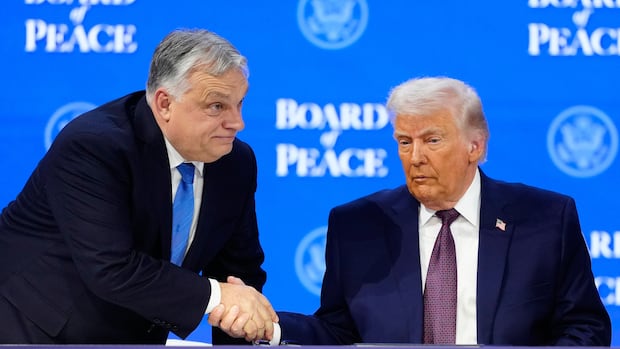
Despite U.S. officials repeatedly warning Canada not to get involved in the upcoming U.S. midterms, President Donald Trump has his own track record of weighing in on foreign elections.
Trump has endorsed about half a dozen candidates across the globe since he returned to the White House in early 2025 and even boasted earlier this year that he has “a very good record of endorsing candidates in the U.S.,” before touting a number of foreign candidates he backed.
“I’m not supposed to be endorsing people,” Trump said during the February inaugural meeting of his Board of Peace. “As long as it works, it’s OK with me.”
Since early 2025, Trump has backed presidential or prime ministerial candidates in Poland, Honduras, Colombia and Japan.
Most recently, he voiced support for Israeli Prime Minister Benjamin Netanyahu, who is facing an election on Tuesday.
The U.S. president also put his support behind former Hungarian prime minister Viktor Orbán’s failed re-election bid, which included Vice-President JD Vance appearing at a rally in Budapest.
Trump also weighed in to last year’s midterms in Argentina, suggesting that a financial support package would hinge on a good result for President Javier Milei’s party.
WATCH | The Power Panel on U.S. meddling claims: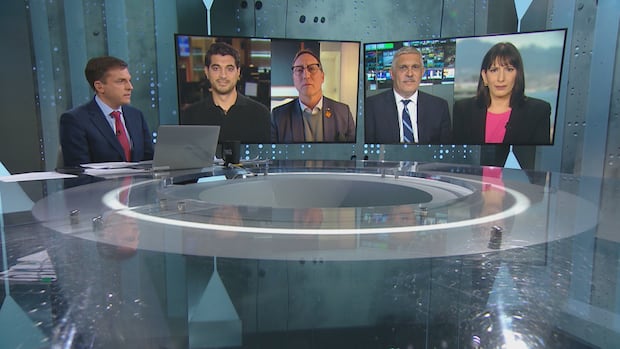
U.S. election meddling fears just ‘distraction politics’: ex-AG
Global Affairs Canada instructed Canadian diplomats in the U.S. on Tuesday to avoid meeting with, attending events with or appearing in photos or promotional materials alongside U.S. midterm election candidates. The memo came after U.S. President Donald Trump accused Canadian politicians of interfering in American elections. The Power Panel stops by Power & Politics to unpack the election interference concerns.
Daniel Drezner, a professor of international politics at Tufts University in Massachusetts, said U.S. officials suggesting Canada is interfering in the midterms is a situation of the “pot calling the kettle black,” given Trump’s track record.
“The truth is that this administration has had a long track record of intervening directly into the elections of official allies,” he told CBC News in an interview.
The U.S. Embassy in Ottawa released a “fact sheet” on Wednesday pointing to instances that could amount to “potential interference in U.S. elections” after Prime Minister Mark Carney and other Canadian politicians dismissed previous suggestions that Canadian officials are trying to influence the vote outcome on Nov. 3.
WATCH | ‘No merit’ to U.S. claims, Carney says: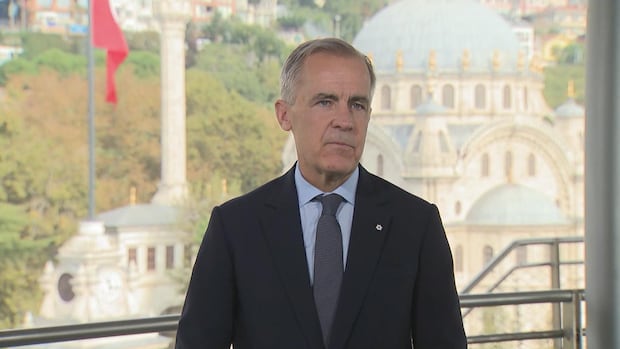
‘No merit’ to suggestion Canadian politicians interfering in U.S. election, Carney says
Prime Minister Mark Carney, speaking from Istanbul on Friday, says there are deep diplomatic ties between Canada and the U.S., and engagement happens no matter the timing, including during elections. ‘We have no intention to interfere’ with their democratic processes, Carney said.
The embassy’s release pointed to Liberal MP Anthony Housefather canvassing for a Florida Democrat, whom he’s said is a friend, during a primary vote earlier this year and comments made by Industry Minister Mélanie Joly regarding Canada’s counter-tariff strategy, some going back to March 2025 when she was in charge of foreign affairs.
The embassy’s list also included the Ontario government’s now infamous Ronald Reagan ad that ran in the U.S. last year and a federal government billboard campaign from early 2025.
In an exclusive interview with Rosemary Barton Live airing on Sunday, former U.S. ambassador to Canada James Blanchard said the administration has “no credibility” given Trump’s list of public endorsements.
“If this accusation had come from the Reagan administration or the Bush administration or the Obama administration, the Clinton administration, I would take it seriously,” Blanchard said. “But I can’t from this current administration.”
Embassy declines to comment
CBC News reached out to the U.S. Embassy in Ottawa and pointed out Trump’s track record of endorsing foreign candidates. The embassy declined to comment when asked if a Canadian official offering a similar endorsement to a midterm candidate would amount to potential election interference.
Trump also jumped into the Canadian political fray during the 2025 campaign, writing on social media that he’d “rather deal with a liberal than a conservative.”
The current president is not the only notable U.S. politician to talk Canadian electoral politics during a campaign. Former president Barack Obama publicly endorsed former prime minister Justin Trudeau in 2019 and 2021, albeit after he had left the White House. Sen. Bernie Sanders also backed former NDP leader Jagmeet Singh in the 2021 campaign.
Drezner said those examples are different from Trump’s endorsements because neither were a part of the executive branch at the time. He pointed out that typically it’s the norm for heads of states or heads of government not to weigh in on foreign elections.
“The idea was that surely you can do business with whoever wins and you might have to do business with whichever party wins. So therefore you shouldn’t be seen as campaigning overtly for one side or another,” he said.
Trump officials also appeared to take an interest in the recent Alberta referendum. U.S. Treasury Secretary Scott Bessent said in January that Alberta would make a “natural partner” for the U.S. while discussing the possibility of a separation referendum.
WATCH | Canadian diplomats told to be cautious during midterms: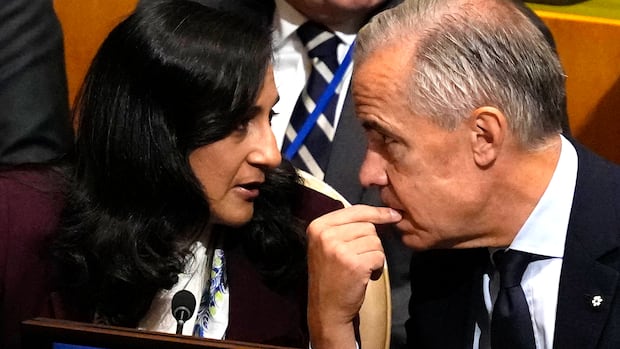
Canadian diplomats told to avoid appearances with U.S. midterm candidates
Global Affairs Canada has advised Canadian diplomats in the U.S. to be careful on social media and to avoid appearances with midterm candidates as American warnings about election interference ramp up.
The Globe and Mail reported recently that Republican political operatives were on the ground in Alberta earlier this year to help the separatist campaign. CBC News previously reported that Alberta separatists also attended meetings in U.S. State Department offices in Washington, D.C., last year.
The U.S. Embassy’s list came after Ambassador Pete Hoekstra and Trump adviser Peter Navarro warned against Canada getting involved in the midterms.
Carney and other government officials have pushed back on the suggestion that Canada is looking to interfere.
“There is no merit to these claims, so I’ll call it out that way,” Carney told reporters during a news conference in Istanbul on Friday.
“I’m disappointed that their envoy sees that as his role, to make these suggestions,” the prime minister said of Hoekstra in particular.
WATCH | Joly denies U.S. election interference claims:
Joly denies U.S. election interference claims by Trump administration
Industry Minister Mélanie Joly told reporters on Thursday that she regularly meets with both Democratic and Republican politicians, after the Trump administration accused her of planning to ‘influence American politics.’
While Drezner said Housefather’s canvassing for a candidate might be “slightly unusual,” other instances the embassy mentioned — like Joly and Bernadette Jordan, Canada’s consul general in Boston, meeting with American politicians — amounts to “garden variety diplomacy.”
Joly herself has pushed back against the accusations saying she has met with Republicans and Democrats in recent months.
The trade war has become a pressure point on Republican candidates in border states like Michigan and Maine.
Republican Sen. Susan Collins, who has represented Maine since 1997 and has tried to distance herself from Trump’s tariffs, said Friday that she “secured” some exemptions to those levies.
“I will continue working directly with administration officials to seek additional relief and encourage a broader trade agreement with Canada, our neighbour, ally and largest trading partner,” she said in a social media post.
WATCH | Trade war a major issue in midterms:
Canada-U.S. trade war emerges as key issue ahead of U.S. midterms
The Canada-U.S. trade war is solidifying itself as a major ballot-box issue in pivotal states ahead of the U.S. midterm elections.
The Republican candidate for Michigan’s open Senate seat released a 30-second ad criticizing tariffs earlier this month.
“Here in Michigan we know that Canada is not our enemy. We need to end this tariff war now,” Mike Rogers says in the ad.
Drezner said he could “easily see” a situation where the Trump administration blames bad midterm results on Canada.
“They’re going to blame anyone and everyone. That is the modus operandi of this White House,” he said.
When asked on Friday if the Trump administration might blame Canada for a poor midterm result and slap more tariffs on Canadian exports, the prime minister said he doesn’t “see that coming to pass.”