
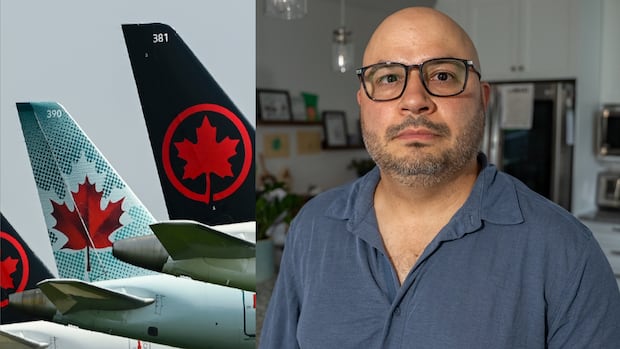
Air Canada denied Juan Rojas compensation for a cancelled flight after it swapped the aircraft assigned to his flight with one that needed safety-related maintenance.
The Ottawa man challenged the airline through the Canadian Transportation Agency and won — and the evidence raises questions about the information Air Canada provided to justify denying him compensation.
“I felt like they were trying to cheat the system,” Rojas told Go Public.
Under Canada’s Air Passenger Protection Regulations, passengers can be entitled to up to $1,000 for delayed flights, but only if the delay is within the airline’s control and not required for safety.
Rojas’s case is not the only one raising questions about airlines’ use of the safety exemption.
Got a story you want investigated? Contact Erica and the Go Public team gopublic@cbc.ca
Go Public has uncovered three other instances in which Air Canada told passengers their flights were cancelled because of safety-related maintenance while flight records show the aircraft they were scheduled to fly on were subsequently used on other routes. In all three cases, Air Canada maintains it does not owe compensation.
What is the maintenance ‘loophole’?
The maintenance “loophole” is a simple way for airlines to potentially deny compensation for countless passengers every year, said Montreal lawyer Sylvie De Bellefeuille.
“It’s a huge duffel bag in which they can put anything and everything,” said De Bellefeuille, director of legal services for Option consommateurs, a Montreal non-profit that advocates for consumer rights.
“Most passengers do not have enough information to counter whatever is said by the airline.”

Lawyer Sylvie De Bellefeuille says Ottawa should close a maintenance ‘loophole’ airlines use to deny paying compensation for delayed or cancelled flights. (Josianne Letourneau/CBC)
Air Canada declined Go Public’s request for an interview.
But in a written statement, it acknowledged that in all four cases, it made a commercial decision: reassigning a functioning aircraft to another route where the scheduled plane required safety-related maintenance, leaving passengers on the original route without their scheduled flight.
Air Canada argued that an aircraft’s schedule is fluid, and it must be able to make “operational adjustments” to “minimize the overall impact on passengers.” The airline said it was within its rights to deny compensation.
Gabor Lukacs, founder of Air Passenger Rights, strongly disputes that interpretation. He points to a 2022 CTA decision, which said mechanical issues must be “a direct cause” of a cancelled flight and cannot be considered a “knock-on effect.”
“I am finding it stunning that Air Canada continues to pretend as if the law has not been settled,” said Lukacs.
Air Canada ‘misrepresents’ info to federal regulator
When Rojas’s September 2022 flight to Bogotá from Montreal was cancelled, Air Canada denied his request for compensation, citing safety-related maintenance.
When Rojas challenged the airline before the Canadian Transportation Agency, Air Canada submitted documents claiming a catering truck had struck his plane, damaging it.
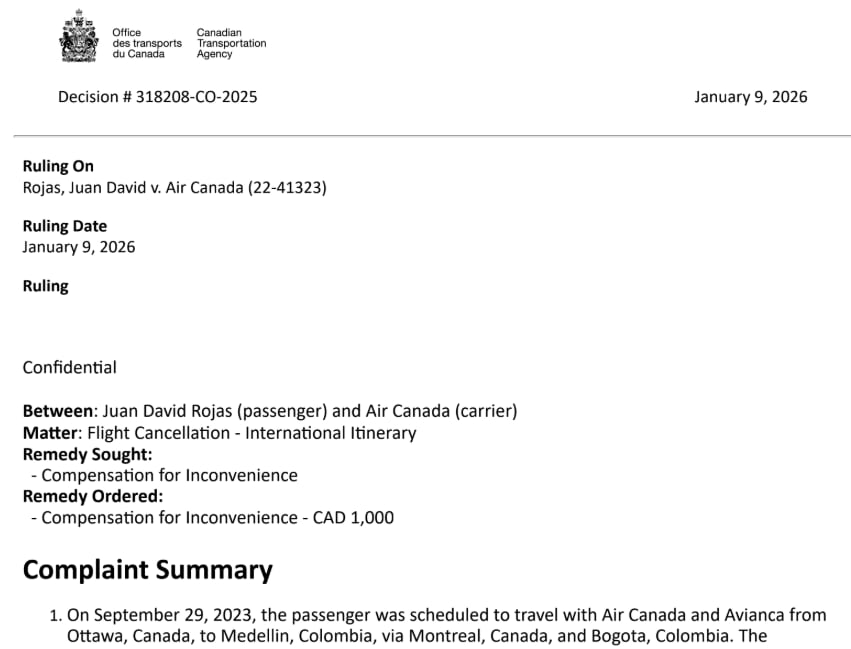
A complaints resolution officer with the CTA found that Air Canada’s claim it cancelled a flight due to safety issues was unfounded and ordered the airline to pay $1,000 in compensation. (CBC)
It wasn’t until a friend suggested he check the public Civil Aviation Daily Reporting System, that he realized the Air Canada plane struck by a catering truck was not the same one assigned to Rojas’s cancelled flight.
In other words, the incident Air Canada cited to justify denying Rojas compensation involved a different aircraft.
It’s “outrageous,” said De Bellefeuille, the lawyer.
“They were clearly misrepresenting the information,” said Rojas, who submitted his discovery to the CTA.
Air Canada told Go Public Rojas’s aircraft was moved to cover for the one that had been damaged.
This past January, a complaint resolution officer ruled in the case, ordering Air Canada to pay Rojas $1,000 for the “inconvenience.”
“The decision to swap aircraft to avoid or minimize delays for one group of passengers at the expense of another is a commercial decision,” the officer wrote. The airline could make that decision, per the ruling, but it was required to compensate affected passengers.
‘A real black mark on Air Canada’
Michael Bociurkiw was flying from Bangkok to Vancouver last February when he received an email from Air Canada mid-flight. His connecting flight from Vancouver to Newark had been cancelled because of safety-related maintenance, the airline said.
But the plane with supposed safety concerns had the exact registration number of the very aircraft Bociurkiw was seated on.
“I wasn’t too concerned about a safety issue,” said Bociurkiw. “I was more concerned about what the hell is going on? And why is Air Canada giving me this story?”
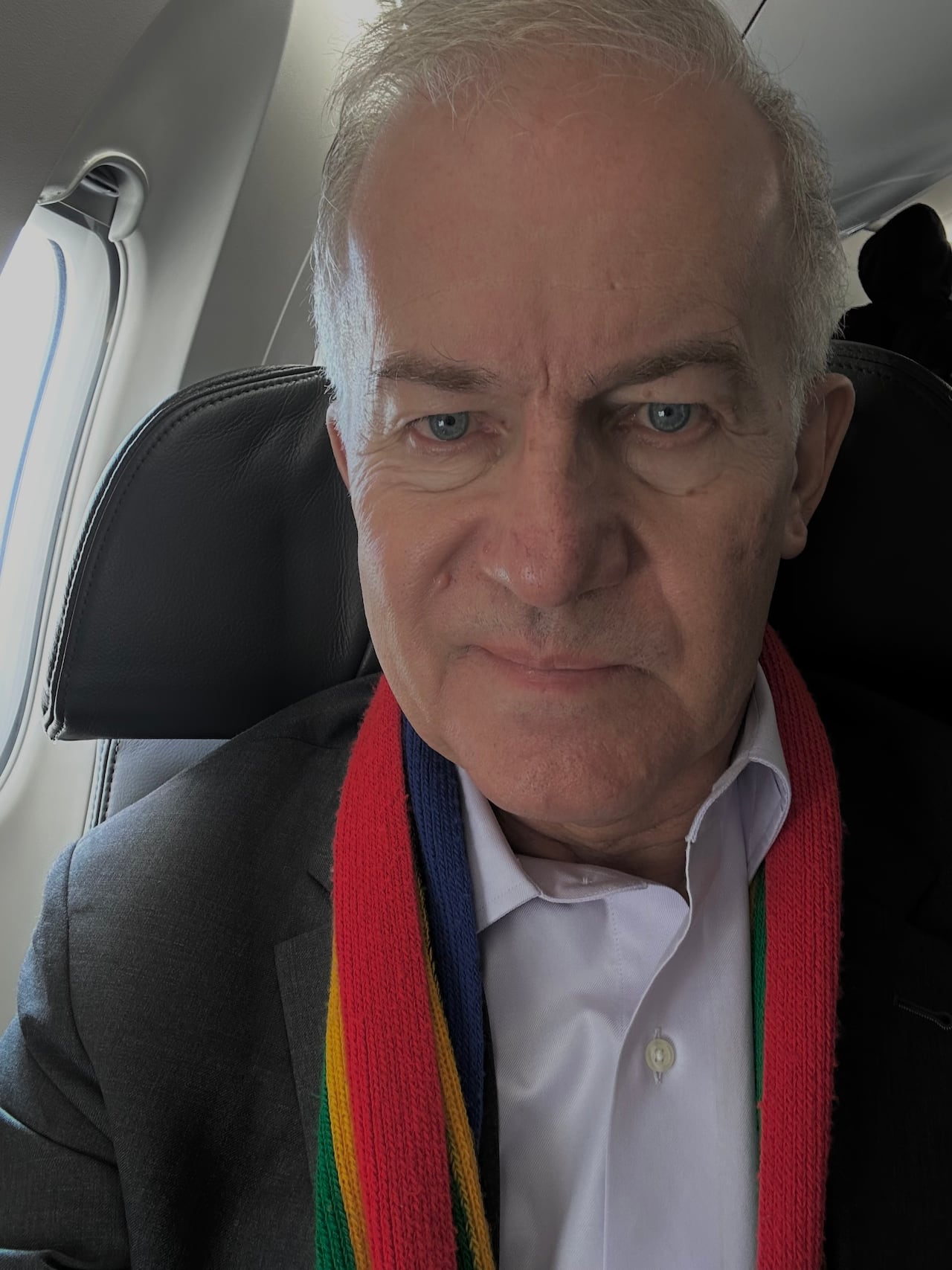
Michael Bociurkiw had his flight cancelled for safety-related maintenance. He found out the plane assigned to his flight was perfectly fine, but the airline needed it for another flight. (Submitted by Michael Bociurkiw)
Go Public found two more cases in which Air Canada cited safety-related maintenance to deny passengers compensation, while flight records showed the aircraft originally assigned to their flights were perfectly fine and used on other routes.
Carlos Fernandez accuses Air Canada of “blatantly lying” after his May flight from Las Vegas to Toronto was cancelled 10 minutes after his aircraft was swapped for one needing safety-related maintenance. Alison Monaghan’s July flight from Toronto to Vancouver was similarly impacted.
“It’s a real black mark on Air Canada as far as ethics and integrity go,” said Monaghan.
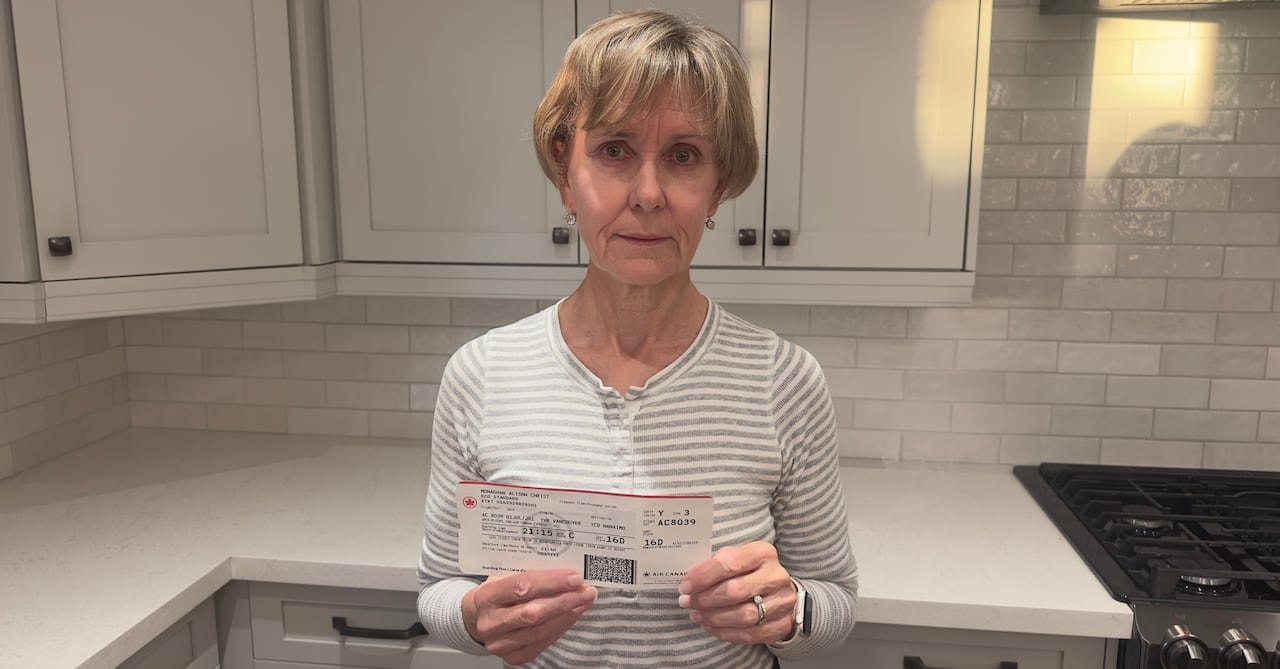
Alison Monaghan’s flight to Vancouver was cancelled after Air Canada used the plane to replace an aircraft on a different route that had developed maintenance issues. (Submitted by Alison Monaghan)
How often does this happen?
Go Public has previously reported on WestJet using the safety-related maintenance exemption to deny passengers compensation. But the full extent of the practice among Canada’s two largest airlines remains unclear.
The CTA, which launched an investigation in the WestJet cases, does not publish its decisions on air passenger disputes — despite a recent court order requiring them to be made public. The agency declined Go Public’s request for past decisions.
A CTA spokesperson cited privacy concerns and said the agency planned to begin publishing decisions early next year, once those had been addressed.
But Lukacs said airlines have little financial incentive to comply with passenger protection rules if they face no meaningful consequences for violating them.
“Right now, it is just more economical for an airline to deceive passengers than to actually comply with the law.”
The CTA said no fine has been issued in Rojas’s case, nor has it ever issued a penalty against Air Canada “for incorrectly characterizing a flight cancellation as safety-related maintenance.”
It should have issued a “hefty” fine in Rojas’s case, Lukacs said, “because Air Canada was not only mistreating the passenger, it was also maintaining the same fraudulent falsehood even when it came before a decision-maker.”
Feds need to do more to protect air passengers, advocates say
De Bellefeuille says Canada’s Air Passenger Protection Regulations need to change so passengers are not left to rely on airlines’ own explanations when flights are cancelled or delayed.
“It’s really David against Goliath,” said the Montreal lawyer and consumer advocate.
In the European Union, airlines can only avoid paying compensation for a qualifying disruption caused by a mechanical problem in limited situations, such as extraordinary circumstances that could not have been avoided, such as an act of terrorism.
But Lukacs – who has also called for an overhaul of air passenger protections – said the government has shown little appetite for reform.
Documents obtained by Go Public through an Access to Information request show previous transport ministers telling the CTA to maintain the airlines’ ability to deny compensation for safety-related maintenance.
Transport Minister Steven MacKinnon declined an interview request.
Rojas says he’s angry that the current rules can leave air passengers in the dark when airlines cite mechanical problems to deny compensation. He’s now been compensated, but wonders about the other people who were booked for the same flight?
“The least the government can do is ensure that our rights are protected.”
Submit your story ideas
Go Public is an investigative news segment on CBC-TV, radio and the web.
We tell your stories, shed light on wrongdoing and hold the powers that be accountable.
If you have a story in the public interest, or if you’re an insider with information, contact gopublic@cbc.ca with your name, contact information and a brief summary. All emails are confidential until you decide to Go Public.