
Here’s a free essay from me today. If you want to support my writing, please become a paying subscriber. It only costs $60 for the year or, if you go monthly, $8. Every dollar makes my work possible. If you find yourself liking what I do and want to ensure I keep at it, go paid. Your support is necessary to make Political Currents thrive.
You will hear this a lot from me, and it will continue to be true: this will end up as the widest open Democratic presidential primary in more than thirty years. Many different candidates have a chance to win. No ideological faction or establishment actor will have a single claim on the field in 2028. It will be true democracy in action, a battle royale to decide what the post-Trump future of America looks like.
That all being said, the issue of Israel is not going away. The war in Gaza was too deadly and the United States spent too many decades emboldening and funding the Jewish State for all of this to disappear into the ether. Any candidate who hopes to run away from the Middle East will be very disappointed. All the top contenders will need fleshed out positions soon. Equivocation won’t really work—voters will demand clarity, one way or the other.
My own positions on Israel are obvious to those who read me. But I am not here to condemn the Netanyahu government again or, once more, question the nature of Zionism. Rather, I am going to approach this more surgically. I am going to, as best as I can, offer a cold-blooded read on what’s at stake here for the next presidential election.
The pro-Israel Democratic voter should be very worried. If one of their candidates doesn’t win or come especially close to winning, the Democratic Party will be reoriented for good. The possibility of realignment is on the table. It might not yet come to pass, but it very well could.
I’m not yet 40, but I’ve lived long enough to watch the issue of Israel evolve in rapid and remarkable fashion. When I started writing about politics in the early 2010s, criticism of Israel was virtually unheard of within the Democratic Party. All factions of the Democrats were pro-Israel. Anyone who was pro-Palestine, anti-Zionist, or merely skeptical of the workings of the Israeli government had no place within the Democratic coalition. Walking into a rally for a Democratic candidate and declaring you supported Palestinian rights and that the U.S. should condition military aid to Israel was like saying you wanted to abolish the sex offender registry. I’m only slightly exaggerating. No serious candidate, circa 2013 or 2014, could have a platform that questioned the unstinting alliance between America and Israel. The 2014 Gaza War, which is mostly lost to popular memory now, was an opportunity for just about every Democratic politician in New York and throughout America to reaffirm their commitment to Israel. Fretting too much, openly, about the Palestinian death toll was verboten. At a speech outside the United Nation in 2014, Hakeem Jeffries bellowed that Israel “lives in a very tough neighborhood” and that “Israel should not be made to apologize for its strength. You know why? Because the only thing that neighbors respect in a tough neighborhood is strength.”
One could call this the hawk position, but it was also the Democratic consensus. Bill de Blasio was the self-identified progressive mayor of New York, and he was fully aligned with Jeffries. Before Bernie Sanders became the standard bearer of the American left, Elizabeth Warren was viewed as a potential 2016 candidate, the progressive hope to take on Hillary Clinton. In the summer of 2014, not long after Jeffries thrilled Israel backers outside the UN, Warren sounded almost exactly like him during a town hall. “America has a very special relationship with Israel,” she said. “Israel lives in a very dangerous part of the world, and a part of the world where there aren’t many liberal democracies and democracies that are controlled by the rule of law. And we very much need an ally in that part of the world.”
That was American politics in 2014. And 2015, too.
The first shift came in 2016, when Sanders emerged as the top rival to Hillary Clinton, an unapologetic supporter of Israel. I was at their contentious debate in Brooklyn where Sanders singlehandedly flung open the Overton Window when it came to talking about the Middle East. “You gave a major speech to AIPAC, which obviously deals with the Middle East crisis and you barely mentioned the Palestinians,” Sanders said to Clinton. “In the long run, if we are ever going to bring peace to that region, we are going to have to treat the Palestinian people with respect and dignity. There comes a time when we pursue justice and peace that we will have to say Netanyahu is not right all the time.”
Clinton noted she had worked towards a two-state solution, but she had little to say about the plight of the Palestinians. The whole concept seemed to flummox her. “I can tell you right now, I have been there with Israeli officials going back more than 25 years that they do not seek this kind of attacks. They do not invite the rockets raining down on their towns and villages.”
In the context of 2026, Sanders’ comments seem almost anodyne. But they were radical for American politics then, when any public break from the Israel consensus was considered a career killer. No one but Sanders could do it. He was an independent senator from Vermont who called himself as a democratic socialist; he was 74 going on 75, and had never belonged to the Democratic establishment. More important, he was Jewish. He was a Zionist. He had, like my own father, lived on a kibbutz in the 1960s. If this wasn’t quite a Nixon going to China moment—Sanders could never be described as an Israel hawk—it probably helped that an elderly Jewish man was the one, on national television, to criticize Israel and speak about the rights of the Palestinians. A new permission structure was created.
Meanwhile, younger voters moved left. Sanders ran and lost in two presidential elections but excited an enormous number of people who were below the age of 30. Most of these voters did not leave politics after Sanders’ presidential ambitions died; they kept voting. Sanders volunteers became famous politician themselves: both Alexandria Ocasio-Cortez and Zohran Mamdani experienced political awakenings supporting Sanders in 2016, when they were in their mid-20s and completely unknown. The Sanders cohort, generally, grew into reliable Democratic voters, and that is why the 2020s Democratic primaries in New York and other states have veered leftward from the 2000s and early 2010s center-left stasis. Part of the left-wing political identity in the 2020s is being pro-Palestine and anti-Israel. Moderates revile this reality—why should a foreign country be a litmus test in an American election?—but it has plenty of historical precedent. In the late 1960s and 1970s, the Vietnam War was a defining issue in local Democratic politics, and many young progressives got elected on anti-war platforms. Reform or liberal Democrats challenging machine incumbents had to be critical of the Vietnam War. It’s true that in the 1960s Americans were dying in Vietnam, and there’s no draft in 2026 that’s sending young men to the Middle East to die by the tens of thousands. But America does fund the Israeli military and Israel has served as an American client state in the Middle East for many decades, a proxy for various conflicts. America and Israel are inextricably bound up. The pro and anti-Israel forces can at least agree upon that.
Now, what will happen in the next presidential election? The last Democratic president, Joe Biden, was strongly supportive of Israel. Barack Obama forever infuriated hawkish Israelis with the Iran deal, but he never broke the bond of money; American taxpayer dollars flowed to Israel under Obama as they did under Trump. The consensus era of the America-Israel relationship—when both political parties agreed, almost equally, that support for the Jewish State had to be unequivocal—lasted from the 1990s to the 2020s, a very long time. A version of the 1980s and early 1990s might return, when politicians in both parties were willing to treat Israel like a more conventional ally; one to be supported, with conditions. It’s forgotten now that George H.W. Bush, in 1991, threatened to withhold military aid to Israel in a dispute over the building of Israeli settlements on Palestinian territories.
The current Republican Party is far away from Bush. Trump launched a war in Iran that Benjamin Netanyahu very much wanted, and the two reportedly worked in concert. The war, in every way, has been a disaster, emboldening the hardline Iranian leadership and spiking the price of oil. Republicans will have a much worse midterm because gas has soared beyond $4 gallon in most states and the price of diesel is much higher. The Iran war, unlike Iraq and Afghanistan, had no pretext, no mass casualty terrorist attack to rally the American people. It really was a neoconservative and Israel hawk fever dream made real. If, in the short-term, the hawks have won, they’ve done significant damage to their position over the next decade. Americans are alienated even further from war and are increasingly cynical about America’s relationship with Israel. Young conservatives, like young progressives, are moving away from Israel, with influencers like Nick Fuentes gaining clout as Ben Shapiro weakens. There’s rank antisemitism within this growing bloc, but there are also plenty of MAGA twentysomethings who thought Trump really did mean America First and No New Wars. Nothing about the war in Iran is “America First.”
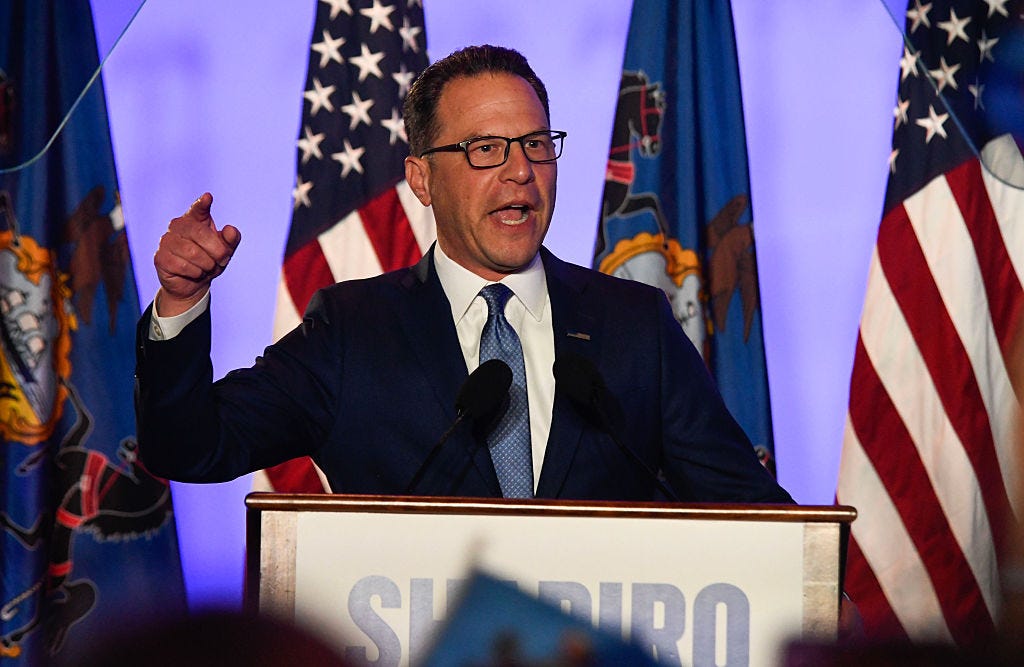
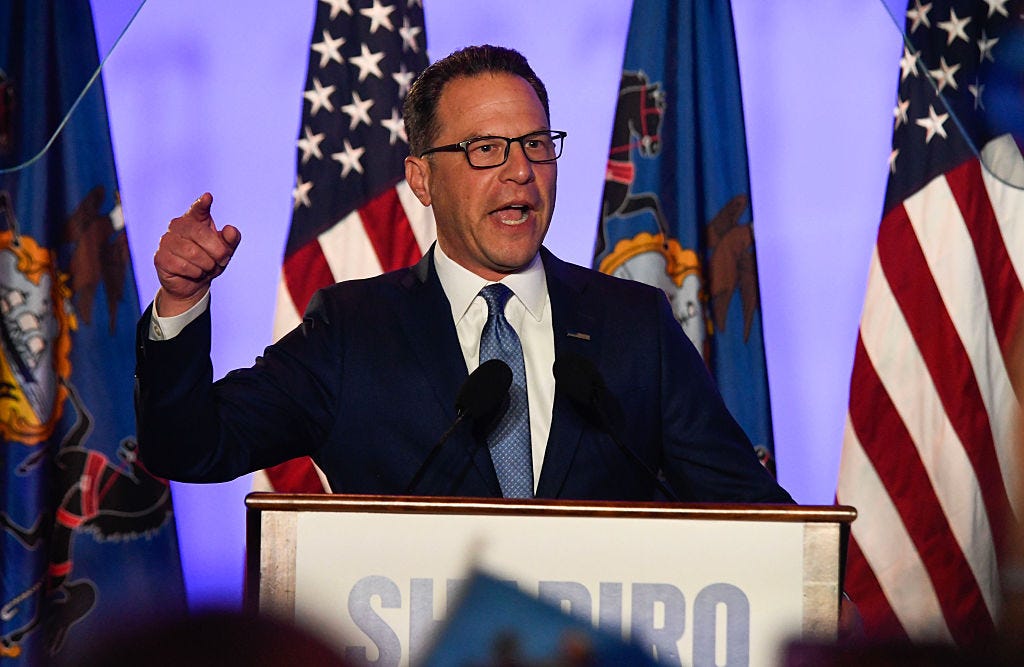
On the Democratic side, we already know Israel-skeptical candidates can win over large electorates. Mamdani, my old campaign manager, is the mayor of New York City. Mamdani is a supporter of BDS and a de facto anti-Zionist. Abdul El-Sayed might be the next senator from Michigan. The real shifts, though, are happening among more conventional Democrats. Gavin Newsom briefly called Israel an “apartheid state” before deciding to walk back the comment. JB Pritzer says he’d block arms sales to Israel. Ruben Gallego said he’d oppose “offensive” weapons if maintain the Iron Dome. Jon Ossoff has voted to restrict certain kinds of weaponry to Israel and said the nation violated international law, if he hasn’t used the word genocide, unlike Alexandria Ocasio-Cortez. Josh Shapiro has repeatedly criticized Netanyahu and said military aid should be used as “leverage.” Still, he is perceived as the most supportive of the top contenders because he volunteered with the IDF. One litmus test for the candidates might be the word genocide. Who can say it and who can’t? Expect many reporters to press many candidates.
None of them, though, will sound like John Fetterman, an unreconstructed Israel hawk who is probably going extinct within the Democratic Party. In that sense, the hawks have already lost 2028. Rahm Emanuel is even talking about conditioning military aid. But the real challenge for those who want a return to the old status quo is to elevate a candidate who sounds like Biden on Israel, circa 2020 or 2021. That might be impossible. Oct. 7 really did change everything. The hawks are right to attack those who celebrate Hamas; the slaughter of Israeli civilians was heinous and should not, at all, be valorized. But Israel lost the moral high ground in the war, with 20,000 dead Palestinian children. The child death toll is truly difficult to fathom. This, along with the Iran war, is enough to turn a generation of Americans against Israel.
Another factor in the alienation of the Democratic voter from Israel is a political incongruity that will probably never be resolved. Israel has become, fundamentally, a right-wing country. For many decades, Labor Zionism was a force in the country, and it’s what drew people like Sanders and my father to Israel in the 1960s. There was a dream of socialism in the desert. That’s long gone. Gone, too, is Israel’s center left. Yes, Netanyahu will eventually lose, but the dynamics that made the Netanyahu government possible will continue to exist. Ultrareligious, hard right voters are surging in the country. It’s a theocratic democracy that suppresses the Arab vote—a democracy more akin to what was found in the Southern United States from the 1870s to the 1960s. How can the average Democrat in the 2020s rally around such a project? Liberal, Israel-supporting Jews are, of course, in a bind. Some are distancing themselves from Israel or hoping the problem is simply Netanyahu, not the Zionist ambition. Others might just become Republicans. Expect the political parties, in the 2030s, to polarize further, with the Democrats becoming the Israel-skeptical party while Republicans, with their evangelical base and growing number of Jews, back Israel further.
As for the 2028 Democratic primary, it will be the first one in modern memory where every top candidate will be willing, to some degree, to criticize the Israeli government. Depending on which candidate becomes president, America’s orientation towards Israel could change permanently. Hawks will have to decide how to proceed. Money, alone, is not enough. AIPAC has enraged a growing number of Democratic establishment politicians who resent the meddling and the money spent against candidates who are pro-Israel but not defenders of Netanyahu. There are groups like Democratic Majority for Israel who’ve tried to tread more carefully; DMFI is still scoring wins. DMFI’s recipe for success has been pounding away at vulnerable progressive candidates and uplifting more moderate contenders. They helped send George Latimer and Shontel Brown to Congress. If Latimer and Brown ensured leftists (Jamaal Bowman, Nina Turner) wouldn’t be there instead, they still haven’t quite given DMFI and AIPAC what they wanted: loud, proud warriors for the Israel cause within the Democratic Party. Brown and Latimer are good votes from an Israel hawk perspective but not much else. And even they might be malleable over time if dynamics shift enough. The grassroots of the Democratic Party are either anti-Israel or indifferent to Israel. That’s lousy news for the hawks.
If you’re hoping for a strongly pro-Israel Democrat to emerge in 2028, what do you do? Probably back Shapiro and hope for the best. Shapiro, though, is a canny politician, and he knows how to read the polls. He’s pivoting, in his own way. Hawks might have to accept that the best they will get is probably Shapiro: a Zionist with strong ties to the country who will probably not condition most military aid there. But who can say that a President Shapiro doesn’t behave like a President Bush, circa 1991? That seems to be where we are headed. Support for Israel is collapsing among Democratic and young voters. That trend will not reverse itself anytime soon. What this means is that Fetterman may be the last of his kind for a long time and no one like him is emerging out of the Democratic primary for president in 2028. The voters will look elsewhere.