
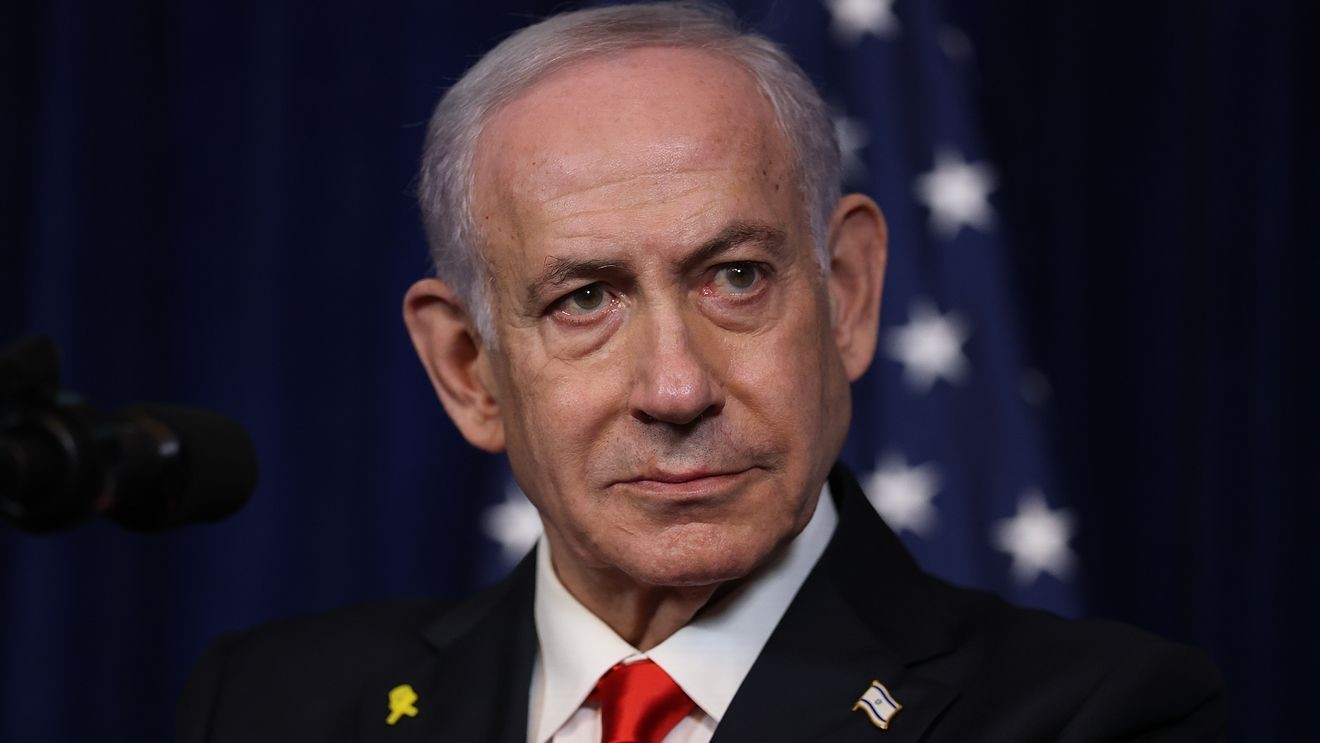
Israeli voters are preparing to head to the polls in a high-stakes parliamentary election that could determine Prime Minister Benjamin Netanyahu’s political future and shape the country’s approach to national security, regional conflicts, and its relationship with the United States.
The election comes after years of extraordinary security challenges, including the Oct. 7, 2023, Hamas-led terrorist attacks, the war in Gaza and escalating confrontations involving Iran and other regional adversaries.
With no clear governing majority emerging ahead of the vote, the outcome could depend on whether smaller political parties secure enough support to enter Israel’s parliament, known as the Knesset.
David Rubin, former mayor of Shiloh, Israel, joined The National News Desk live from Israel to discuss the election, Netanyahu’s relationship with President Donald Trump and the security challenges facing the country.
“Security is certainly a big issue,” Rubin said.
He argued that the Oct. 7 attacks remain central to how Israelis evaluate political leadership and national security.
“In Israel, everything depends on October 7th,” Rubin said. “October 7th has become the litmus test for almost everything.”
The attacks, which killed approximately 1,200 people and resulted in the abduction of 251 hostages, fundamentally changed Israel’s security environment and prompted years of military operations and political debate.
Rubin said voters are focused on which leaders can best confront the threats facing Israel from Iran and armed groups operating throughout the region.
“The question [for] Israelis is who will best be able to handle the security challenges from Iran and from Syria and Lebanon and the Houthis and all of the threats coming from countries like Turkey,” Rubin said.
“Israel is literally on the front lines,” he added.
Iran’s regional activities, including its support for armed groups such as Hezbollah and the Houthis, have remained major concerns for Israeli security officials.
The country has also faced questions about how to prevent future attacks, protect its borders and maintain military readiness while managing relationships with neighboring countries.
Rubin said those issues have taken priority over many traditional domestic concerns.
“Who is going to be able to handle it best? That is really the overriding question,” Rubin said.
“Yes, people here care about the economy, and they care about a lot of other issues, but that is the main issue.”
The election also comes as Netanyahu seeks to maintain his leadership amid criticism over his government’s handling of the security failures surrounding Oct. 7 and the conflicts that followed.
Supporters of Netanyahu emphasize his experience in national security and diplomacy, while critics argue that his government must be held accountable for the intelligence and military failures preceding the attacks.
Rubin praised Netanyahu’s relationship with Trump, describing it as an important asset for Israel.
“The relationship that Netanyahu has is incomparable,” Rubin said. “He has a great relationship with President Trump.”
He argued that Netanyahu’s familiarity with the United States and his ability to communicate directly with American leaders have strengthened the partnership between the two countries.
“He has that masterful ability to communicate, especially in English,” Rubin said.
Rubin pointed to Netanyahu’s years living and studying in the United States, including his time at the Massachusetts Institute of Technology.
“He went to college. He went to MIT in America, and he lived in America quite a few years,” Rubin said.
The United States remains Israel’s most important military and diplomatic partner, providing security assistance, intelligence cooperation and support on major regional issues.
Rubin expressed concern that a change in Israeli leadership could lead to disagreements with the Trump administration, particularly over how to confront Iran.
“If the left gets in, not only are they not going to be able to communicate well, but they’re not going to be in sync with President Trump and with the American administration,” Rubin said.
That assessment reflects Rubin’s political perspective. Israeli opposition leaders have maintained relationships with American officials, and the broader U.S.-Israel alliance has continued under governments led by different political parties.
Rubin argued that continued cooperation between Trump and Netanyahu would be important for addressing Iran’s military capabilities and regional influence.
“They’re not going to be able to complete what was started with Iran and truly needs to be finished,” Rubin said, referring to his concerns about a potential change in leadership.
The interview then turned to Israel’s parliamentary system and why the election’s outcome may not be immediately clear when the votes are counted.
Unlike the American presidential system, Israelis vote for political parties rather than directly electing a prime minister.
The 120-member Knesset is elected through proportional representation, with parties receiving seats based on their share of the national vote, provided they meet the electoral threshold.
Political leaders must then assemble a coalition capable of securing the support of at least 61 lawmakers to govern.
Rubin said the number of parties competing for seats makes coalition negotiations particularly important.
“It depends on the multiparty system,” Rubin said.
“It’s not like people go to the polls and they vote for Netanyahu,” he explained. “They vote for political parties.”
Rubin estimated that approximately 10 parties could enter the next Knesset, with several others close to the threshold.
“There are about 10 political parties that are going to get into the Knesset, Israel’s parliament,” Rubin said.
“And there are about two or three that are questionable.”
He explained that the performance of those smaller parties could affect how parliamentary seats are distributed and which coalitions become mathematically possible.
“If those two or three parties don’t get enough votes to get into the Knesset, then that could determine which direction the results will be,” Rubin said.
Under Israeli election rules, parties must receive at least 3.25% of the national vote to qualify for seats in parliament.
Votes cast for parties that fail to meet the threshold do not translate into parliamentary representation, potentially changing the balance of power among the parties that qualify.
As a result, the final composition of the Knesset and subsequent coalition negotiations will determine who leads the next government.
The interview also turned to violent unrest in France, where more than 1,300 people were arrested during another weekend of nationwide demonstrations.
French authorities reported 1,314 arrests, 53 injured police officers and 75 fires following protests on Oct. 24. Businesses were also looted as confrontations between demonstrators and police escalated in several cities.
The demonstrations were driven largely by concerns about the rising cost of living, deteriorating school conditions and broader dissatisfaction with the French government. Although many protests were peaceful, violence erupted on the sidelines, prompting police to use tear gas and water cannons to disperse crowds.
French officials have blamed some of the violence on far-left groups and opportunistic rioters. The unrest has also drawn attention to the country’s broader political and social divisions.
During the interview, the host raised questions about whether immigration policies and Islamist extremism have contributed to instability in France and other Western countries.
Rubin argued that radical Islamist ideology poses a serious threat to Western societies.
“It’s absolutely the reason, without question,” Rubin said.
He pointed to a book he wrote approximately 12 years ago, titled “The Islamic Tsunami,” in which he said he warned about the potential spread of Islamist extremism.
“About 12 years ago, I wrote a book called ‘The Islamic Tsunami,’ in which I predicted that this was going to be happening,” Rubin said.
“It’s happening today.”
Rubin argued that Western governments should place greater emphasis on confronting extremist movements and preventing the spread of violent ideologies.
“It’s that radical Islamic ideology that is threatening the entire Western world, the entire Western civilization,” Rubin said.
However, the reported causes of the recent French demonstrations center primarily on economic conditions, education policy and political grievances. The available reporting does not establish that Muslim immigration or Islamist extremism caused the violence.
The distinction is significant because Islam, a religion practiced by millions of people in France and around the world, is separate from violent Islamist extremism. The actions of extremist organizations do not represent Muslim communities as a whole.
Rubin also connected his concerns about extremism in Europe to the ongoing confrontation with Iran.
He argued that reducing Iran’s ability to support armed groups throughout the Middle East should remain a priority for Israel and the United States.
“It’s much more important to stop that than it is to lower the price of gas today,” Rubin said.
He suggested that confronting Iran and its regional allies could ultimately contribute to greater stability, including in global energy markets.
“The price of gas will be lowered once Iran is confronted and all of their tentacles are cut off,” Rubin said.
Rubin warned that European countries and the United States should remain vigilant about the potential threat of extremist violence.
“That’s what needs to be dealt with now, the Islamic extremism that you’re seeing in France and that you’re going to be seeing more and more in Great Britain and that you’re going to be seeing in the United States if it’s not checked,” Rubin said.
The discussion comes as Israel prepares for its Oct. 27 election, with Netanyahu facing opposition from former military chief Gadi Eisenkot and other political leaders seeking to form a new governing coalition.
The election is widely viewed as a referendum on Netanyahu’s leadership following the Oct. 7 attacks and the subsequent regional conflicts. Questions about military service exemptions for ultra-Orthodox Jews, accountability for security failures and the cost of living are also shaping the campaign.
For Rubin, national security remains the central issue as Israelis prepare to cast their ballots.
“Israel is literally on the front lines,” Rubin said.
“Who is going to be able to handle it best? That is really the overriding question.”