
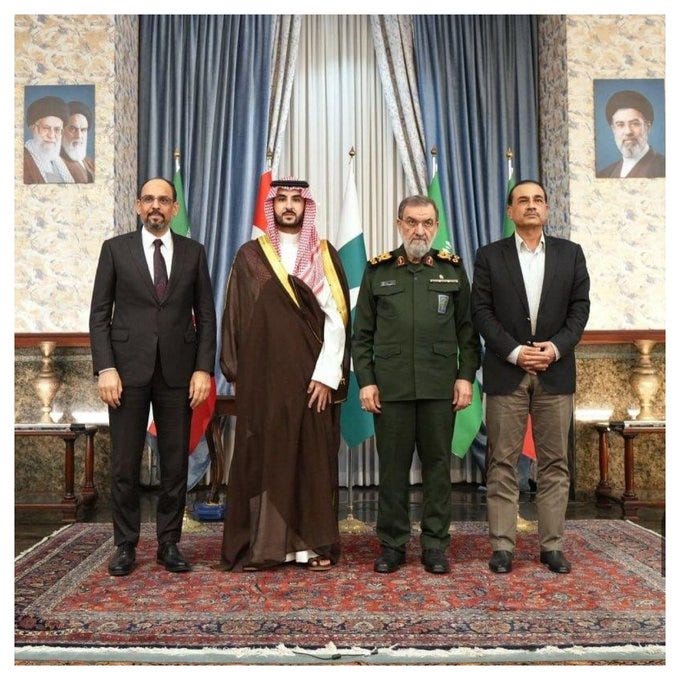
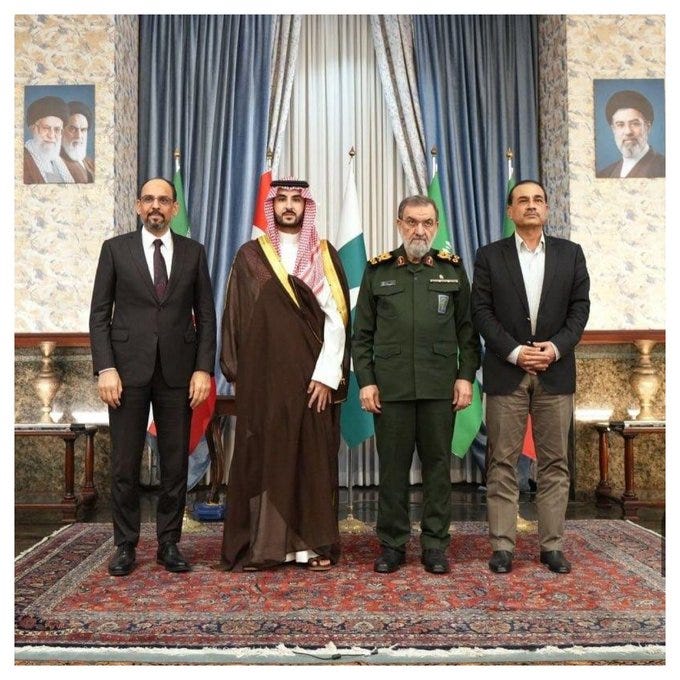
Much of the Middle East was on edge this past weekend, fearing that President Donald Trump and Israeli Prime Minister Benjamin Netanyahu would restart the Iran war. Thankfully, hostilities didn’t resume, but it’s not because of a lack of effort. According to Iranian sources, Israeli fighter jets did breach Iranian airspace, but Tehran surprisingly chose not to respond. Today’s meeting in Tehran between Saudi, Turkish, Pakistani, and Iranian officials is partly why Iran showed restraint.
Israel has made no secret of its desire and plans to restart the Iran war, but on a larger scale than previous rounds. Earlier this month, Israeli Defense Minister Israel Katz told Israeli TV that Israel is ready to strike Iran with “full force” and that this time around it will target Iranian energy infrastructure to “set Iran back 40 years, to the age of darkness and to the Stone Age.”
Over the weekend, news broke of an alleged rift between Netanyahu and the IDF Chief of Staff Lt. Gen. Eyal Zamir over a proposed military operation against Iran ahead of Israel’s election, with Zamir pushing back over its timing and potential impact on the Israeli elections tomorrow. The Israelis had also conducted numerous mock practice attacks against Iran in Iraqi airspace in the past week.
All these developments added to an explosive situation where war was just one tiny, dumb decision away. Tehran had, of course, also hinted that it would no longer wait to be attacked, but strike preemptively against the U.S. and Israel if it felt strikes against its territory were imminent.
Which is why Iran’s decision not to strike after Israeli fighter jets allegedly breached its airspace is all the more surprising. But sources in Tehran tell me that a variety of factors prompted this Iranian decision, rooted in two key Iranian assessments: that time is still on Iran’s side and that Israel is trying to goad Iran into striking first to get the war started at a moment in which it is still not a foregone conclusion whether Trump has opted for war or not.
The Iranians have made clear that they will respond ferociously to Israeli and American strikes and that Saudi Arabia in particular will likely face significant destabilization in such a scenario, in addition to other Gulf Cooperation Council states. The irony, of course, is that such a response would serve Israel quite well. The more Iran retaliates against GCC states, particularly Saudi Arabia, the more these Arab states will feel compelled to turn to Israel for support and protection, undermining Iran’s longer-term goal of inviting these states to join Iran in forming a security arrangement in the Middle East.
In that scenario, the dream of an Israeli-Arab anti-Iran bloc like the Abraham Accord could be revived. Consequently, Tehran has to weigh its options very carefully and not rush into responding to Israeli provocations, as it could amount to a trap. It appears that Israel’s maneuvers in Iraq ultimately convinced Tehran that Israel was bluffing and that an Iranian response would be counterproductive. For now, that assessment may have been correct.
Another factor was today’s meeting of Saudi, Pakistani, and Turkish officials in Tehran. Iranian media and officials have touted the meeting as a clear sign that American efforts to isolate Iran or exclude it from regional security discussions have failed. For all three countries to come to Tehran, on relatively short notice, is seen as a win in Tehran — a victory that would have been jeopardized if Iran responded to Israeli provocations over the weekend.
Contrary to speculation, the meeting was not a stepping stone toward inviting Iran into the Mecca Pact. Rather, it was driven by a more urgent matter: the Ansar Allah-Saudi war that is not only destabilizing Yemen, but also now Saudi Arabia itself. (Ansar Allah is often referred to as the “Houthis.”)
But the content-less statement from the Tehran meeting reflects how difficult this issue will be to resolve. From the Iranian perspective, Riyadh has committed the same mistake as Trump: starting a war that it cannot end on the battlefield and is unwilling to end at the negotiating table.
In Trump’s case, the hold-up is the lifting of the Persian Gulf blockade. In Riyadh’s case, it is the lifting of the air blockade on Yemen. Tehran is willing to help, a source in Iran tells me, but it won’t challenge Ansar Allah’s condition of lifting the air blockade, just as Tehran won’t budge on the lifting of Trump’s blockade.
Nevertheless, the gathering in Tehran further validates the logic restrainers have put forward for years: as the U.S. pulls back militarily, contrary to Washington’s conventional wisdom, regional states are showing greater agency and taking greater responsibility for the region’s security themselves.
This agency does not mean that all problems will be resolved or that conflict and chaos will be avoided. But whatever is achieved or not achieved, it will be their conflicts, their chaos, and their responsibility — not that of the U.S.
PS. We will discuss this, the Israeli elections, and much more tomorrow at 10am ET during our Geopolitical Q&A for paid subscribers. You can register using the link below: