
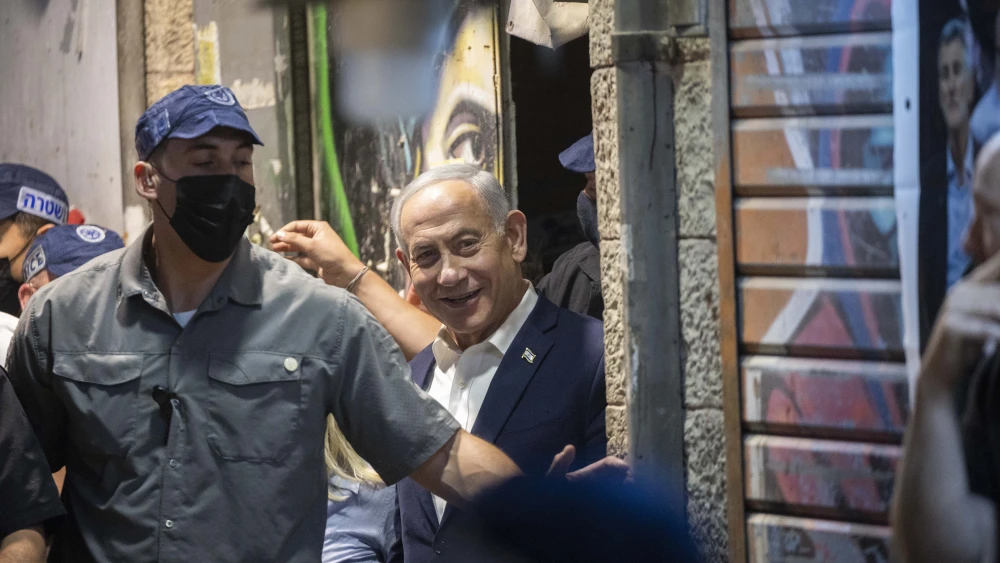
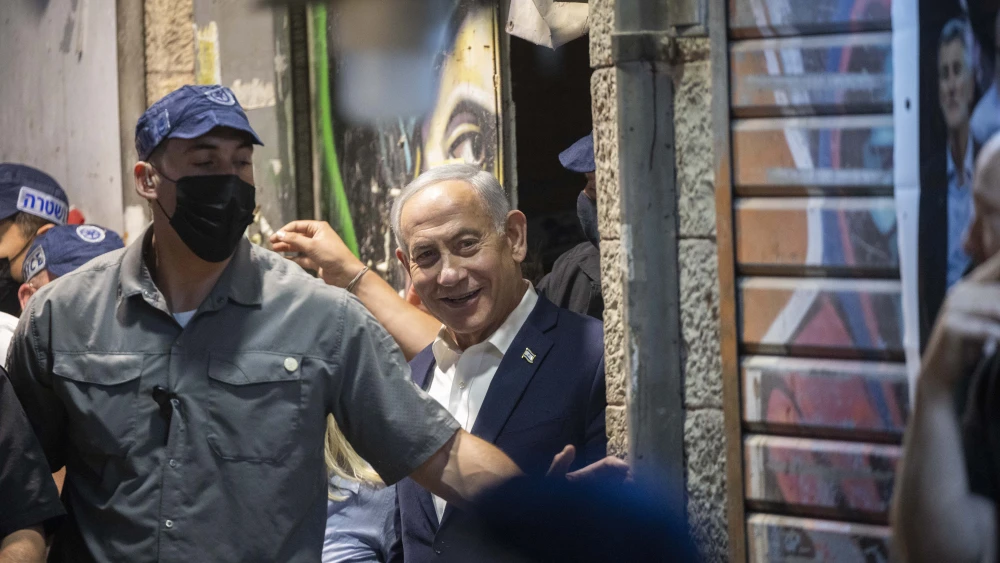
 Israeli Prime Minister and Likud party chairman Benjamin Netanyahu visits the Mahane Yehuda Market in Jerusalem as part of the Likud party’s election campaign ahead of Israel’s upcoming elections Oct. 22. (Photo credit: Yonatan Sindel/Flash90)
After two IDF soldiers were killed and three others wounded in a terrorist shooting attack near the Yehuda Junction of Hebron on Friday morning, Oct. 23, Israeli Prime Minister Benjamin Netanyahu announced the IDF will apply a “more aggressive counterterrorism model” in Hebron, according to Jerusalem News Syndicate.
The IDF identified the slain soldiers as Staff Sgt. Ron Yonatan Roytman, 23, of Ashkelon, a squad commander in the Home Front Command’s Ari Battalion, and Sgt. Yuval Shai Svilem, 20, of Hod Hasharon, a combat soldier in the same battalion.
Netanyahu ordered an immediate cordon on Hebron and instructed security forces to impose a full closure of the West Bank following the attack.
Two Palestinian terrorists were killed after a gun battle with IDF troops that lasted more than 20 minutes, according to an initial military investigation.
The two terrorists, both 27-year-old Hebron residents, arrived by car at a temporary military checkpoint near an exit from Hebron at around 7:30 a.m.
According to the IDF’s preliminary assessment, the gunmen had intended to reach Route 35 and attack Israeli civilians but realized that they would be unable to get past the checkpoint.
The terrorists, armed with an M16 rifle and a handgun, got out of their vehicle and opened fire on the troops, using nearby buildings for cover.
Soldiers from the Home Front Command’s Ari Battalion, who were manning the checkpoint, returned fire. The battalion’s deputy commander and a company commander, along with an officer from the Paratroopers Brigade’s 101st Battalion who rushed to the scene, killed the two terrorists.
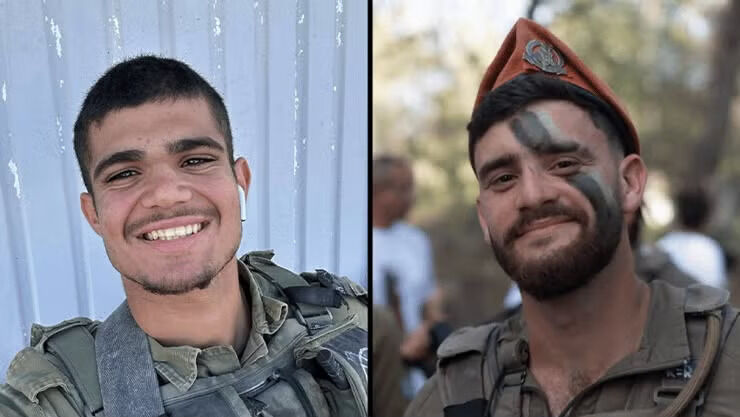 IDF Sgt. Yuval Shai Svilem, 20, left, and Staff Sgt. Ron Yonatan Roytman, 23, were killed in action Oct. 23. (Courtesy of the IDF)
A large quantity of ammunition was subsequently found in the terrorists’ vehicle, which the military said indicated they had planned a larger-scale attack.
The three wounded soldiers, also members of the Ari Battalion, were evacuated to hospitals in Jerusalem for treatment.
Howard Libit, executive director of the Baltimore Jewish Council, said that things have been escalating for a while now, and that there is cause for concern.
“The situation in the West Bank has obviously been difficult for a while. The settler attacks have been really troubling, and we spoke out about that as a Baltimore Jewish Council about a month ago, and that continues to be a concern. Obviously, the attack on the soldiers is also a huge concern,” he said.
IDF Chief of Staff Lt. Gen. Eyal Zamir said, “This was a serious terrorist attack. The soldiers’ rapid response prevented an even more serious attack and further harm to civilians and security forces.”
Hamas later claimed responsibility for the attack. The IDF and Israeli Security Agency (Shin Bet) said they were investigating whether the two terrorists acted independently or were part of a broader network.
IDF Seals Off Hebron
Following the attack, the IDF launched expanded counterterrorism operations in the Hebron area, imposing a full cordon on the city and surrounding villages.
Troops were operating at the homes of the two terrorists and at the residences of additional suspects as security forces stepped up arrest operations and intelligence efforts in the area.
The military said there had been no specific intelligence warning of the attack, although forces had already been placed on heightened alert ahead of Israel’s Oct. 27 election.
Zamir instructed the Central Command to prepare for additional troop reinforcements as needed.
“I commend our heroic soldiers who acted decisively and prevented a major attack, and I wish our wounded a speedy recovery,” Netanyahu said in a statement issued before the soldiers’ deaths were announced. “Our forces are operating with increased strength to thwart terrorism and are carrying out extensive waves of arrests.”
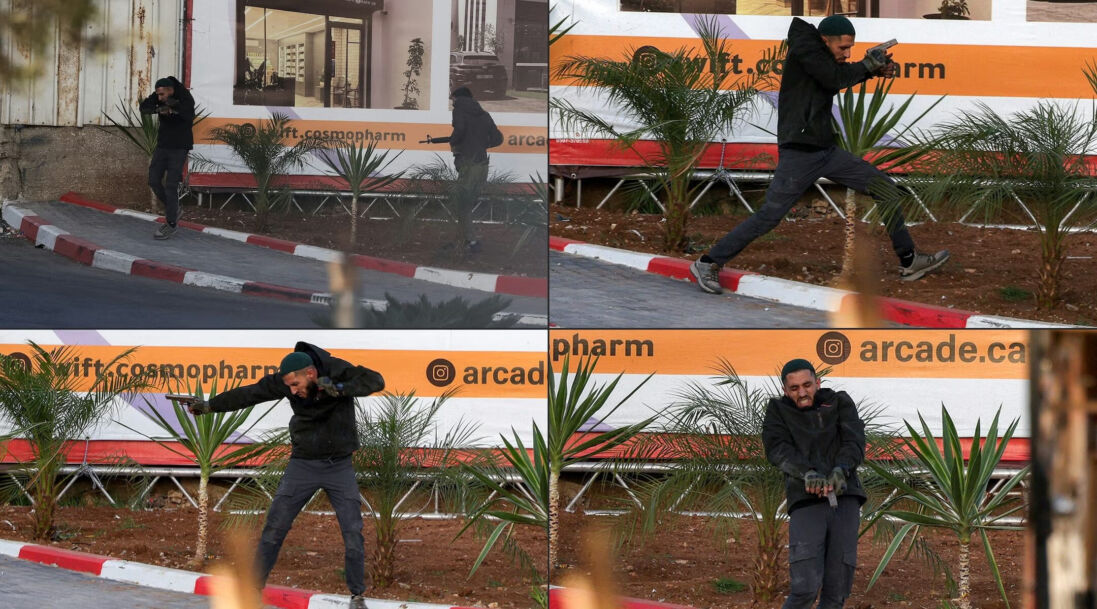 This combination of pictures created Oct. 23 shows armed Palestinian men during a fire exchange with Israeli forces at the northern checkpoint of Hebron. (Photo credit: HAZEM BADER / AFP)
Netanyahu vowed that Israel would pursue Hamas terrorists and those who send them “everywhere and at all times,” adding, “You have nowhere to hide.”
The attack came as the IDF reinforced Judea and Samaria with an additional regular brigade as part of preparations for the election period.
The IDF briefed reporters last week that Hebron, a Palestinian city of over 200,000, was under a full siege, with no one permitted to enter or leave the city. Elsewhere in the West Bank, IDF forces were conducting extensive checks of Palestinian vehicles arriving at major roads.
The West Bank has been a growing hotbed of violence for months, with settler violence and military activity on the rise amid the Palestinian olive harvesting season.
On Oct. 16, dozens of masked Israeli settlers attacked Palestinian farmers harvesting olives near the village of Abu Falah, northeast of Ramallah. Settlers reportedly threw stones, used slingshots, set olive trees on fire and assaulted Palestinians.
At least 160 Israeli settler attacks linked to the olive harvesting season were recorded in the first two weeks of October, according to the United Nations. The U.N. added that many of those attacks were carried out “under the protection of, or with the participation of, Israeli forces.”
Libit said that, in his mind, these events won’t actually have much of an impact on the Israeli elections — he said people’s views are “hardened” at this point.
“I’m not sure that someone who was thinking they were going to vote for one party is necessarily going to change their opinion just because of this one attack. I think political opinions are pretty firm at this point,” Libit said. “My sense is … its mostly a question of turnout.”
Libit added that he thinks security is the top concern for most Israelis, with that only becoming more prominent after the Oct. 7, 2023, attacks. For Libit, the next two weeks will tell us a lot about the future of relations between the U.S. and Israel.
“It’s going to be fascinating to watch the turnout both tomorrow and next Tuesday to see what happens. These are two really important elections, and I think there will be major consequences for both elections in terms of the U.S.-Israel relationship,” he said
Andrew Guckes, Zoe Bell, Jerusalem News Syndicate and Jewish Telegraphic Agency contributed reporting to this article.