
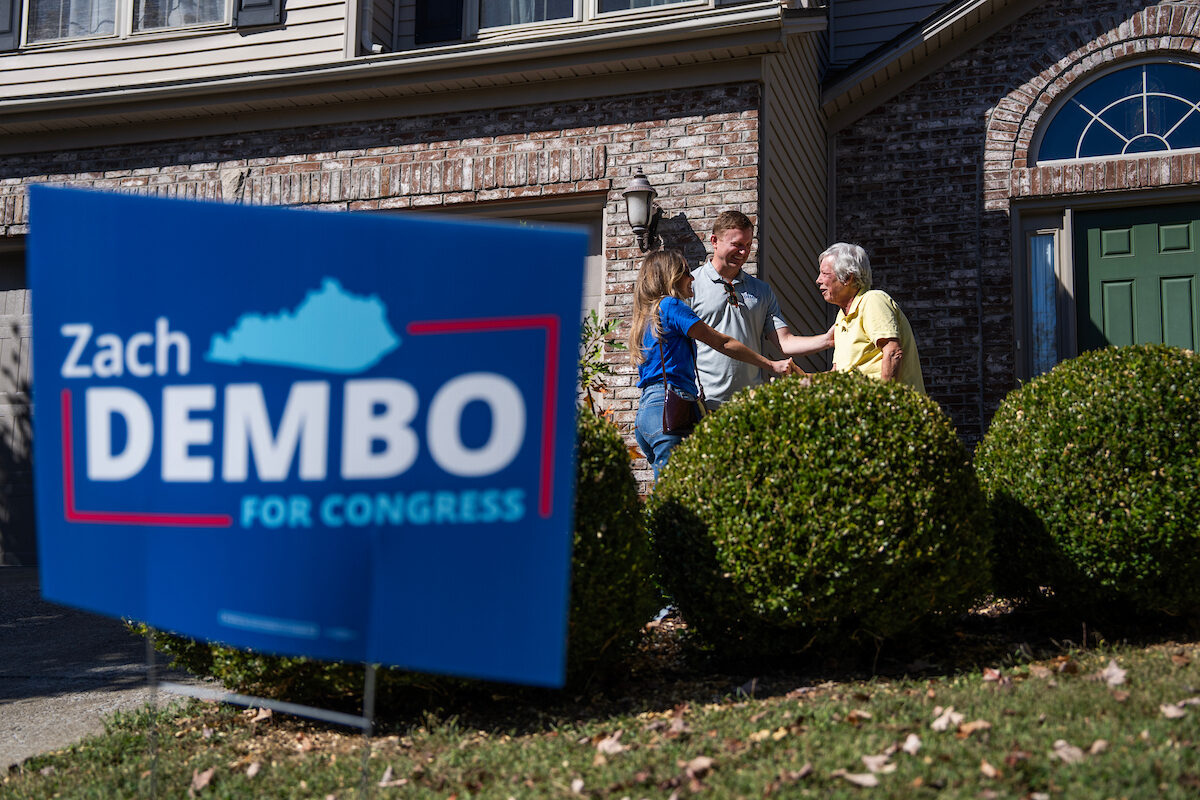
In the closing days of the midterm campaign, the fight for the House and Senate is taking place on traditionally Republican turf, including states and districts that would have been unthinkable Democratic targets at the beginning of the cycle.
In total, Inside Elections has made a total of 64 race rating changes this week – 45 in the House, nine in the Senate and 10 for governor. All but one of those contests shift in a direction more favorable to Democrats.
While President Donald Trump’s negative job approval rating is mostly to blame for Republican woes around the country, the rating changes don’t all fit a single mold. Some of the shifts are in swing districts, where it’s clearer that the Democratic nominee has at least a narrow advantage. But GOP candidates are struggling to pull away from their Democratic opponents in red districts and states as well.
Now, there’s a chance that the polls are underestimating Republican support or that GOP-leaning undecided voters will turn out and reluctantly support GOP candidates. But as I wrote two months ago, 2026 feels similar to 2006, when an unpopular Republican president and war in the Middle East created the conditions for a Democratic wave election. The final results could be remarkably the same. Twenty years ago, Democrats flipped both chambers, gaining six Senate seats and 30 House seats.
House battleground grows
Democrats appear well on their way to winning the House majority. While they only need a net gain of three seats, Inside Elections’ latest projection is that the party will gain between 20 and 30 seats.
That’s the most bullish projection for Democrats at any point this cycle and a byproduct of the president’s standing and a shifting House battleground. In March 2025, when Inside Elections debuted its House ratings for the cycle, there were 64 races rated as competitive, including 30 Republican-held seats and 34 Democratic seats. Now the battleground has expanded and shifted into GOP territory, with 82 competitive races in all – 55 seats held by Republicans and 27 by Democrats.
In the latest batch of rating changes, 10 GOP-held districts have been added to the House battleground, with the races moving from Solid Republican to Likely Republican. They include Colorado’s 4th District (held by Rep. Lauren Boebert), Kansas’ 2nd (Derek Schmidt), New Jersey’s 2nd (Jeff Van Drew), North Carolina’s 3rd (Greg Murphy), North Carolina’s 9th (Richard Hudson, also the National Republican Congressional Committee chairman), North Carolina’s 13th (Brad Knott), Oklahoma’s 5th (Stephanie Bice), Washington’s 5th (Michael Baumgartner) and Tennessee’s open 9th. The race for Ohio’s 10th District, held by Rep. Michael R. Turner, jumped from Solid Republican all the way to Lean Republican.
Three Democratic-held districts moved off the battleground, going from Likely Democratic to Solid Democratic: California’s 45th (Derek Tran), Virginia’s 7th (Eugene Vindman) and New Hampshire’s 2nd (Maggie Goodlander). In different political circumstances, including if there had been an unpopular Democratic president in the White House, all three districts would have been hosting competitive races.
At the core of the battleground, a dozen races moved out of Toss-up status and are now rated Tilt Democratic: Arizona’s 6th District (held by Republican Rep. Juan Ciscomani), Colorado’s 8th (Republican Gabe Evans), Florida’s 14th (Democrat Kathy Castor), Florida’s 25th (Democrat Jared Moskowitz), North Carolina’s 1st (Democrat Don Davis), Ohio’s 7th (Republican Max Miller), Ohio’s 9th (Democrat Marcy Kaptur), Pennsylvania’s 10th (Republican Scott Perry), Texas’ 15th (Republican Monica De La Cruz), Virginia’s 2nd (Republican Jen Kiggans) and Wisconsin’s 3rd (Republican Derrick Van Orden) and North Carolina’s open 11th District.
And five House races shifted to Toss-up from Tilt Republican: Colorado’s 5th District (Republican Jeff Crank), Michigan’s 4th (Republican Bill Huizenga), Florida’s open 22nd, Kentucky’s open 6th and Montana’s open 1st.
While Republicans mostly drew the new congressional maps, Democratic prospects continue to improve in a handful of races in Ohio, Texas and North Carolina.
While both statewide races for governor and Senate in Ohio shifted from Toss-up to Tilt Democratic, a batch of Buckeye State House races moved toward Democrats as well: The races for Kaptur’s, Miller’s and Turner seats; the 1st District (Democrat Greg Landsman) moved from Tilt Democratic to Lean Democratic; and 15th District (held by Republican Mike Carey) moved from Likely Republican to Lean Republican.
In Texas, at least three of the seats Republicans were counting on winning through redistricting are not looking easy for them. The race for the open 9th District shifts from Likely Republican to Lean Republican, the 28th (Democrat Henry Cuellar) moves from Tilt Democratic to Lean Democratic, and the open 35th goes from Lean Republican to Toss-up.
And North Carolina is developing into a migraine for the GOP as well. Democratic former Gov. Roy Cooper is running a strong Senate campaign, and GOP chances in certain House seats are diminishing. In addition to the newly added battleground races, the contests for the 1st and 11th districts are no longer Toss-ups and are now rated Tilt Democratic. CQ Roll Call’s Daniela Altimari was recently on the ground in the 3rd District.
Some Senate surprises
The Senate landscape has changed as well, with the latest rating changes all favoring Democrats. The party needs to flip four seats for a Senate majority, and Inside Elections now projects Democrats to gain between four and six seats.
Two races moved out of Toss-up to Tilt Democratic: Ohio and Texas. Even though Texas Democrats haven’t won statewide in more than 30 years, state Rep. James Talarico has a serious chance to break that losing streak. Polls have shown him narrowly leading GOP nominee Ken Paxton for five months, despite hundreds of millions of dollars in spending against him. Paxton, the state attorney general who defeated GOP Sen. John Cornyn in the primary, could still pull this off, but Talarico has the edge.
Ohio is another extremely expensive race, and Democratic former Sen. Sherrod Brown is benefiting from a dramatically different political environment compared with two years ago when he lost reelection. Polling shows him with a narrow edge over appointed GOP Sen. Jon Husted.
Senate Republicans are also at risk of losing the Iowa and Kansas seats, even though Trump won both states by double digits in 2024. The races could end up reverting to the states’ Republican roots, but for now, Democratic nominees Josh Turek in Iowa and Adam Hamilton in Kansas remain in the hunt. Both races shift from Tilt Republican to Toss-up.
It’s a somewhat similar story in Nebraska (Pete Ricketts) and South Carolina (Darline Graham), two typically Republican states that appear ripe for a Democratic takeover. Both of these races shift from Lean Republican to Tilt Republican. And there’s even enough data and party spending to warrant moving the races in Louisiana (Bill Cassidy’s open seat) and Mississippi (Cindy Hyde-Smith) out of Solid Republican to Likely Republican.
Overall, the latest changes are a continuation of a remarkable shift in the Senate battleground into GOP territory. In January 2025, Inside Elections rated just five Senate races as competitive: three seats held by Democrats (Georgia, Michigan and New Hampshire) and two by Republicans (Maine and North Carolina). Now there are a whopping 16 states on the Senate battleground, divided between 12 Republican-held seats and four by Democrats.
Governor’s races are important too
The four gubernatorial open races previously rated Toss-ups – Alaska, Georgia, Ohio and Wisconsin – have now shifted to Tilt Democratic.
In Nevada, Republican Gov. Joe Lombardo has had a consistent advantage over Democratic state Attorney General Aaron Ford, but the national environment could bring him down. That race shifts from Tilt Republican to Toss-up.
Texas Gov. Greg Abbott, who’s seeking a record fourth term, continues to be in a tight race against Democratic state Rep. Gina Hinojosa, proving that Republicans’ problems in the Lone Star State go beyond Paxton’s baggage. That contest moves from Lean Republican to Tilt Republican.
And GOP Sen. Marsha Blackburn appears to be in a surprisingly closer-than-expected race for governor in Tennessee, where a conservative independent candidate is drawing GOP support. Her race moves from Solid Republican to Likely Republican.
Oregon offers a glimmer of hope in what could otherwise be a rough night for Republicans. GOP state Sen. Christine Drazan narrowly lost the gubernatorial election four years ago, but she’s within striking distance in her rematch against unpopular Democratic Gov. Tina Kotek. Oregonians’ frustrations appear centered on the decades of Democratic control at the state level rather than Republican control at the federal level. The race shifts from Lean Democratic to Tilt Democratic.
Here’s the full list of the latest rating changes by Inside Elections:
House races moving toward Democrats
Alabama’s 2nd District (Shomari Figures, D): from Lean Republican to Tilt Republican
Arizona’s 2nd District (Eli Crane, R): from Likely Republican to Lean Republican
Arizona’s 6th District (Juan Ciscomani, R): from Toss-up to Tilt Democratic
California’s 6th District (Kevin Kiley, I): from Lean Democratic to Likely Democratic
California’s 45th District (Derek Tran, D): from Likely Democratic to Solid Democratic
Colorado’s 4th District (Lauren Boebert, R): from Solid Republican to Likely Republican
Colorado’s 5th District (Jeff Crank, R): from Tilt Republican to Toss-up
Colorado’s 8th District (Gabe Evans, R): from Toss-up to Tilt Democratic
Florida’s 14th District (Kathy Castor, D): from Toss-up to Tilt Democratic
Florida’s 22nd District (Open; Lois Frankel, D): from Tilt Republican to Toss-up
Florida’s 25th District (Jared Moskowitz, D): from Toss-up to Tilt Democratic
Kansas’ 2nd District (Derek Schmidt, R): from Solid Republican to Likely Republican
Kentucky’s 6th District (Open; Andy Barr, R): from Tilt Republican to Toss-up
Michigan’s 4th District (Bill Huizenga, R): from Tilt Republican to Toss-up
Minnesota’s 1st District (Brad Finstad, R): from Likely Republican to Lean Republican
Montana’s 1st District (Open; Ryan Zinke, R): from Tilt Republican to Toss-up
Nevada’s 2nd District (Open; Mark Amodei, R): from Lean Republican to Tilt Republican
New Hampshire’s 2nd District (Maggie Goodlander, D): from Likely Democratic to Solid Democratic
New Jersey’s 2nd District (Jeff Van Drew, R): from Solid Republican to Likely Republican
North Carolina’s 1st District (Don Davis, D): from Toss-up to Tilt Democratic
North Carolina’s 3rd District (Greg Murphy, R): from Solid Republican to Likely Republican
North Carolina’s 9th District (Richard Hudson, R): from Solid Republican to Likely Republican
North Carolina’s 11th District (Open; Chuck Edwards, R): from Toss-up to Tilt Democratic
North Carolina’s 13th District (Brad Knott, R): from Solid Republican to Likely Republican
Ohio’s 1st District (Greg Landsman, D): from Tilt Democratic to Lean Democratic
Ohio’s 7th District (Max Miller, R): from Toss-up to Tilt Democratic
Ohio’s 9th District (Marcy Kaptur, D): from Toss-up to Tilt Democratic
Ohio’s 10th District (Mike Turner, R): from Solid Republican to Lean Republican
Ohio’s 15th District (Mike Carey, R): from Likely Republican to Lean Republican
Oklahoma’s 5th District (Stephanie Bice, R): from Solid Republican to Likely Republican
Pennsylvania’s 1st District (Brian Fitzpatrick, R): from Lean Republican to Toss-up
Pennsylvania’s 10th District (Scott Perry, R): from Toss-up to Tilt Democratic
South Carolina’s 1st District (Nancy Mace, R): from Lean Republican to Tilt Republican
Tennessee’s 9th District (Open; Steve Cohen, D): from Solid Republican to Likely Republican
Texas’ 9th District (Open; Al Green, D): from Likely Republican to Lean Republican
Texas’ 15th District (Monica De La Cruz, R): from Toss-up to Tilt Democratic
Texas’ 28th District (Henry Cuellar, D): from Tilt Democratic to Lean Democratic
Texas’ 35th District (Open; Greg Casar, D): from Lean Republican to Toss-up
Virginia’s 1st District (Rob Wittman, R): from Lean Republican to Tilt Republican
Virginia’s 2nd District (Jen Kiggans, R): from Toss-up to Tilt Democratic
Virginia’s 5th District (John McGuire, R): from Likely Republican to Lean Republican
Virginia’s 7th District (Eugene Vindman, D): from Likely Democratic to Solid Democratic
Washington’s 5th District (Michael Baumgartner, R): from Solid Republican to Likely Republican
Wisconsin’s 1st District (Bryan Steil, R): from Likely Republican to Lean Republican
Wisconsin’s 3rd District (Derrick Van Orden, R): from Toss-up to Tilt Democratic
Senate races moving toward Democrats
Georgia Senate (Jon Ossoff, D): from Lean Democratic to Likely Democratic
Iowa Senate (Open; Joni Ernst, R): from Tilt Republican to Toss-up
Kansas Senate (Roger Marshall, R): from Tilt Republican to Toss-up
Louisiana Senate (Open; Bill Cassidy, R): from Solid Republican to Likely Republican
Mississippi Senate (Cindy Hyde-Smith, R): from Solid Republican to Likely Republican
Nebraska Senate (Pete Ricketts, R): from Lean Republican to Tilt Republican
Ohio Senate (Jon Husted, R): from Toss-up to Tilt Democratic
South Carolina Senate (Darline Graham, R): from Lean Republican to Tilt Republican
Texas Senate (Open; John Cornyn, R): from Toss-up to Tilt Democratic
Gubernatorial races moving toward Democrats
Alaska Governor (Open; Mike Dunleavy, R): from Toss-up to Tilt Democratic
Georgia Governor (Open; Brian Kemp, R): from Toss-up to Tilt Democratic
Iowa Governor (Open; Kim Reynolds, R): from Tilt Democratic to Lean Democratic
Michigan Governor (Open; Gretchen Whitmer, D): from Tilt Democratic to Lean Democratic
Nevada Governor (Joe Lombardo, R): from Tilt Republican to Toss-up
Ohio Governor (Open, Mike DeWine, R): from Toss-up to Tilt Democratic
Tennessee Governor (Open; Bill Lee, R): from Solid Republican to Likely Republican
Texas Governor (Greg Abbott, R): from Lean Republican to Tilt Republican
Wisconsin Governor (Open, Evers, D): from Toss-up to Tilt Democratic
Gubernatorial races moving toward Republicans
Oregon Governor (Tina Kotek, D): from Lean Democratic to Tilt Democratic