
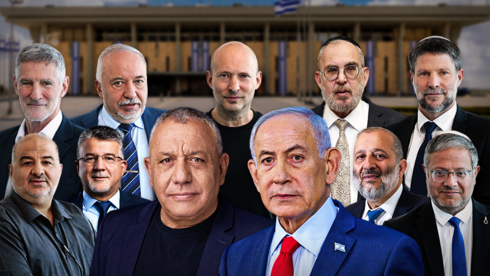
President Isaac Herzog plans to summon representatives of the parties elected to Israel’s 26th Knesset to his official residence as early as Wednesday, November 4, even before the new parliament is sworn in, to begin the process of forming the country’s next government. Herzog will hear which candidate each party recommends to lead the coalition-building effort. Unlike previous elections, however, there is no clear government in sight.
Herzog has called on party representatives to approach the consultations with an open mind, particularly because neither of the two main political blocs commands the 61 seats needed for a majority in the 120-member Knesset. The presidential consultations could produce some surprises, including Arab parties recommending Gadi Eisenkot in an effort to replace Prime Minister Benjamin Netanyahu’s government, opposition to which was among the factors driving increased Arab voter turnout.
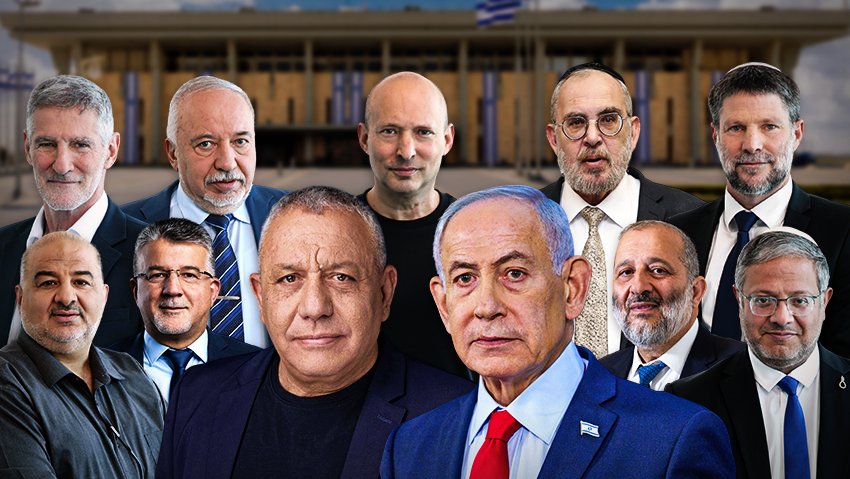
Israel’s next government: The endorsements, the holdouts and the political math
(Photo: Shutterstock,Elad Malka, Shalev Shalom Alex Kolomoisky, Reyan Preus)
The election results leave Netanyahu’s bloc with 53 seats, Eisenkot’s bloc with 48 and the two Arab parties with a combined 19. So which candidate is each party expected to endorse, and which parties remain undecided?
Netanyahu’s Likud will be the largest party in the next Knesset, with 27 seats. Unsurprisingly, it is expected to recommend its chairman, who led the outgoing government, for another term. Expected endorsement: Netanyahu.
There is little uncertainty here either. Gadi Eisenkot, chairman of the largest party in the anti-Netanyahu bloc, has already declared his intention to form a government to replace Netanyahu’s. In recent days, Eisenkot has met with the leaders of the other parties in his bloc, apart from Avigdor Lieberman, apparently in part to consolidate their support for his candidacy. Expected endorsement: Eisenkot.
Party chairman and former prime minister Naftali Bennett and his No. 2, Yair Lapid, met with Eisenkot in the days following the election. The third-largest party in the Knesset, with 12 seats, is expected to remain aligned with the bloc seeking a change of government. Expected endorsement: Eisenkot.
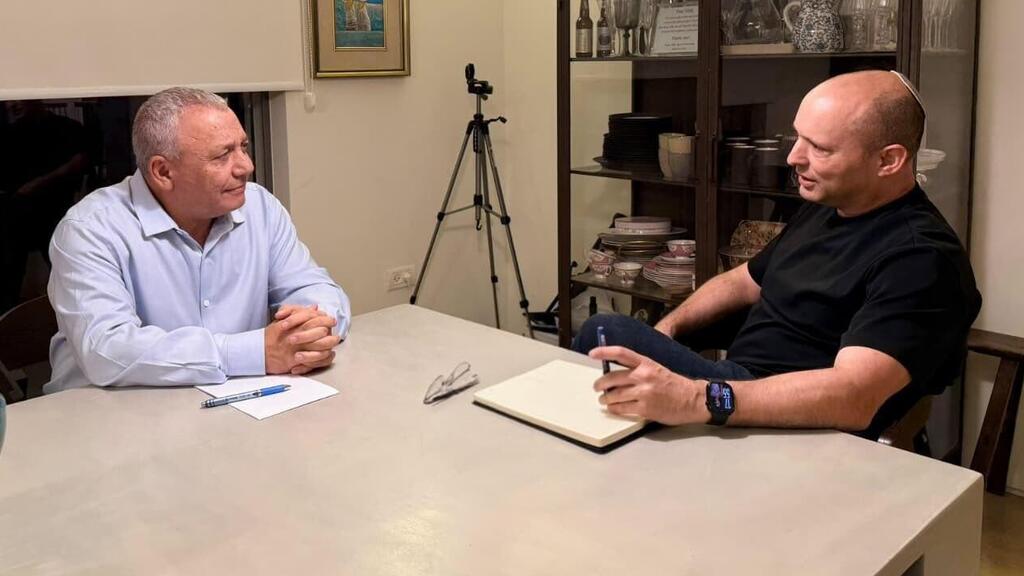
Naftali Bennett and Gadi Eisenkot meet following the election results
The Joint List, which won 11 seats, has issued an official statement expressing its willingness to cooperate politically in establishing an alternative government and has made clear that it intends to work toward ending Netanyahu’s rule. Ahmad Tibi said again Saturday evening that the party was prepared to recommend Eisenkot and support a move to replace the Knesset speaker. Although the party has not formally announced its decision, it appears likely to endorse the Yashar! chairman during the presidential consultations. Likely endorsement: Eisenkot.
Mansour Abbas, whose Arab Islamist party won eight seats, is also expected to recommend Eisenkot. Abbas has not ruled out joining a new government or supporting one from outside the coalition. It remains unclear, however, whether other members of Eisenkot’s bloc would agree to such an arrangement, particularly Yisrael Beiteinu chairman Avigdor Lieberman. Likely endorsement: Eisenkot.
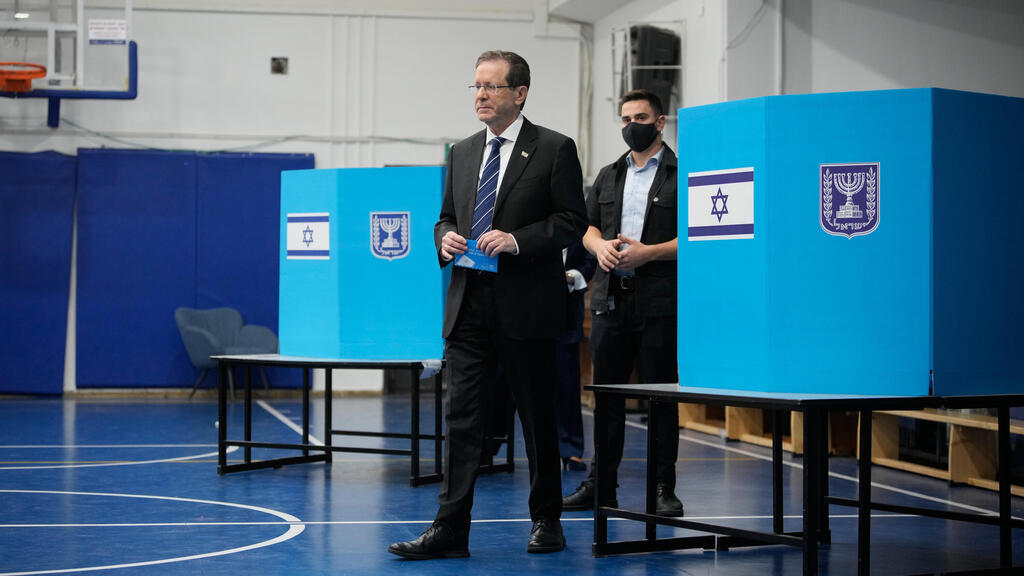
President Isaac Herzog casts his ballot in Israel’s elections
(Photo: AP/ Ohad Zwigenberg)
Party chairman Yair Golan has been the most outspoken figure in Eisenkot’s bloc in favor of forming a government with the Arab parties. Golan, whose party won eight seats, has argued in recent days that a broader alliance seeking to replace Netanyahu could command 67 seats and that the results present an opportunity to form a new government in partnership with Israel’s Arab citizens. He has recently met with Eisenkot, Lapid and Abbas. Expected endorsement: Eisenkot.
One of the biggest unanswered questions concerns Avigdor Lieberman, whose party secured seven seats. Lieberman has yet to publicly declare whether he intends to recommend Eisenkot for prime minister. He has repeatedly ruled out joining Netanyahu, but has also said he will not serve in a government with the Arab parties or one dependent on their support. Before the election, figures within his party even raised the possibility that Yisrael Beiteinu would recommend Lieberman himself. Expected endorsement: Undecided, although support for Eisenkot remains possible.
Throughout the election campaign, Itamar Ben-Gvir, chairman of the far-right Otzma Yehudit party, repeatedly attacked Netanyahu, alleging that the prime minister was planning to establish a unity government with Eisenkot that would exclude him. That possibility continues to be discussed, but Ben-Gvir, who spoke with Netanyahu after the results became clear, has become a regular political ally of the Likud leader in recent years. His seven lawmakers are therefore expected to back Netanyahu in the presidential consultations. Expected endorsement: Netanyahu.
Another major question mark hangs over the ultra-Orthodox United Torah Judaism party. Its chairman, Yaakov Asher, who replaced Moshe Gafni, visited the homes of senior rabbinical leaders on Saturday alongside other party lawmakers. They received the rabbis’ blessings but avoided addressing the central political question: whether the party would join any future government, and under whose leadership. United Torah Judaism is demanding legislation regulating exemptions from military service for ultra-Orthodox yeshiva students before making any commitment. It has not pledged to recommend either candidate. Expected endorsement: Unclear, including whether the party will endorse anyone at all.
Aryeh Deri’s ultra-Orthodox Shas party fell sharply from 11 seats to six. Although it withdrew from the government and coalition months ago following the failure to pass legislation providing military draft exemptions, it continues to support Netanyahu and considers itself part of his political bloc. Expected endorsement: Netanyahu.
Party chairman Bezalel Smotrich and his No. 2, Zehut leader Moshe Feiglin, regard themselves as integral members of Netanyahu’s bloc. Smotrich has already met with the Likud chairman to coordinate political moves and is not expected to depart from his previous pattern of backing Netanyahu. Expected endorsement: Netanyahu.
Herzog is expected to begin consultations with party representatives on Wednesday, with the meetings likely to continue Thursday and possibly into Friday. Under Israeli law, the president must complete the process and assign the task of forming a government within seven days of the official publication of the election results. With the results due to be formally presented on November 4, the deadline is November 11, although Herzog could make his decision earlier.
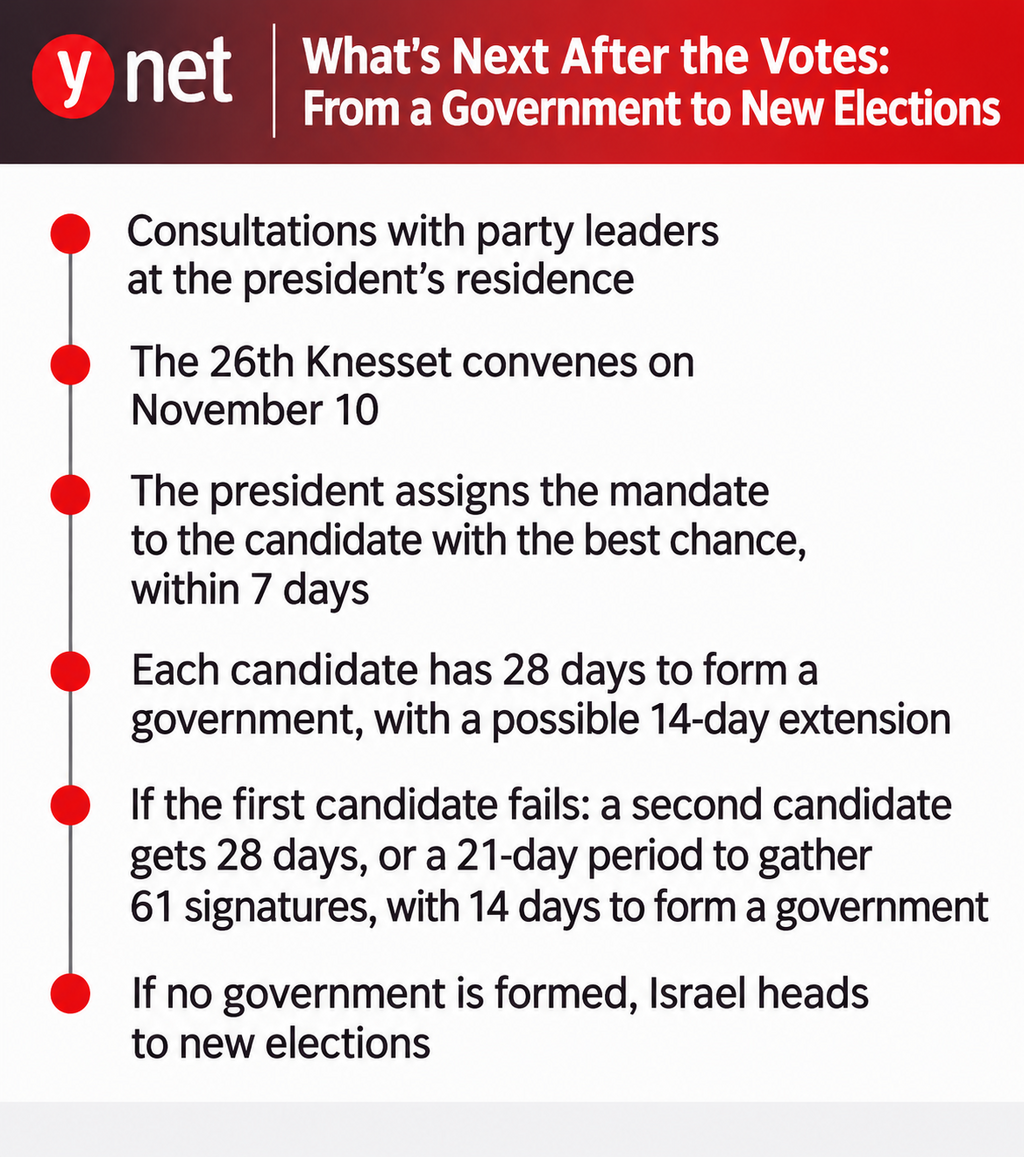
The president generally assigns the task to the Knesset member he believes has the best chance of forming a government. In practice, that is often the candidate who receives the largest number of recommendations from fellow lawmakers, although the number of endorsements is not the sole consideration.
Based on the current projections, that candidate would be Eisenkot. Even if Lieberman’s Yisrael Beiteinu decides not to recommend him, Eisenkot could receive 60 endorsements, including those of the Joint List and Ra’am. If Lieberman also backs him, the total would rise to 67.
Netanyahu, meanwhile, is expected to receive 46 recommendations from Likud, Otzma Yehudit, Shas and Religious Zionism. United Torah Judaism’s seven seats remain uncertain, potentially leaving the party outside either camp during the consultations.
Receiving the most recommendations, however, does not guarantee the formation of a government. The next challenge for either candidate will be turning political endorsements into a workable coalition capable of winning the Knesset’s confidence.
The candidate who receives the first mandate from the president has 28 days to form a government. Herzog may grant an extension of up to 14 additional days, giving the candidate a maximum of 42 days to assemble a coalition.
If that candidate fails, the president has two options. He can assign the task to another Knesset member, most likely a candidate from the rival political bloc, who would then have 28 days to form a government, without the possibility of an extension.
Alternatively, Herzog can inform the Knesset speaker that he sees no prospect of forming a government. That triggers a final 21-day period during which at least 61 lawmakers can submit a written request asking the president to assign the task to a particular member of the Knesset.
A candidate nominated through this procedure would receive 14 days to form a government. The same 21-day procedure can also follow an unsuccessful second attempt to form a coalition.
If none of these attempts produces a government that wins the confidence of the Knesset, parliament is automatically dissolved and Israel heads for another election.