
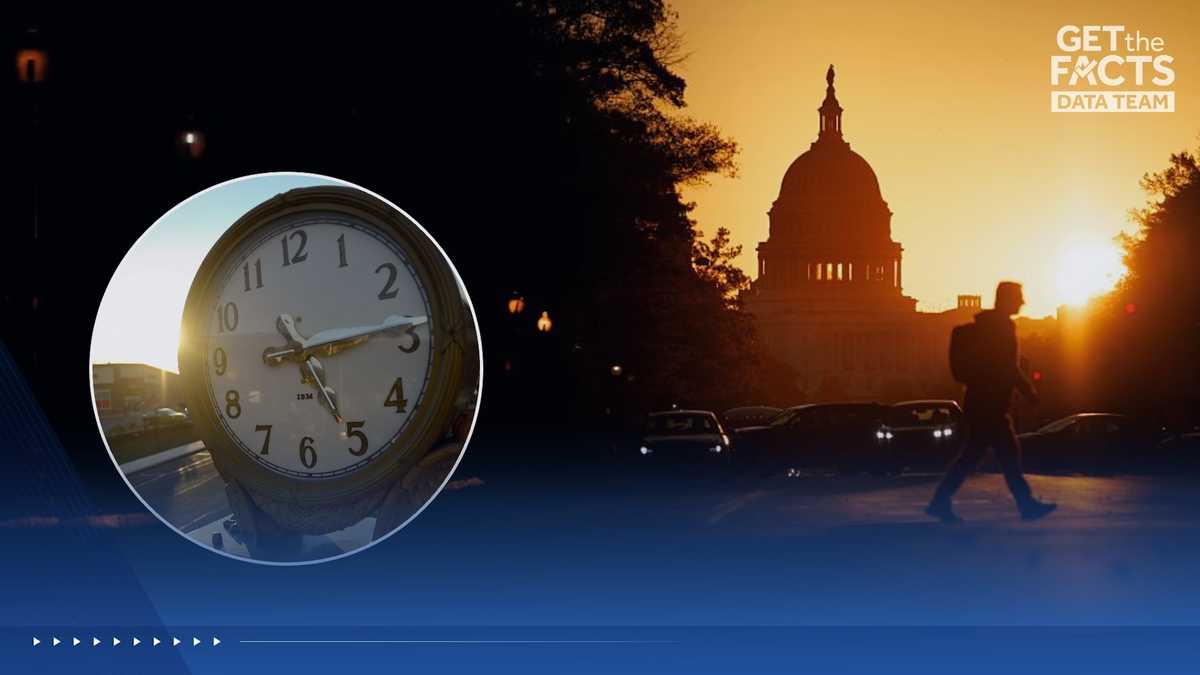
Search your ZIP code to see when your sunrise and sunset would be if the US got rid of the clock change
The U.S. House of Representatives passed a bill back in July that would make daylight saving time permanent. Since then, the Sunshine Protection Act has stalled in the Senate, meaning the clocks “fall back” an hour on Halloween weekend.
The Sunshine Protection Act passed the House 308-117. Making daylight saving time permanent would mean using the time zone year-round that people now set clocks to from March to November.
President Donald Trump has backed making the time zone permanent, writing on Truth Social in May, “It’s time that people can stop worrying about the ‘Clock,’ not to mention all of the work and money that is spent on this ridiculous, twice yearly production.”
Daylight saving time occurs from March to November each year in the U.S. On the second Sunday in March, clocks spring forward. When it ends on the first Sunday in November, clocks fall back.
Use the tool below and search your ZIP code to see how your sunrise and sunset would change if the bill to make daylight saving time become law.
Daylight saving time was first implemented in 1918 with the passage of the Standard Time Act to conserve energy, but was repealed the following year.
It was then implemented once again during World War II, but was standardized in the U.S. with the passage of the Uniform Time Act in 1966, which established daylight saving time from April to October.
The act also allowed local exemptions. Neither Hawaii nor Arizona, excluding the Navajo Nation, recognizes daylight saving time. Both states follow standard time year-round.
The U.S. experimented with a trial of year-round daylight saving time in the 1970s. The effort, signed into law by President Richard Nixon, was to help with conserving gas.
At first, it had approval from most Americans, but that approval nosedived by the second month of the trial. One main concern was the safety of children leaving for school in the dark in the morning. The trial was reversed later that year by President Gerald Ford.
The length of daylight saving time has been expanded twice since the act’s passage in 1966, once starting in 1987 and a second time beginning in 2007.