
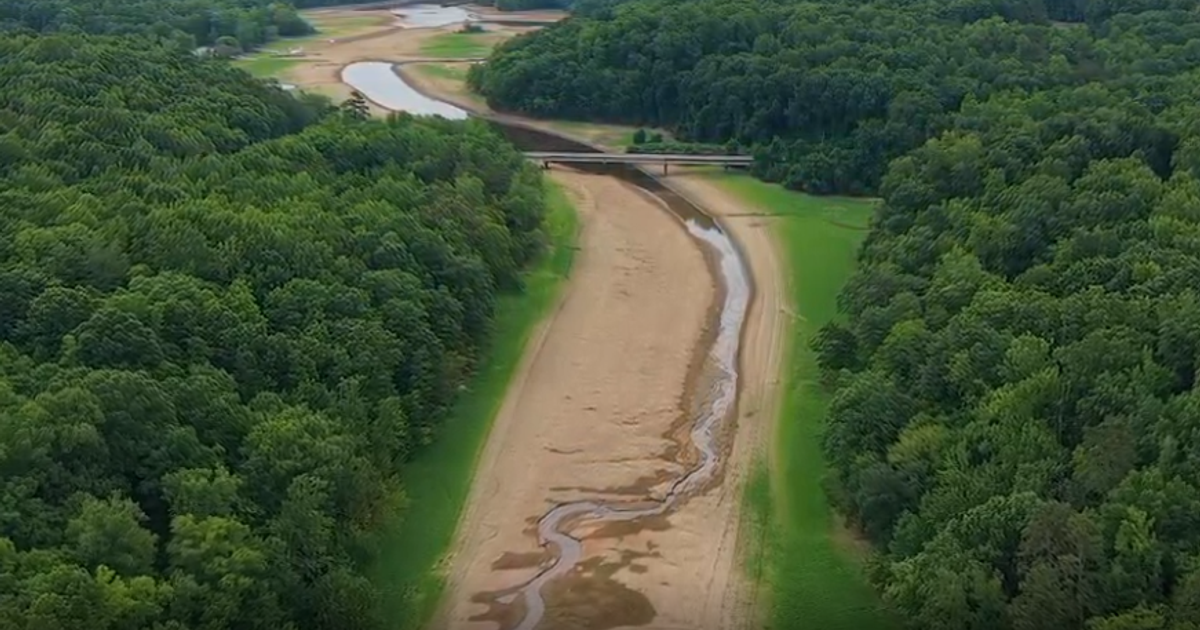
Durham has an estimated 81 days of water supply remaining, with the city’s two primary reservoirs at just 31% of their combined storage capacity.
According to the city of Durham, Lake Michie is 12.71 feet below its full level of 341 feet.
Little River Reservoir, Durham’s other primary water source, is also significantly low, sitting 19.08 feet below its full level of 355 feet.
The declining water levels come as drought conditions continue across Durham County, where some areas are experiencing moderate drought while others are in severe drought.
How Durham is supplementing its water supply
As drought conditions persist, Durham is relying on additional water sources to help preserve its dwindling supply.
Those sources include Teer Quarry, a former quarry converted into a water storage facility, and Jordan Lake.
Joe Lunne, a senior public information and communications analyst with Durham’s Department of Water Management, explained that Durham has its own allocation of water from Jordan Lake but does not currently have the infrastructure needed to withdraw and treat that water directly.
Instead, Durham pays the Town of Cary to treat its allocated Jordan Lake water and deliver it through connections between the two cities’ water systems.
Once the treated water enters Durham’s distribution system, it blends with the city’s other water supplies.
Durham is also purchasing water from the Orange Water and Sewer Authority (OWASA), which primarily serves Chapel Hill and Carrboro.
OWASA gets its water from three sources: Cane Creek Reservoir, University Lake and Quarry Reservoir. Those reservoirs collect and store rainwater that is treated before being delivered to customers.
Lunne said Durham has increased the amount of water it is receiving through Cary and OWASA as drought conditions continue.
Could Stage 3 water restrictions be next?
With reservoir levels continuing to decline, Durham is monitoring conditions that could trigger Stage 3 water restrictions.
According to Lunne, the city would move to Stage 3 restrictions if forecasts show at least a 10% chance that its combined reservoir storage could drop to just 25% within the next eight weeks.
“While we are getting close to hitting the trigger for Stage 3, we aren’t there yet,” Lunne said.
Rain is forecast over the next couple of days, which could provide some relief to Durham’s water supply.
What are Durham’s current Stage 2 water restrictions?
Durham remains under Stage 2 water restrictions, which limit how residents and businesses can use city water.
For residents:
No sprinkler irrigation: Sprinkler and spray irrigation are prohibited. There are no designated watering days.Hand watering is allowed: Residents can still water plants using a handheld hose or watering can. Drip irrigation and tree and shrub watering bags are also permitted.Decorative water features: Adding water to decorative fountains, ponds or pools is prohibited unless the water is recycled.Swimming and wading pools: Water can only be added to replace evaporation or spillage and maintain proper operation of chemical feeders.Vehicle washing: Washing vehicles with city water is prohibited except at commercial or institutional car washes.Outdoor cleaning: City water cannot be used to wash sidewalks, driveways, decks or building exteriors unless necessary for health or safety reasons or to prepare a surface for painting.
For restaurants and large water users:
Restaurants: Drinking water may only be served when a customer requests it.Large water users: Businesses and facilities using more than 100,000 gallons of water per day must aim to reduce consumption by 30% and document their conservation efforts. Those operating under an approved Water Conservation Plan must follow the Stage 2 reduction goals outlined in that plan.