

Listen to this article
Estimated 4 minutes
The audio version of this article is generated by AI-based technology. Mispronunciations can occur. We are working with our partners to continually review and improve the results.
It’s about a 20-kilometre drive to Brad and Lorrie Swan’s nearest neighbours on Oromocto Lake.
Getting to their isolated off-grid cabin deep in the woods requires using several dirt roads and remote logging routes.
But the Swans do have a mailbox. They decorate it for Halloween and Christmas.
Nobody delivers mail that far into the forest, however. Not even remotely close.
And the Swans find this endlessly amusing.
“That’s the big joke,” Brad said. “Everyone wonders who delivers, who we pay, and who we know to deliver way out here.
“But it’s just all staged just for fun, and that’s the way we are.”
One day last spring, the Swans were being who they are and returning to their log cabin when they noticed a logging-road worker had stacked one large rock on top of an even larger rock.
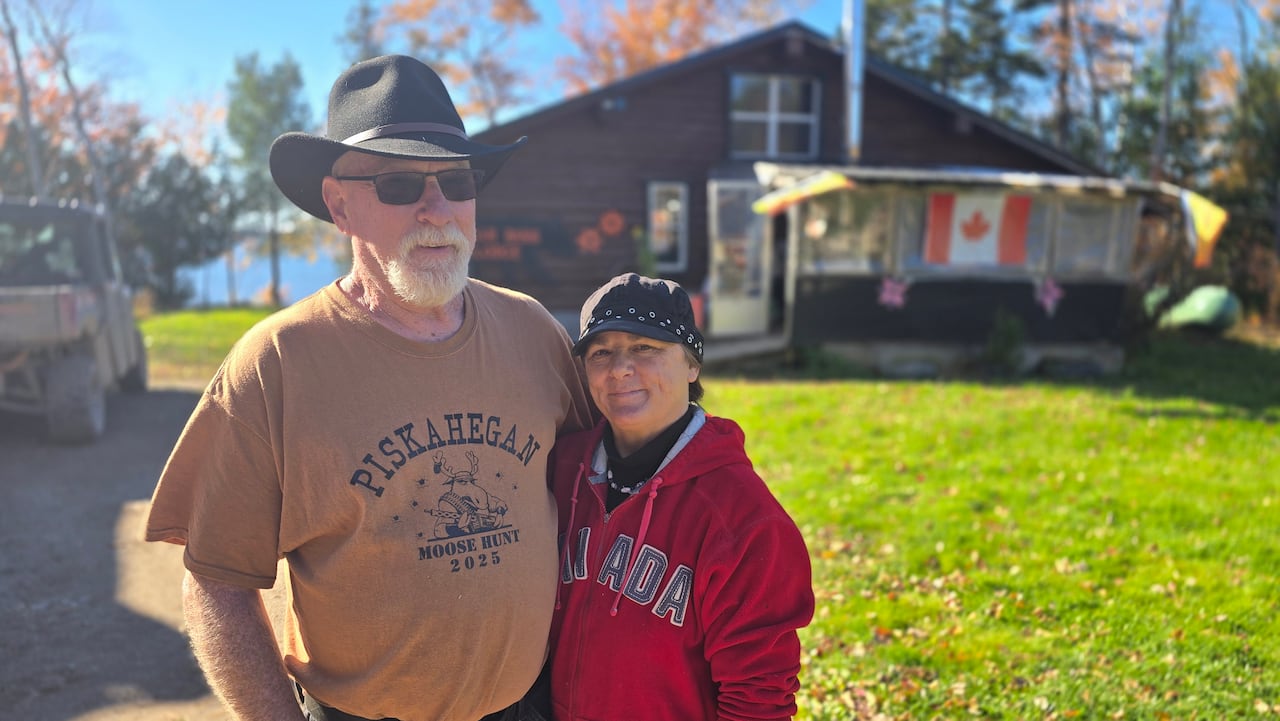
Brad and Lorrie Swan by their off-grid cabin on Oromocto Lake. The couple painted a giant rubber duck into existence when a road worker used heavy equipment to stack two rocks in a clearcut along the dirt road to their remote home. (Shane Fowler/CBC)
“Me and the wife both looked at each other and said it looks like a duck,” Brad said. “[We] turned right around, went to the hardware store, bought the paint, came back and painted it.”
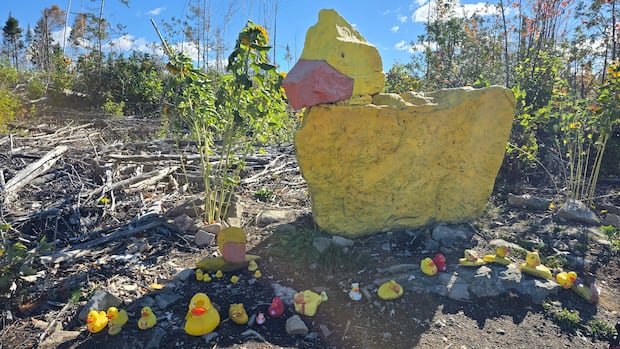
They painted it yellow and orange and stuck googly eyes on it. At about seven feet tall, it’s the largest rubber duck around that’s made of stone.
The ducks that have shown up in its shadow are much smaller.
WATCH | The story of the stone duck in the middle of nowhere :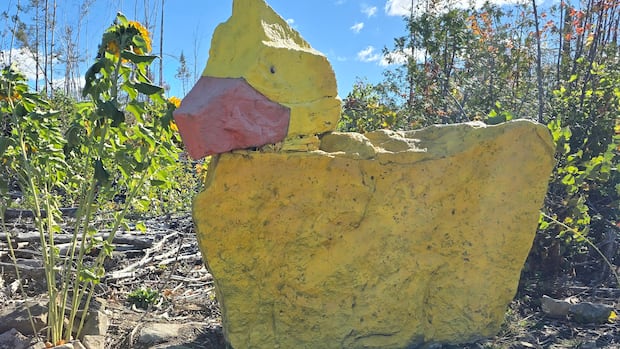
A large stone duck has appeared in the remote New Brunswick wilderness
Two stacked rocks and a bucket of paint have created a wholesome destination for travellers in the forest southwest of Fredericton.
The giant duck has become a destination for people travelling the area in off-road vehicles.
“It’s amazing the amount of traffic that’s out here for the middle of the woods,” Brad said. “It tickles me pink.”
Those who visit the duck are leaving behind more ducks.
Now about two dozen painted ducks made from rocks sit by the large duck. They’re joined by several genuine rubber ducks.
People have signed the small ducks, leaving their names and the places they’re from, including Oromocto, Saint John and even P.E.I.
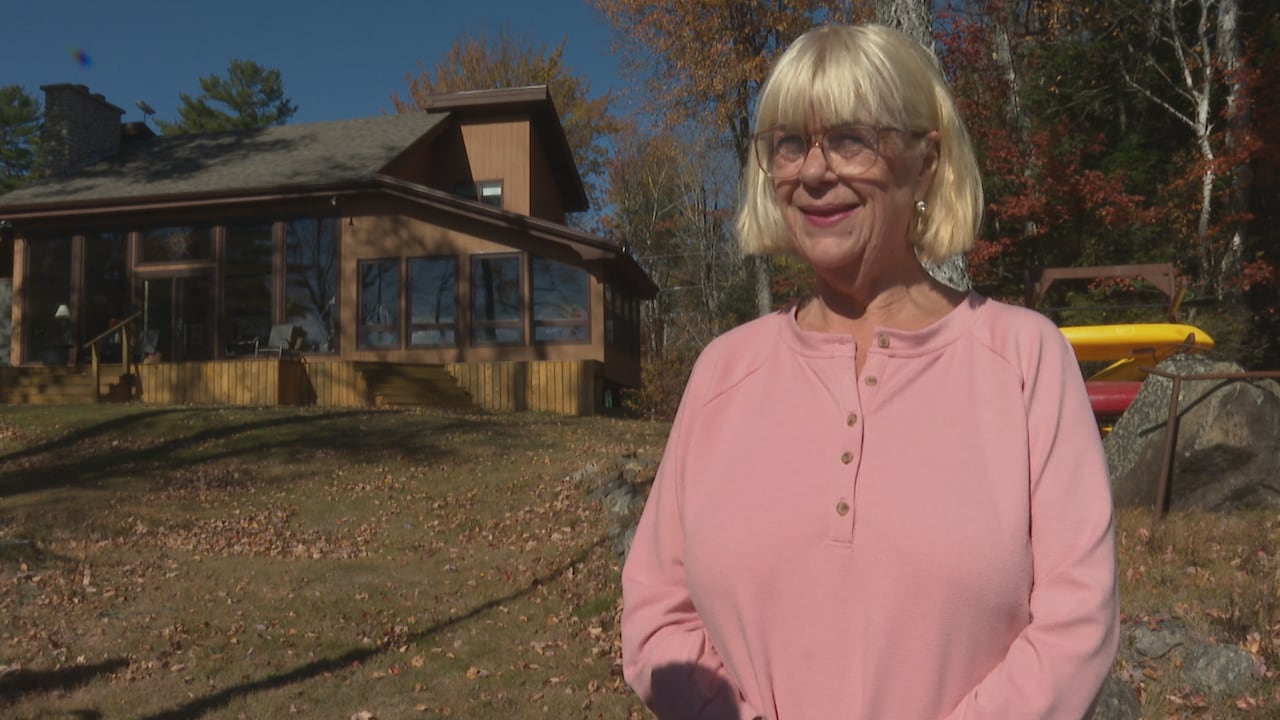
Jean Gass has travelled to the stone duck and left behind smaller rocks hand-painted with her daughter and granddaughter. (Shane Fowler/CBC)
“The world right now needs fun things more than ever before,” said Jean Gass, one of Swan’s faraway “neighbours,” who has added a few ducks to the duck pile.
She’s painted her own small rock ducks with her daughter and granddaughter and calls the whole oddity “wholesome.”
“We need to embrace everything that can make you smile because there’s too much that doesn’t make you smile right now.” Gass has also planted sunflowers at the duck.
She and her husband travel there in their side-by-side offroad vehicle. To anyone following suit, she recommends taking an offroad vehicle or a truck, not a car, to the duck.
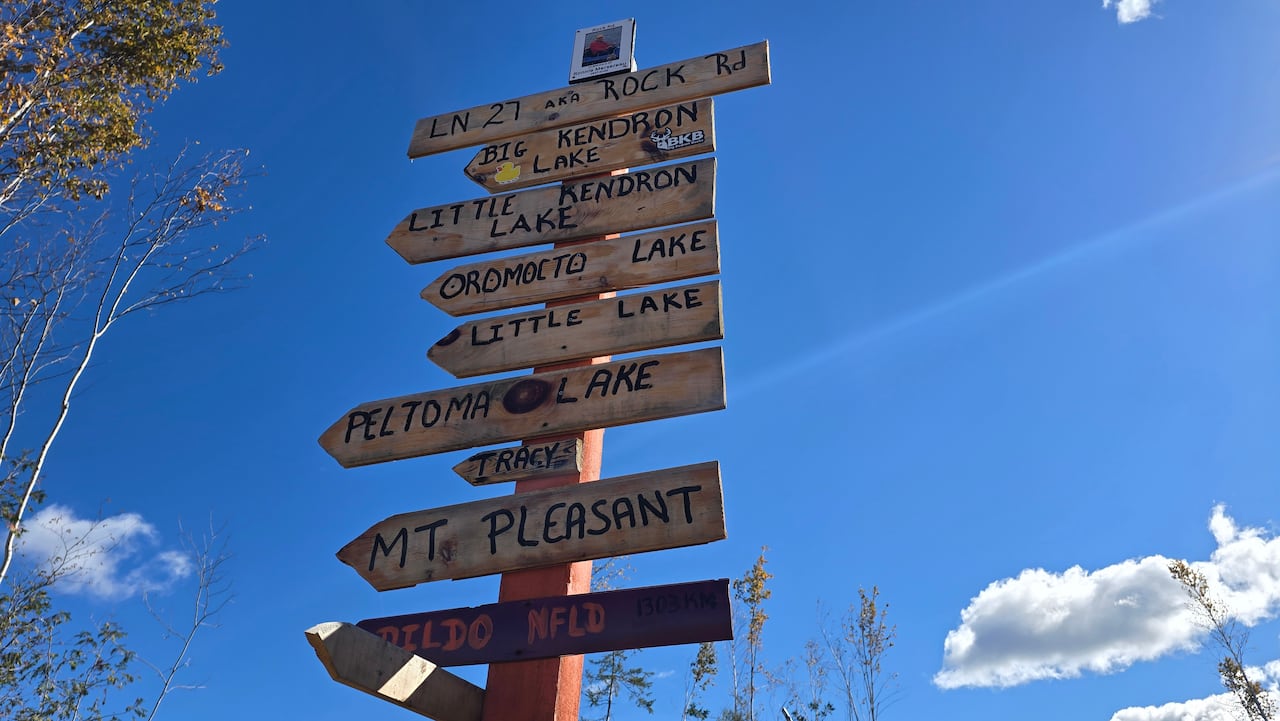
The Swans have erected a signpost memorial for a friend at the crossroads where the duck sits. (Shane Fowler/CBC)
“This is remote, side-by-side country, this is ATV country,” Gass said. “But everybody’s going, they go all day. The retired people are going during the week, and the young people are going during the weekend.”
The roadway that hosts the duck was known locally for decades as Rock Road before it was officially named Lane 27 in recent years.
At the crossroad of clearcuts where the duck stands is a towering signpost that lists the various locations the logging roads will take travellers as they go deeper into the woods.
At the top of the post is a photo the Swans put up as a memorial to a friend, with the inscription: “In memory of Ronnie Mersereau / 1947-2022.”
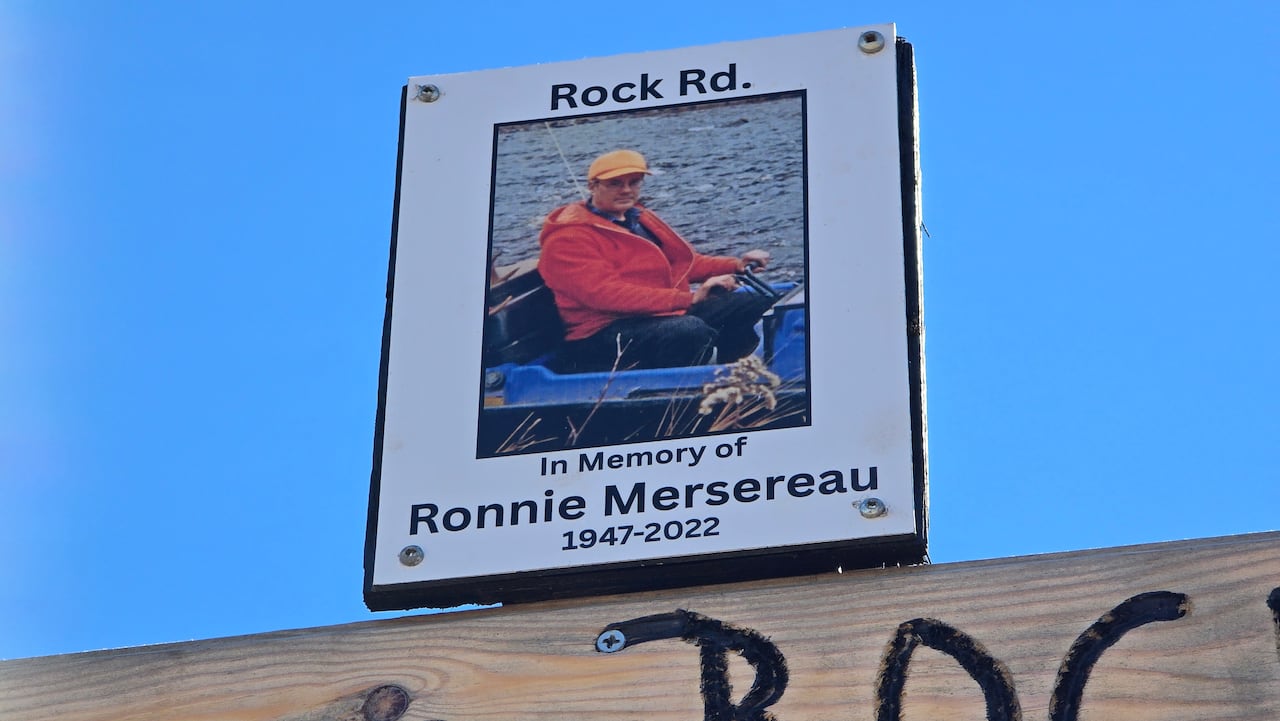
The duck sits next to a memorial Brad and Lorrie Swan made in memory of their friend Ronnie Mersereau, who spent much of his time in the surrounding woods. (Shane Fowler/CBC)
Merserau was “an outstanding person and one of the first ones out here in the area with the camp,” Brad said.. “Ronnie was just a super outdoorsman. He knew where all the migration trails were for hunting and different spots for hunting and fishing.
“And he was a real true outdoorsman because he’d share these spots with people to encourage people to get out, to do and enjoy the outdoors.”
Brad said he’s delighted that this odd little corner, with its signposts, memorial, sunflowers, giant ducks and rubber ducks keeps growing.