
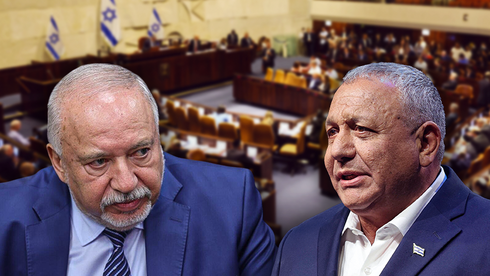
While Eisenkot continues to promote a 48-seat national emergency government, Yisrael Beytenu chairman Avigdor Liberman is pursuing an entirely different strategy, conducting independent negotiations with the Haredi parties.
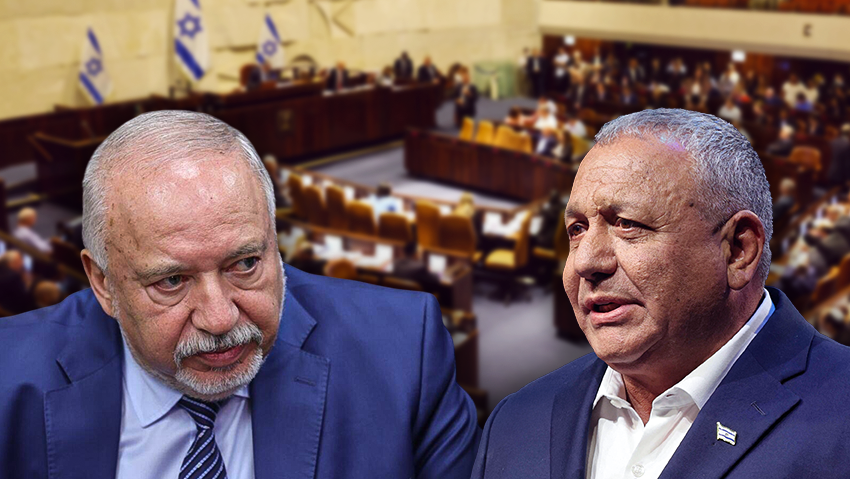
Heading for a clash? Eisenkot and Liberma
(Photos: Shutterstock, Alex Kolomoisky, Ariel Schalit/AP)
Liberman has already made his preferred course clear: a 61-seat government with the Haredi parties, or another election. As far as he is concerned, a minority government dependent on Arab parties is not an option, even if their support comes from outside the coalition. One of Eisenkot’s key allies in the bloc seeking to replace Netanyahu is therefore attempting to impose a different coalition framework before Eisenkot has even received the mandate.
Political sources claimed that Jerusalem Mayor Moshe Lion, who is close to both Liberman and Haredi politicians, has been mediating talks between them about forming a government. Speaking to ynet, however, Lion said he was abroad and was not involved in the matter.
Eisenkot appeared to take an indirect swipe at Liberman, warning that anyone who tries to sabotage the formation of a government for personal rather than substantive reasons “will be remembered by history as someone who failed to rise to the occasion.”
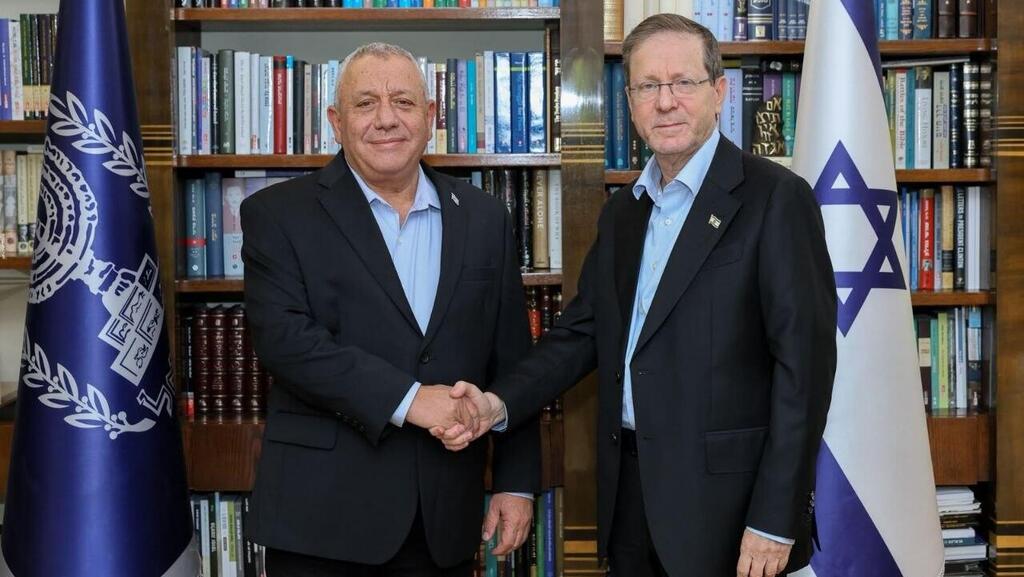
Eisenkot and Herzog: Yashar! Party head will get the mandate, but forming a new government could prove difficult
(Photo: Arnon Bosni)
Lieberman’s strategy is effectively unfolding in two stages. First, he is attempting to bring United Torah Judaism on board. The party declined to endorse any candidate for prime minister and has been holding talks with both political blocs. The next step would be to recruit Shas, although that presents a more complicated challenge.
Shas endorsed Netanyahu, and party chairman Aryeh Deri has already made clear that, at this stage, the party is not expected to abandon the right-wing bloc.

Shas Chairman Aryeh Deri and United Torah Judaism Chairman Yaakov Asher. Maximizing the political payoff
(Photo: Alex Kolomoisky, Yuval Chen)
For Liberman, however, the central question is not whether the Haredi parties will join Eisenkot or Netanyahu, but whether a partnership with them can produce an alternative government without relying on Arab parties.
Shas, which holds six seats, is the missing piece in Lieberman’s coalition puzzle. Without its support, it is impossible to reach 61 seats through an alliance with the Haredi parties alone. Deri, however, has already demonstrated that he is in no hurry to part ways with Netanyahu. With the Haredi parties now positioned as potential kingmakers, they have an opportunity to maximize their political bargaining power.
Golan also extends a hand
Against the backdrop of the talks with the Haredi parties, Democrats chairman Yair Golan and members of his party issued a joint statement emphasizing that they were interested in a partnership with the Haredi community, but not at any price.
“We are not looking to punish the Haredim. We want a partnership with the Haredi community, but a genuine partnership requires mutual responsibility,” they wrote.
Golan made clear that such a partnership would require Haredi military service, greater participation in the workforce and the preservation of freedom of choice in public life, including the ability to enjoy leisure activities and use public transportation on Shabbat.
“We are extending a hand out of a genuine desire to establish a government of change. Under no circumstances are we offering a blank check,” he stressed.
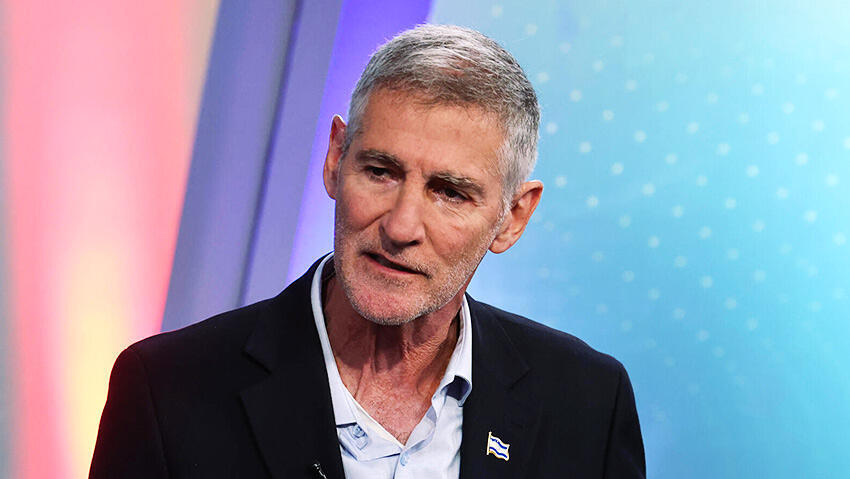
Democrats Yair Golan is interested in a real partnership
(Photo: Yariv Katz)
Netanyahu was effectively launching a defensive political maneuver amid concerns that Eisenkot could succeed in forming a government. He sought to exploit disagreements within the bloc seeking to replace him and portray Eisenkot’s potential dependence on Arab parties as a threat to national security.
“There is only one choice, not national suicide, but national unity,” Netanyahu said, calling for a government that would include “all the parties of the national camp and all the Zionist parties that want to protect our country.”
In practice, Eisenkot now faces two main options, both politically difficult.
The first is to insist on the minority government he originally envisioned, relying on outside support from Ra’am and potentially United Torah Judaism. That would bring him into direct conflict with Liberman’s position.
The second is to adopt Liberman’s proposal, bring the Haredi parties into the coalition as a bloc and establish a 61-seat government. Such a move would require Eisenkot and his partners to make significant concessions, particularly on military conscription.
Liberman is effectively presenting Eisenkot with a political ultimatum: a government with the Haredi parties or another election. Rather than waiting for Eisenkot’s decisions, he is actively pursuing his own coalition arrangement with the Haredi parties, while Netanyahu attempts to draw those potential partners back into his bloc through appeals for national unity.