
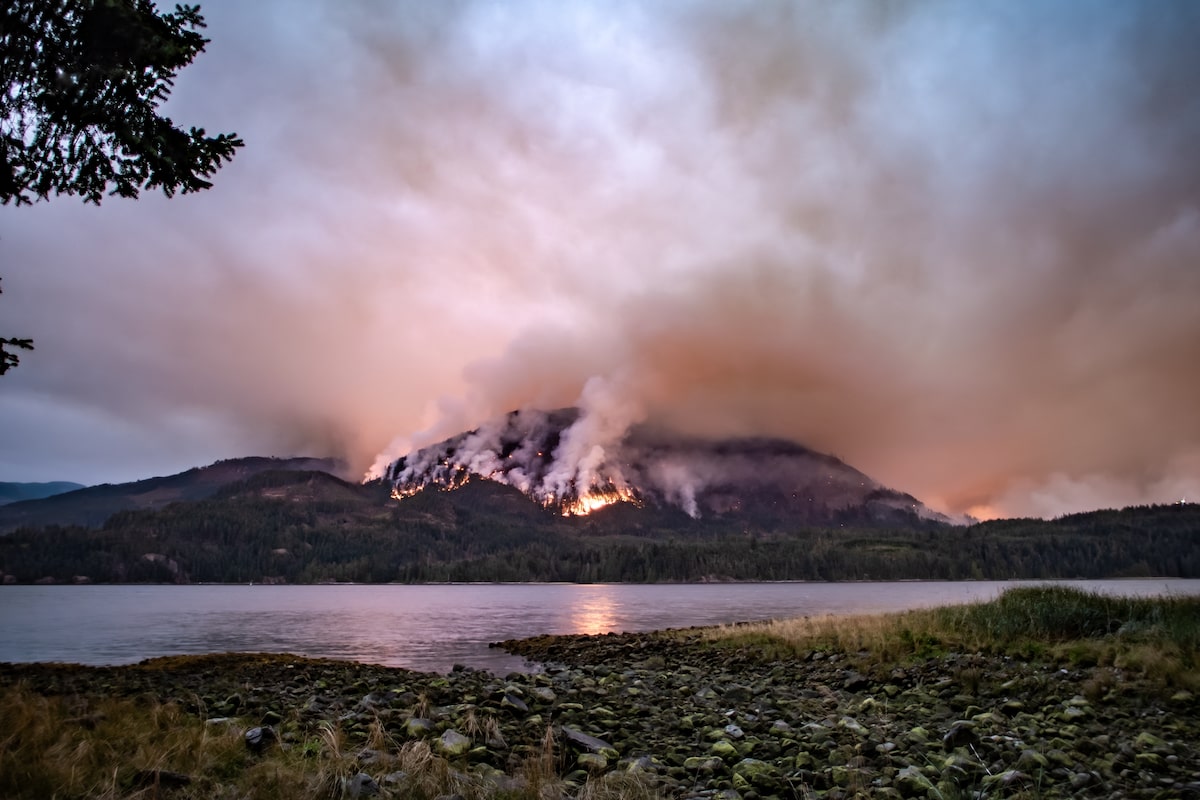
A wildfire burns on Mount Underwood near Port Alberni, B.C., in August. A new poll says a majority of older Canadians endorse the idea of mandatory service for those under 30 in areas such as environmental support.COLBY REX O’NEILL/AFP/Getty Images
A recent Angus Reid poll shows overwhelming support for requiring Canadians aged 18 to 30 to perform a year of national service in health, environmental, disaster response or youth services. Enthusiasm is highest among those over 60; the survey found that 84 per cent of older Canadians believe such service would support the personal development of younger adults.
As someone who values citizenship, I understand the appeal and welcome expectations that we fulfill responsibilities to our communities.
But the results of this poll make me anxious, because they miss a deeper reality. Younger Canadians already perform a critical national service: They pay more out of pocket, and sacrifice their standard of living, to protect healthy retirements for our aging population.
We don’t yet call this sacrifice national service, nor do we celebrate it. But it’s real, baked into our housing markets, government budgets and the deteriorating health of our planet. So before we ask millennials and Gen Z to take on more, we should acknowledge the service they already provide.
The housing market is ground zero for younger generations paying more and making sacrifices. When boomers were starting out, they typically needed to work full-time for five years to save a 20-per-cent down payment on an average home. Today, younger Canadians must work for 14 years – even longer in Ontario and B.C.
How the world became obsessed with naming – and blaming – the next generation
We impose this greater workload on young people because politicians fear the fallout of lower prices. That fear effectively drafts millennials and Gen Z into protecting housing wealth for older homeowners by paying more for less space, enduring the stress of soaring rents and mortgage debt or abandoning the dream that a good home should be within reach if they work hard and save.
The budgets tabled by governments amplify the burden of service expected of younger Canadians. My research shows that the typical 35-year-old now pays 20 to 40 per cent more in income taxes toward healthy retirements than boomers did at the same age. When boomers were 35, seven working-age Canadians supported each retiree; today, only three share the load.
This is a challenge, because demand for care rises steeply with age. In Ontario, a 20-year-old uses about $2,200 in medical services annually, compared with $10,300 for a 70-year-old and $34,000 for a 90-year-old. Because our population has aged so dramatically – Ontario alone has nearly three million more seniors than it would if today’s age profile resembled 1976 – annual medical spending is about $20-billion higher.
The burden for younger taxpayers is heavier still because retired couples with annual household incomes of $182,000 can receive $18,000 in Old Age Security subsidies. By contrast, families with kids begin losing income supports once household income reaches $81,000. So younger Canadians not only pay more, they also face tighter benefit restrictions than retirees. That’s national service, imposed quietly through budgets and taxes.
Then there’s the climate file. Science shows that humanity has pushed past six of the nine planetary boundaries that make Earth habitable. From greenhouse gas emissions to biodiversity loss and nitrogen pollution, millennials and Gen Z will inherit the lifelong responsibility to stabilize the climate, restore ecosystems and fund the transition – all while building lives in housing and fiscal systems stacked against them. This is the ultimate intergenerational service.
It therefore feels dissonant for older Canadians to endorse yet another form of mandatory service for the young when, in truth, we already conscript younger Canadians into decades of obligations that advantage their elders. Service doesn’t just happen when young adults don a uniform in health care, fire protection or a climate corps. It happens every day when they absorb inflated housing costs, heavier taxes and mounting environmental debts so their elders don’t have to.
Older Canadians now owe it to younger generations to revisit whether our governments do enough to leave a proud legacy. That may mean adjusting housing policy so affordability becomes a bigger priority than asset protection. It should mean reforming Old Age Security so retirees with six-figure incomes lighten the load for their children’s generations. And it absolutely means taking responsibility for today’s pollution, rather than expecting our kids to pay more dearly for it later.
I’m not dismissing the value of civic programs that help young people contribute to their country. But until we acknowledge that millennials and Gen Z already perform critical national service on behalf of the aging population, it is misguided to demand even more. Young Canadians don’t need to give another year of national service. They need recognition – and reciprocity from older generations.
Dr. Paul Kershaw is a policy professor at UBC and founder of Generation Squeeze, Canada’s leading voice for generational fairness. You can follow Gen Squeeze on X, Facebook, Bluesky and Instagram, as well as subscribe to Paul’s Hard Truths podcast.