
In the wake of Florida voters approving the sweeping property tax cuts in Amendment 3, Central Florida communities are bracing for shakeups to their municipal budgets.
A new Orlando Sentinel analysis quantifies the possible pain.
Tiny Howey-in-the-Hills, for example — nestled in mostly rural central Lake County and with a police department of seven full-time officers — will see $936,752 in lost property tax revenue in 2028, when Amendment 3 is fully phased in, according to the nonprofit Florida TaxWatch. That translates to 22.5% of its roughly $4.2 million general fund, the Sentinel calculated.
The general fund pays for the town’s police, library, parks and special events, including its popular Christmas Festival.
In a Friday interview, Howey’s Mayor Graham Wells hastened to assure his residents there is no danger the city would lose its Police Department or its festivals. But he acknowledged the town will have to pull money from its reserve funds in 2027, when Amendment 3’s cuts begin to take effect as of Oct. 1. And he’s well aware the tax loss gets even bigger in 2028.
“It’s not going to impact us from paying the bills,” Wells said. “But the second year is a completely different ball game.”
While every local government across the state will have to grapple with Amendment 3 in some way, it’s expected to be especially trying for rural and bedroom communities that have higher percentages of their tax base comprised of residential properties that pay homesteaded property taxes.
Amendment 3 cuts only those taxes, imposing a $150,000 homestead tax exemption in 2027 rising to $250,000 the following year. It doesn’t apply to property taxes that fund schools.
But a city like Orlando collects property taxes on downtown high-rises as well as commercial and industrial properties that don’t get the Amendment 3 tax benefits. It also gets big helpings of sales tax and other business-related taxes. Compare that to Belle Isle, its smaller neighbor to the south, with a population of about 7,500 on the Conway Chain of Lakes..
Orlando is projected to lose about $60 million in homestead property tax, roughly six times as much as Belle Isle’s entire general fund. That amounts to about 7.6% of Orlando’s general revenues, the Sentinel calculated.
Belle Isle stands to give up about $2 million in tax revenue — but that’s a whopping 19% of its general fund.
Mayor Jason Carson said the city has a spending freeze in place as it assesses the fallout. One expense Belle Isle would love to reduce is the cost it pays to receive fire protection from Orange County. Over about five years, he said, the charge has gone up more than 80%, while calls for service haven’t increased at anywhere near the same rate. Of course, Orange County fire will now also be looking to increase revenue and reduce costs because of Amendment 3.
“Our budget is not that big to begin with,” Carson said. “We’re not going to press the panic button.”
Head directly east, clear across Central Florida, to upper middle-class Oviedo, where just over 66% of the city’s taxable properties are homesteaded parcels.
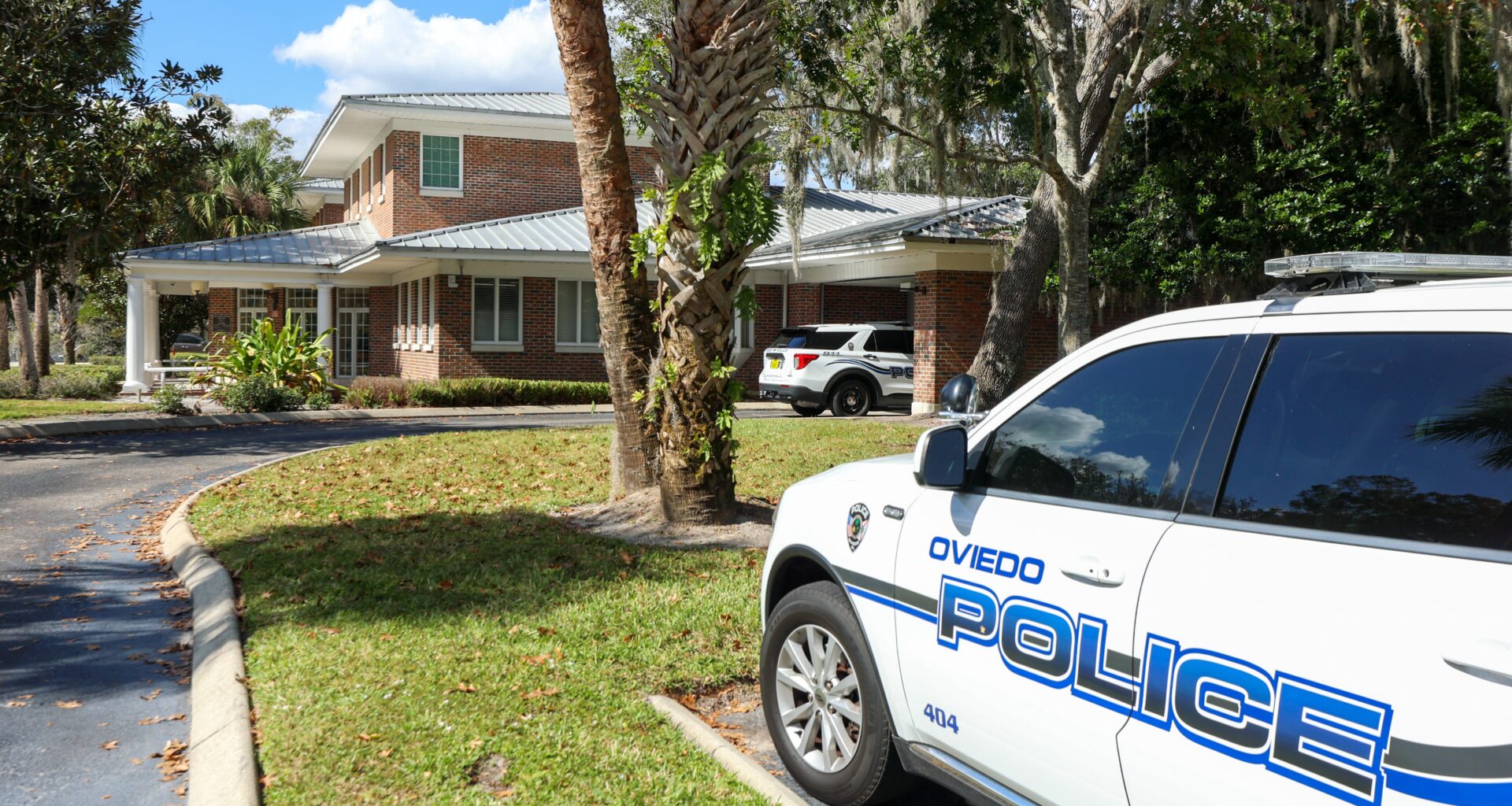
Mayor Megan Sladek said Oviedo will have to make tough choices, considering the city will see more than $10.4 million in lost revenue in its general fund in 2028, or nearly 23% of its roughly $46 million current budget.
As an example of the choices, she pointed out that every one of Seminole’s seven cities have their own police departments, while the county has the Seminole County Sheriff’s Office.
“We need to have a full and robust discussion on whether it makes sense to have eight law enforcement agencies,” she said. “Can we collaborate? Can we consolidate? Why are we not having that discussion? It’s a scary sounding thing. I understand why there’s hesitation. But we need to run the math.”
In its analysis, the Sentinel collected general fund values from city and county budgets from the current fiscal year, and compared them with Florida TaxWatch’s projected revenue losses.
Once Amendment 3 is fully implemented in 2028, the lost revenue ranges from 4% of Eatonville’s general fund to 32% of Lake County’s general fund. Eatonville takes a relatively small hit because so much of its population is renters.
In the lead up to Election Day, most cities and counties hadn’t said publicly how they were planning for the fallout. But some gave strong hints of trouble ahead. In Orlando, Mayor Buddy Dyer implemented a hiring freeze and rolled budget savings from last year into a “stabilization fund” to help limit future burdens. Seminole County Sheriff Dennis Lemma said he’d likely need to cut 300 positions due to the county having less money to fund his agency.
More recently, at least some officials are trying to project optimism. Howey Mayor Wells, for example, is hopeful that future residential and commercial growth ultimately will make up for his town’s loss.
“I’m looking at it from the point of view that we will have 2,600 new homes by the next five or 10 years,” Wells said. He added a new retail center anchored by a Publix will be completed in the coming years and add to the town’s coffers.
But officials are more sanguine in Winter Springs, an upper-middle class community in Seminole, where more than 70% of its taxable properties are homesteaded parcels, according to the Seminole Property Appraiser’s Office.
According to the Sentinel analysis, the city would see an estimated $4.5 million in lost revenue in 2028, or just over 16% of its current general fund budget of $26.3 million.
Winter Springs Mayor Kevin McCann touted that his city has one of the lowest property tax rates in the region, along with the fewest number of employees per capita. But that only goes so far.
“We are very fiscally responsible. So there’s just very little to cut,” he said. “But we’re going to have to replace those revenues. Everything is on the table … .And it’s going to affect employee morale. And [employee] retention is already difficult for municipal governments.”
The worst case: Some small cities — no longer able to afford to offer basic services — may face extinction and end up being absorbed by their counties.
“I will fight that forever,” McCann said on whether Winter Springs faces unincorporation. “I will do everything I can to prevent that. I will fight that as long as I can.”