

Listen to this article
Estimated 5 minutes
The audio version of this article is generated by AI-based technology. Mispronunciations can occur. We are working with our partners to continually review and improve the results.
As the dust settles on a stunning midterm election that saw Republicans take heavy losses in the U.S. Congress, former Canadian and American officials are unsure if the drubbing signals the end of U.S. President Donald Trump’s political era and MAGA movement.
“It all remains to be seen as to how the next two years go,” former Arkansas governor Asa Hutchinson said in an interview on Rosemary Barton Live. “I would expect the chaos to continue, and so that’s not good for the Trump legacy.”
Democrats made massive gains on Tuesday, flipping at least 40 seats in the U.S. House of Representatives and seven seats in the U.S. Senate, including a historic win in ruby red Texas. The party may also gain two more Senate seats in Mississippi and Alaska, depending on final results.
The underlying polls paint an even more concerning picture for the Republicans, suggesting the party lost significant ground across all demographics — including white men — just two years after they picked up support from Hispanic and Black voters.
WATCH | How Trump lost control of U.S. Congress: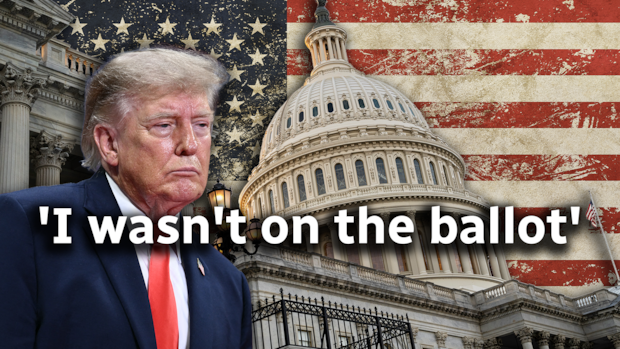
Midterms ‘bluenami’: The exact moment Trump lost control of Congress | About That
Democrats made historic gains in the U.S. midterm elections, winning majority control of both the House and Senate by flipping deep-red seats in several states including Texas, South Carolina and Kansas. Andrew Chang breaks down shifts across key battlegrounds to explain how the ‘bluenami’ unfolded as traditional Republican strongholds fell. (Photo credits: The Canadian Press, Reuters, Adobe Stock and Getty Images)
Democrats faced their own soul-searching questions after losing the 2024 election, in part due to eroded support from their key voting groups, only to make large enough strides this year that could propel them back to the White House in 2028 if they hold.
Hutchinson, a longtime Republican who ran against Trump in the 2024 presidential primary, acknowledged that Trump will not be a typical lame duck president and will likely continue to make controversy and try to command the attention of his party.
But he does see the drubbing as a chance for Republicans to realign themselves with “traditional values,” including supporting likeminded allies and advocating for small government as well as free trade.
“The fact that president Trump was to receive this rebuke by the American voters is going to open it much more widely as to who will be contesting that and running in 2028,” Hutchinson said.
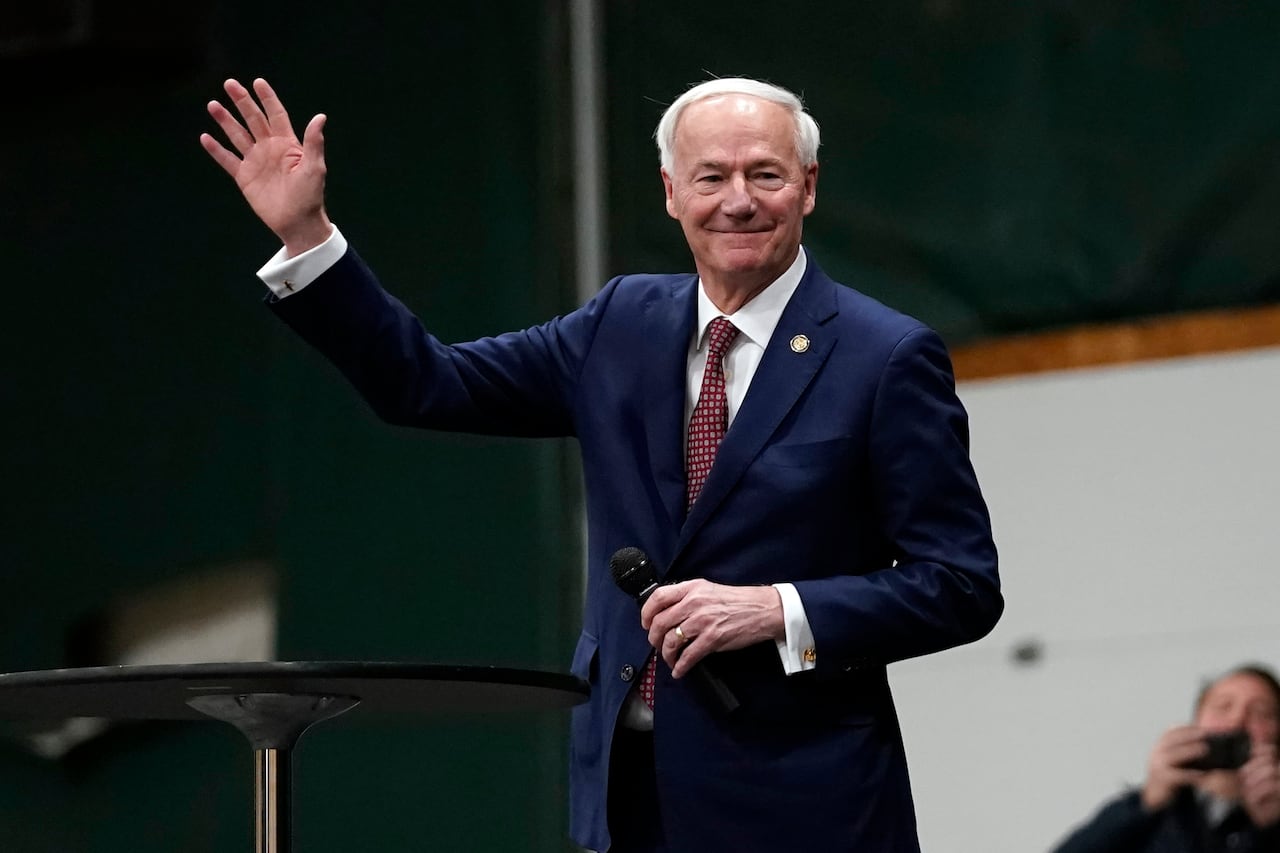
Former Arkansas Gov. Asa Hutchinson in Clive, Iowa, on Jan. 15, 2024. (Andrew Harnik/The Associated Press)
Jaime Harrison, a former chair of the Democratic National Committee, said American voters are “fed up with the corruption that they see in this administration” and sent Trump a rebuke to his his trade policies and the war in Iran that drove up prices.
“It’s a destruction-level type of event. I mean, [the Republicans] got wiped out,” he said.
Harrison also said that the late Republican senator Lindsay Graham, whose sister Darline lost her election to Democrat Annie Andrews in South Carolina, warned the party in 2016 that Trump would lead to the downfall of the Republican Party.
Bruce Heyman, former U.S. ambassador to Canada, told CBC’s The House that Trumpism and MAGA are “much diminished today,” but will still have some flicker because of the deep loyalty that exists in parts of Trump’s base.
“It wasn’t really as much a Democratic win as it was a Republican loss,” Heyman said.
“You needed to get the independents and the Republicans to come over…. It’s going to be up to Democrats to see whether they can keep them on board or do they go back to a more stable Republican Party going forward.”
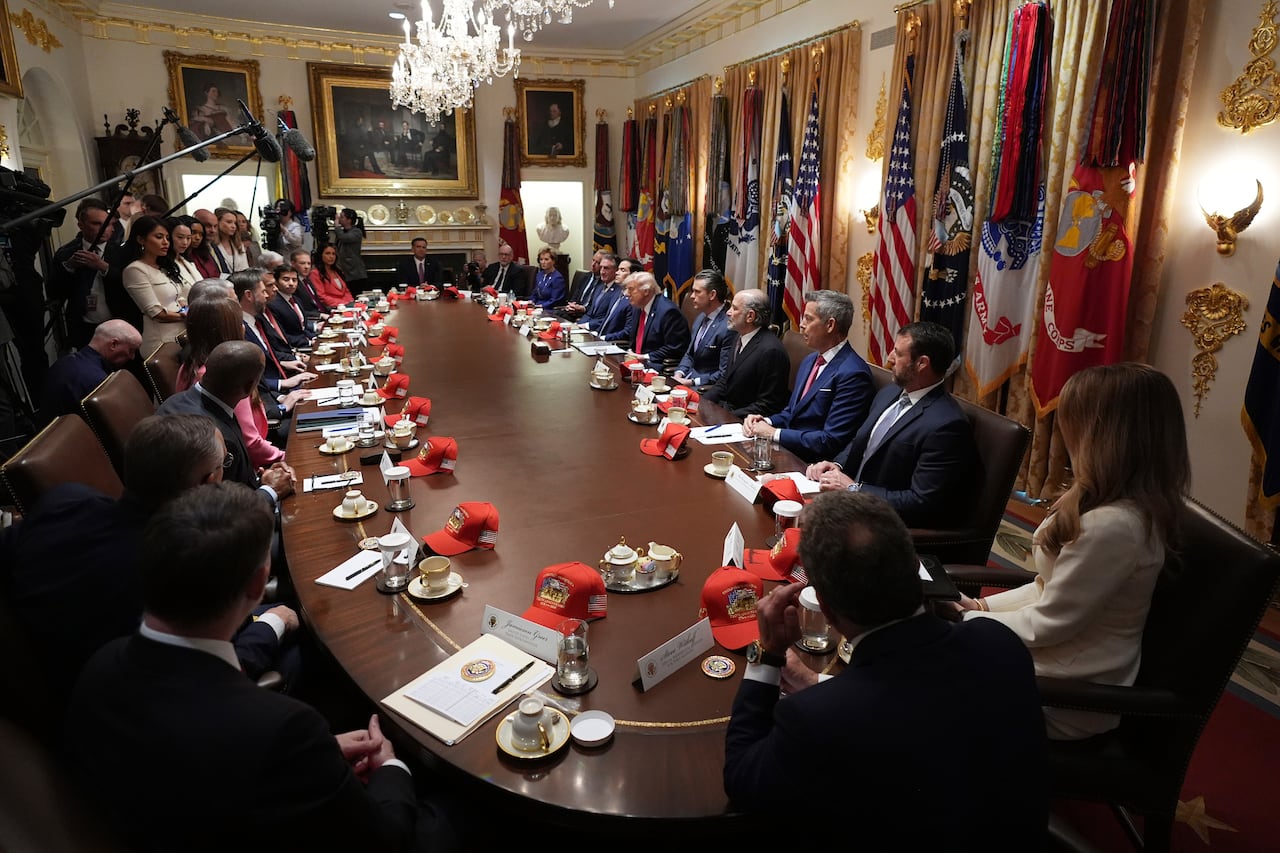
Trump, centre right, attends a meeting in the Cabinet Room, at the White House, on Wednesday, May 27, 2026, in Washington. (Jacquelyn Martin/The Associated Press)
Frank McKenna, former Canadian ambassador to the U.S., expects to see an erosion of support from Trump’s MAGA base “because nobody wants to go down with the ship when you’re in politics.”
But he pointed out Trump’s recent promotion of immigration hardliner Stephen Miller to chief of staff signals the president isn’t backing away from some of his key policies, like a mass deportation campaign.
“He’s still going to want to be the centre of attention and he’s still going to make life difficult for other people. The only difference now is that he has less power than he had a week ago,” McKenna said.
What’s Canada’s next play?
The Republican wipeout presents a trade deal opportunity for the Canadian government, if Trump takes the loss as a sign to soften his approach to Canada.
Just a few days before the midterms, Prime Minister Mark Carney said he had a “good conversation” with Trump on the future of Canada-U.S. trade and that teams will work in the coming weeks on the outlines of a possible deal.
Heyman said it’s hard to predict what will happen next, but there may be “jarring days ahead” for Democrats and Canadians alike, since Trump is now untethered to political concerns as he closes out his presidency.
But Carney should pursue multiple paths, Heyman said, including continuing negotiations with the White House, diversifying Canada’s economy and building up relationships with the new U.S. Congress.
“Hopefully, we’ll get us to a point where tariffs can be reduced or eliminated [and] building long-term agreements that we’ll put in place that you’ll need Congress for,” he said.
WATCH | Michigan Democratic senator-elect on Canadian tariffs:
El-Sayed willing to work with Trump to end ‘stupid tariffs’ on Canada
Michigan’s Democratic senator-elect Abdul El-Sayed said he’s willing to work with the Trump administration to end the trade war with Canada during an interview with MS NOW’s Morning Joe program on Thursday. El-Sayed will be sworn into office in January 2027.
McKenna said one ticking time bomb remains for Canada: Trump’s threat to increase tariffs on Canadian autos, car parts and steel to 50 per cent on January 1, 2027.
“It would effectively end cross-border auto traffic within Canada and North America,” McKenna said, adding that Canada is the biggest single-buyer of U.S.-produced automobiles.
But, he said he feels good about the pressure that Trump will face to lift the tariffs and lead the two countries toward a deal.
“In a way, it might be a release valve for him. So I’m feeling pretty optimistic, actually, that we can get to a deal.”