
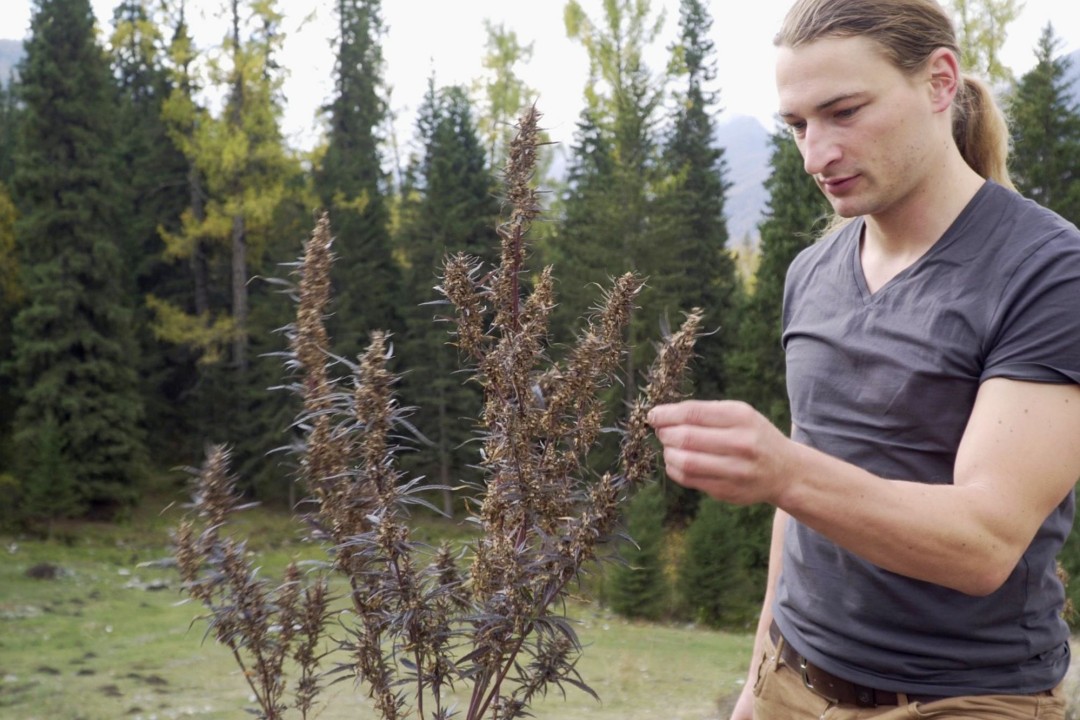
People may have been getting high off cannabis earlier than previously thought, at least 2,800 years ago, a new study in the journal Science suggests. Archaeologists who led a dig at a monumental tomb in Siberia said they turned up evidence of the earliest known use of cannabis for psychoactive purposes, reports the AP. The findings point to cannabis consumption at least 300 years earlier than previously known use in neighboring China. The international team said analysis of hair in the royal tomb where cannabis seeds turned up sheds new light on the plant’s role in ancient societies.
“It’s extremely rare that we have both preserved plant parts and human soft tissue with the active compounds in it in the same context,” says study co-author and University of Bern archaeologist Gino Caspari. It’s not clear whether the cannabis was consumed through inhalation or ingestion, he notes. The dig took place starting in 2017 at a burial mound at the Tunnug 1 site in the Uyuk Valley of southern Siberia. The team, deployed “essentially out in the middle of nowhere,” “struck gold” when it found tiny black spots that turned out to be cannabis seeds, along with preserved human hair that they could analyze, Caspari says.
“It’s only so often as an archaeologist that you … get to drug test a person [who’s] been dead for almost 3,000 years,” he notes. Not all independent experts, however, are convinced, with one calling the hair analysis “scientifically weak.” Today, scholars don’t consider ancient accounts trustworthy without corroborating evidence. Because the cannabis plant has other uses—seeds are pressed for oil, and fibers are used for cloth—their presence alone doesn’t confirm drug use. More here.