
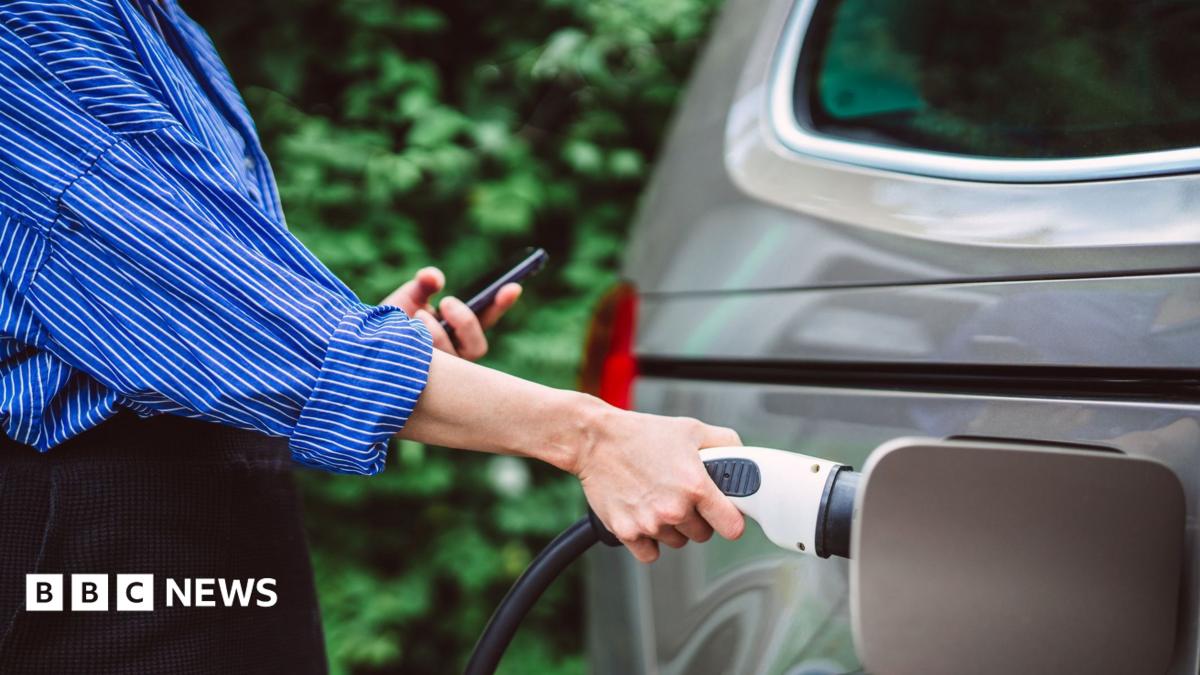
The UK government’s electric vehicle (EV) targets are expected to be reduced this week in a move likely to be welcomed by carmakers but opposed by environmental groups.
Under the current rules, 80% of new cars sold in the UK must be electric by 2030 but industry groups have long called for “urgent relief”.
New petrol or diesel cars are due to be phased out by 2030 and by 2035 all new cars must be zero emission.
But the speed of the transition to electric has been hotly debated, including within the cabinet.
The government has been consulting on reducing its 80% rule and a significant reduction is now expected.
Downing Street has insisted no decision has been made.
A government source told the BBC it would approach the issue in a “pragmatic and balanced” way.
If ministers do decide on a steeper watering-down of the rules, it will arguably be interpreted by some – alongside the approval of the Jackdaw gas field in the North Sea – as Prime MInister Andy Burnham prioritising economic considerations over environmental ones.
Sustainability groups say any weakening of the 2030 target will threaten the UK’s long-term electrification and climate goals.
A government spokesperson said: “We are committed to the phase out of all new cars relying solely on petrol and diesel engines by 2030, and to 100% of new car and van sales being zero emission by 2035, and our legally binding net zero targets.”
Net zero means balancing the amount of planet-warming “greenhouse” gases produced by human activities with the amount being actively removed from the atmosphere.
The government’s policy to phase out petrol and diesel vehicle sales has undergone multiple changes since it was first introduced by former Prime Minister Boris Johnson in 2020.
His successor Rishi Sunak pushed back the timeline to 2035, and the Burnham government set up a review of the EV sales targets in August.
Pressure in the European Union saw the bloc scrap a similar plan to ban new petrol and diesel car sales by 2035, particularly from countries with large auto industries such as Germany.
The Conservative Party has also vowed to abandon the petrol car ban if it wins the next election, with leader Kemi Badenoch calling it a “well-meaning, but ultimately destructive piece of legislation”.