
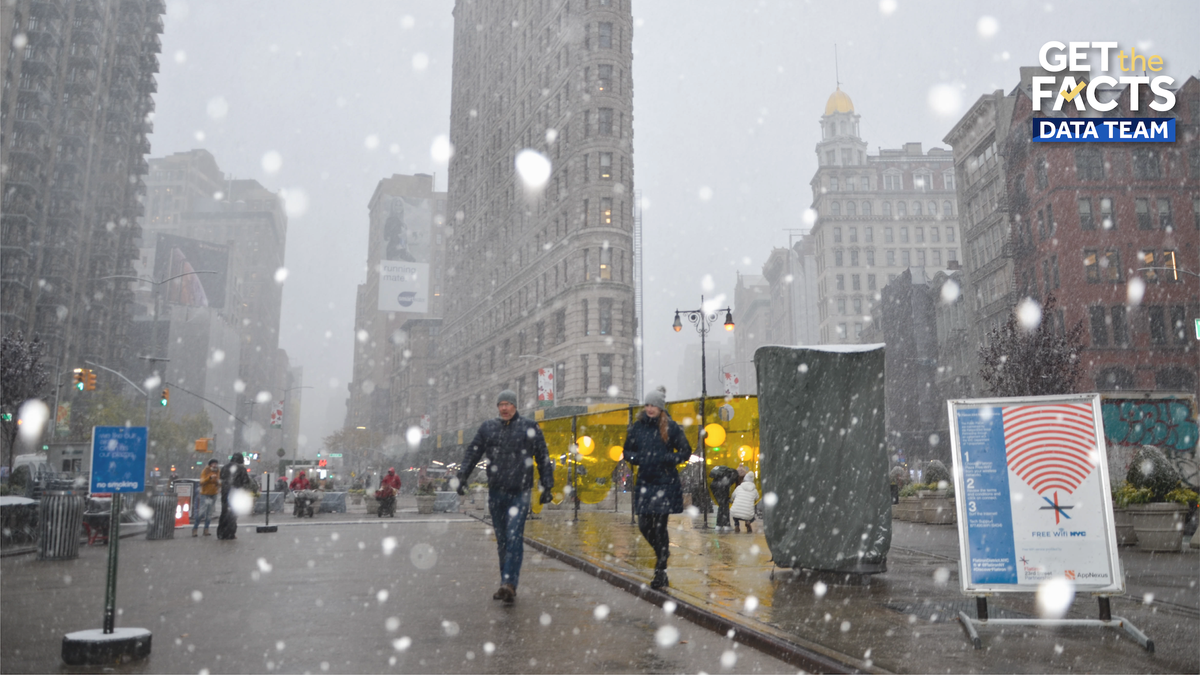

Parts of the United States may see the first measurable snow of the season this week as a storm reaches parts of the east coast, turning into a nor’easter.
Some places in the U.S., mainly northern and higher-altitude geographies, see snow as early as August. In others, it can be well into the new year — if they get snow at all.
The Get the Facts Data Team built an interactive tool to find out what the earliest first snow on record was in your lifetime and where you live.
The interactive uses data from the National Oceanic and Atmospheric Administration on the first measurable snowfall of the winter season. Trace amounts of snow may have fallen before the earliest date recorded, but were not counted.
When does the first snow usually happen in the US?
The most elevated parts of the Rocky Mountains see the first snow in August or September, according to the Farmers’ Almanac.
The Northern Rocky Mountains, Upper Midwest and northern New England often see the first snowfall in October.
The Great Lakes, Northeast and higher Appalachians typically see the first snow in November. The Central Plains, Mid-Atlantic and Northwest will see the first snow late November into December.
The Deep South, Gulf Coast and southeastern and southwestern states see the first snow from December to January, if they have snow at all.
How El Niño will impact this winter
With a very strong El Niño event active over the Pacific Ocean this year, winter weather is expected to be impacted.
An El Niño event occurs when there is a sea surface temperature anomaly of more than 0.5 degrees Celsius for five consecutive three-month periods. It grows strongest during the winter months in the U.S.
During an El Niño winter, the northern U.S. may experience a warmer winter than usual. But in the Southern states, stormier conditions are more likely, along with chances of more rain and snow in the winter.