
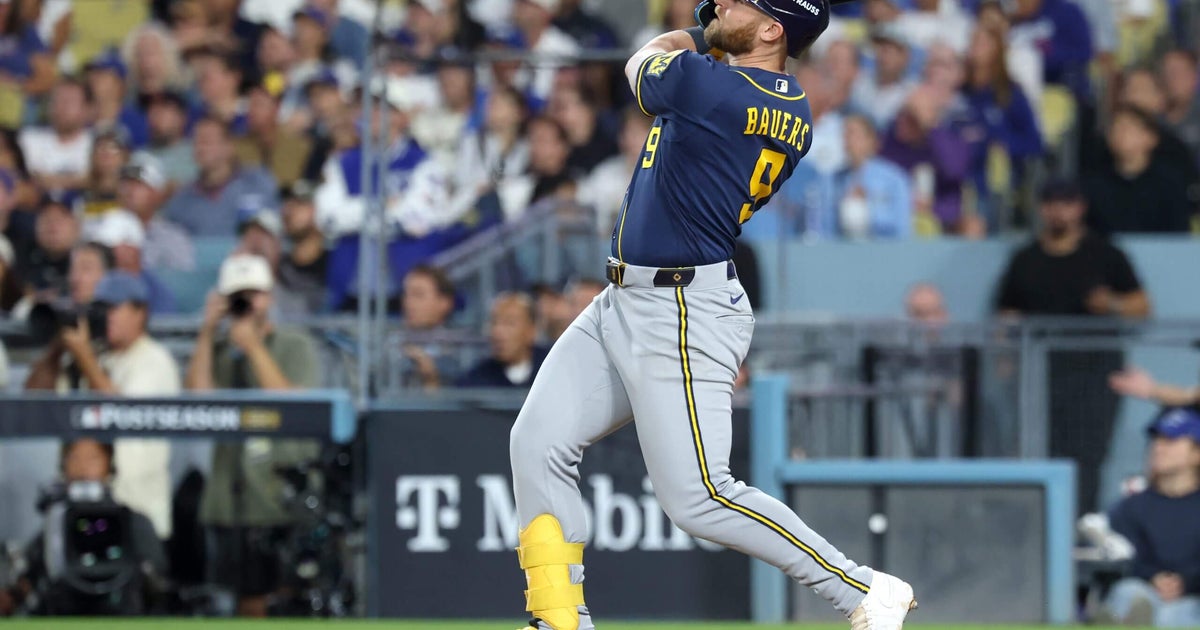
With the addition of free agent Jake Bauers, the Boston Red Sox are acting the way a big-market team with a good farm system should.
The Sox not only agreed to pay Bauers $58 million over four years Friday, but did so knowing the signing would cost them their second- and fifth-highest draft selections, as well as $1 million from their international bonus pool for the upcoming signing period.
Bauers’ arrival will mark the third straight year of Boston accepting those penalties for signing a player who rejected a qualifying offer. The Red Sox did it before the 2026 season when they added Ranger Suarez. And they did it before the 2025 season when they landed Alex Bregman.
In Bauers’ case, the Red Sox are taking the hit in the draft and international market after also spending significant prospect capital over the summer, when they traded a four-player package that included three of their best six prospects for catcher Adley Rutschman.
Boston’s farm system checked in at No. 10 in The Athletic’s Keith Law’s spring training rankings, which was in line with the consensus. After the trade deadline, ESPN placed Boston at No. 16 while MLB.com ranked it No. 24.
Still, the Red Sox likely view their decisions to sign free agents who rejected qualifying offers as measured calculations. Their major-league roster features a number of good young players under multiple years of club control. They are not exactly emptying the tank with their farm system, either. To date, they’ve chosen to hold onto top prospect Franklin Arias, among others.
The addition of Bauers increases the Red Sox’s estimated luxury-tax payroll to $269 million, about $3 million less than their final figure for 2026, per FanGraphs. The luxury-tax system, however, might include new thresholds and penalties in the next collective-bargaining agreement, or be replaced entirely by a salary cap.
Either way, the Red Sox — who made the playoffs in each of the past two seasons only to get eliminated in the wild-card round both times — clearly see a window to make deep playoff runs.
Brewers mulling options at first
After losing Bauers, the Milwaukee Brewers won’t necessarily add a first baseman, according to people briefed on the team’s thinking but not authorized to speak publicly.
The Brewers could retain Andrew Vaughn, a right-handed hitter who FanGraphs projects to earn $8.5 million in arbitration. Their farm system also includes three first-base prospects, most notably Andrew Fischer, who last season hit 48 homers between Class A and Double A.
The MLB GM Meetings were quiet. But the rest of this month won’t be.
Andy McCullough
Fischer bats left-handed, making him a potential complement to Vaughn, but has played only 72 games above A ball. Another left-handed hitter, Blake Burke, hit 34 homers in the minors last season, but was much more successful at Double A than Triple A. The third first-base prospect, Luke Adams, bats right-handed, and injuries last season limited him to 212 at-bats at Triple A. When healthy, though, he was quite productive, hitting 13 homers with a .927 OPS.
The chances of the Brewers pursuing free agent Ty France, a right-handed hitter who like Bauers enjoyed a breakout season in 2026, would appear slim. France, 32, is a year older than Bauers and figures to command a strong multiyear deal of his own.
Braves just getting started
So much of the Atlanta Braves’ pitching blueprint for 2027 revolves around right-hander Didier Fuentes, the 21-year-old prodigy who excelled last season after moving to the bullpen.
The three-year, $35 million agreement the Braves reached Thursday with free-agent righty reliever Evan Phillips was necessary for them to stretch out Fuentes as a starting pitcher next spring. But the Braves still want to add at least one starter, according to people briefed on their plans. They could re-sign Raisel Iglesias or add another closer, too.
While both Phillips and last year’s big free-agent bullpen addition, Robert Suarez, have closing experience, they joined the Braves under the same condition — that they would pitch in the late innings, but not necessarily close.
Iglesias, then, would still fit. His return would further bolster the bullpen. The Braves, though, might prefer to spend on their rotation.
Right-handers Spencer Strider, Spencer Schwellenbach and Reynaldo López, who combined for just 21 starts last season due to injuries, amount to wild cards entering 2027. Lefty Chris Sale and righties Grant Holmes and Bryce Elder are the Braves’ top returning healthy starters, with lefty Martín Pérez a free agent.
Fuentes is not a lock for the rotation. If for some reason the Braves aren’t comfortable with what they see from him in the spring, they could always return him to the bullpen. And even if they commit to Fuentes, it’s difficult to imagine him as a full-season option. Between the majors and minors, he pitched only 97 innings last season, including playoffs.
Whatever the outcome with Fuentes, it would behoove the Braves to add at least one starter. Free-agent righty Sonny Gray, who lives in Nashville and prefers to pitch relatively close to home, remains an obvious fit. And if the Braves opt against adding a closer, they could always supplement their bullpen with a setup type to pitch in front of Phillips and Suarez.
Phillips, after undergoing Tommy John surgery in June 2025, returned to the Los Angeles Dodgers in July and struck out 33 and walked only six in 26 innings. His average fastball velocity of 96.8 mph was even higher than his 96.1 average in 2024, his last full healthy season.
The case for Jazz Chisholm Jr.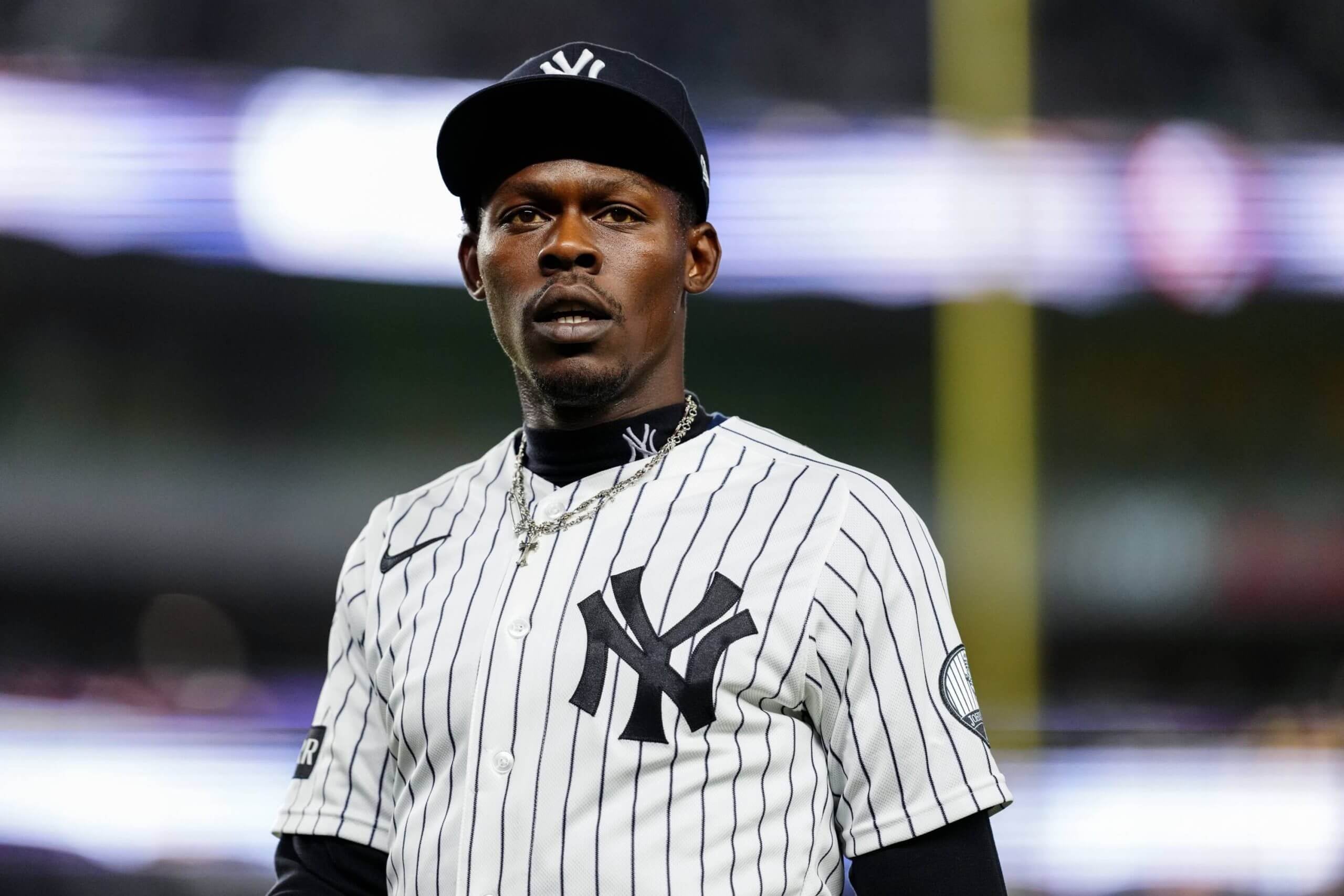
Jazz Chisholm Jr., who will turn 29 in February, is an interesting player to watch this offseason. (Mary DeCicco / MLB Photos via Getty Images)
Free agent Jazz Chisholm Jr.’s agents at Roc Nation Sports are selling him as an all-around force who not only produces offensively, but also offers defensive versatility and elite base-running skills.
Chisholm will play next season at 29, making him one of the younger players on the market. He regressed last season from a 31-homer, 31 stolen-base campaign after talking himself up as a potential 50-50 player. The New York Yankees declined to make him a $23.15 million qualifying offer, in part because he occasionally drew attention to himself for the wrong reasons.
Still, even Chisholm’s detractors acknowledge he is a rare talent.
He is one of six players with at least 30 stolen bases in each of the past three seasons, and also ranks among the game’s best in more advanced base-running measures. He also has played 404 games at second base, 192 in center field and 74 at third, with positive defensive metrics for his career at each position.
A number of teams, meanwhile, might welcome his lively personality, believing it will bring their club more edge. Chisholm still might end up with a short-term deal — The Athletic projected two years, $45 million. In a prove-it type situation, he would be an interesting player to watch. He always is.
Familiar faces changing places?
Brad Ausmus and Joe Espada effectively could exchange jobs. Ausmus already has replaced Espada as Houston Astros manager. Espada appears a leading candidate to replace Ausmus as Yankees bench coach.
Might Yankees manager Aaron Boone be uncomfortable with Espada by his side as he enters the final year of his contract? Well, Boone experienced a similar situation when the Yankees hired Ausmus to replace Carlos Mendoza as bench coach in November 2023.
At that point, too, Boone was entering his final guaranteed year. He could have perceived Ausmus, who previously had managed the Detroit Tigers and Los Angeles Angels, as a threat. But no tension between the two was evident during Ausmus’ tenure, during which the Yankees averaged 94 wins and made the playoffs three straight years. To the contrary, the two enjoyed a strong relationship. Boone recommended Ausmus to his former USC teammate, new Astros general manager Randy Flores, for the Astros’ managing job.
As it turned out, Ausmus was indeed no threat to Boone, who had his option exercised for 2025, then signed a two-year extension. Espada was with the Yankees as a special assistant to GM Brian Cashman in 2014 and as an infield and third-base coach from 2015 through ‘17. He then was the Astros’ bench coach from 2018 to ‘22.
Don’t mess with the robos!
In the first year of the automated ball-strike challenge system (ABS), players, coaches and managers seemed to accept that arguing with robot umps is futile.
The evidence is in the data Major League Baseball presented to club executives at the general managers’ meetings in Las Vegas.
According to the league, ejections over balls and strikes dropped 90 percent from 2025 to 2026, helping contribute to total ejections dropping 30 percent.
The reason the overall reduction wasn’t greater is that ejections increased 89 percent on replay decisions and 65 percent on check swings.
The latter development could prompt the league to give more serious consideration to implementing the check-swing challenge system it introduced during the 2024 Arizona Fall League season and has since tested in the minor leagues.
Baseball rules do not specify a standard for check swings. An MLB memo to general managers and other club executives in March stated that under the challenge system, “a swing will be considered to have occurred if the maximum angle between the bat head and the bat handle exceeds 45 degrees.”
Around the horn
• Free-agent left-hander Kris Bubic, who was traded from the Kansas City Royals to the Los Angeles Dodgers during his second stint on the injured list with elbow soreness, is drawing broad interest from contenders and non-contenders alike, according to a person briefed on his market.
Bubic, 29, finished the season healthy, and the Dodgers included him on their postseason rosters. The year before, he was unable to pitch after July 26 due to a shoulder strain. But prior to that, he had a 2.55 ERA in 20 starts.
• A few teams have expressed interest in free agent Antonio Senzatela as a starting pitcher.
In 2026, for the first time in his career, the 10-year veteran worked strictly as a reliever. Senzatela’s stuff and velocity played up from the bullpen. In 57 games (73 1/3 innings) spent between the Colorado Rockies and Milwaukee Brewers, Senzatela had a 4.05 ERA and a 1.35 WHIP.
• Pitcher Zach Plesac, who last appeared in a major-league game in 2024, is attempting a comeback — as a two-way player. Plesac recently started playing winter ball after hitting and pitching during a brief stint in an independent league over the summer.