
Petrol stations’ shared fuel cards, which allow motorists to buy fuel without using their own government-issued cards, have been withdrawn in 11 provinces. Unlike personal fuel cards, which provide access to subsidized petrol quotas, station cards allow drivers to refuel outside their individual allocations.
The restrictions have fueled public dissatisfaction, Abdolhossein Hemmati, secretary of parliament’s energy committee, told ILNA news agency on November 15.
Under the allocation system, each vehicle receives 60 liters of petrol at 15,000 rials (about 0.6 US cents) per liter, 50 liters at 30,000 rials (1.1 cents) and another 50 liters at 100,000 rials (3.7 cents). Only the first allocation can be carried over to subsequent months, Hemmati said.
The restrictions come as Iran faces a deepening economic crisis, with inflation, declining purchasing power and rising living costs making basic necessities increasingly difficult to afford.
 Inflation pushes Iranians to buy food in installments
Messages received by Iran International indicate that some households have resorted to installment payments for groceries, including bread, meat, chicken and eggs.
Higher fuel costs raise concerns for motorists
Motorists traveling longer distances could face substantially higher fuel bills once their allocations run out, Hemmati warned.
Drivers who exhaust their 100,000-rial allocation during a journey may have to purchase premium petrol costing 1.03 million rials per liter, a price many households cannot afford, he said.
A proposal to allow unused 30,000-rial petrol allocations to accumulate and permit motorists to draw on future months’ quotas is under consideration, Hemmati added.
Esmail Saghab Esfahani, a vice president and head of Iran’s Energy Optimization and Strategic Management Organization, previously said only the first petrol allocation could be stored for up to three months.
Motorists should plan their journeys and save fuel in advance, Saghab Esfahani said, confirming that station fuel cards had been withdrawn in some provinces and that the process had begun in several border provinces.
Parliament Speaker Mohammad Bagher Ghalibaf attributed public concern to repeated comments about petrol policy, saying Sunday that any decision must be accompanied by efforts to secure public understanding.
 Iran weighs gasoline rationing as fuel deficit widens
The remarks followed criticism of Saghab Esfahani’s comments by Iranian media.
News website Khabar Online accused him of unsettling the public, while the Khorasan newspaper, which is close to Ghalibaf, called his remarks personal and irrational.
Khorasan nevertheless supported removing station cards and identifying purchases made without personal fuel cards.
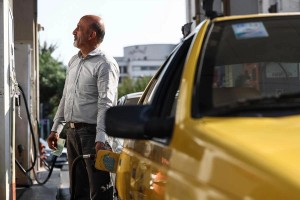
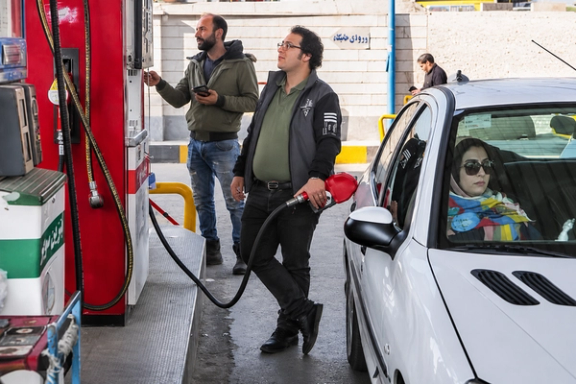 A motorist refuels a car at a petrol station in Iran.
First Vice President Mohammad Reza Aref said Saturday that announcements concerning petrol and petroleum products should come exclusively from the government spokesperson or the head of the National Iranian Oil Refining and Distribution Company.
Transport operators warn of higher prices
The restrictions could also increase the cost of transporting goods, placing further pressure on household budgets.
Fuel allocations for pickup trucks are insufficient, and higher petrol costs could raise freight charges and consumer prices, Davoud Mohammadi, head of Tehran’s urban light freight and motorcycle courier association, told Tasnim news agency on Sunday.
Commercial pickup trucks have been assigned quotas similar to private cars despite being used by drivers to earn their livelihoods, Mohammadi said.
Some drivers could exhaust monthly allocations of 100 or 200 liters within a week, even with careful fuel management, he added.
Removing unrestricted station cards would further limit access to petrol, with additional costs gradually passed on to consumers, Mohammadi warned.
Insufficient fuel for motorcycle couriers and pickup drivers could disrupt deliveries and slow urban transport operations, he said.
Officials deny new policy as petrol queues grow
The government has made no new decision on petrol, Mohammad Sadegh Azimifar, deputy oil minister and head of the National Iranian Oil Refining and Distribution Company, said Saturday evening.
A system requiring identification before using station fuel cards remains experimental, with technical problems being addressed before any decision on wider implementation, Azimifar said.
 Seven years after ‘Bloody November,’ Iran rations gasoline it dares not reprice
Despite those assurances, videos sent to Iran International showed long queues at petrol stations, while motorists expressed concern about restrictions on unrestricted fuel purchases.
The Mehr news agency questioned why authorities were placing the burden of fuel shortages on consumers despite inefficient vehicles and inadequate public transport.
Access to petrol directly affects employment, commuting, medical treatment and the ability to live outside major urban centers, Mehr wrote Sunday.
Some citizens suspect the restrictions are intended to prepare the ground for higher petrol prices.
The government’s ultimate objective is to gradually increase petrol prices, remove fuel subsidies and raise revenue, economic analyst Masoumeh Taherkhani told Iran International.
Economic and energy journalist Ata Hosseinian similarly described the restrictions as preparation for petrol prices reaching between 500,000 and 700,000 rials (about 19 to 26 US cents) per liter.