
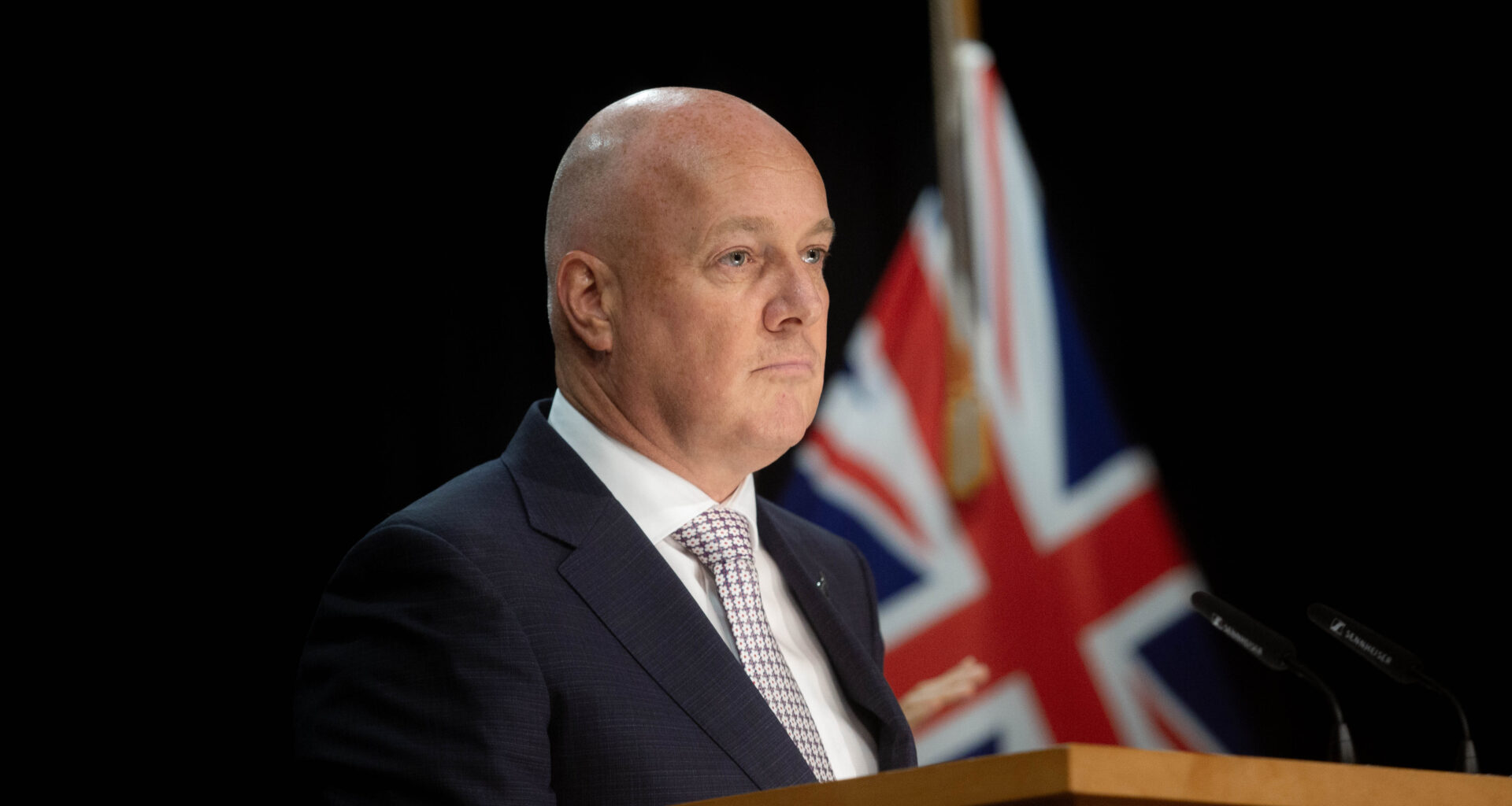
“Personally, I do.”
That was the Prime Minister’s response when asked if he agreed the Reserve Bank should have been more aggressive with Official Cash Rate (OCR) decisions and cuts.
Last Wednesday, the Reserve Bank announced the Official Cash Rate (OCR) had been cut to 3% from 3.25%. There were differing views among the six members of the Monetary Policy Committee (MPC) when deciding on the OCR.
This resulted in only the third vote in the history of the MPC – and the most split vote so far, with four voting for the 25 point cut and two voting against and in favour of a 50 point cut.
Speaking to Newstalk ZB’s Mike Hosking on Monday, Luxon shared that he meets with Reserve Bank Governor Christian Hawkesby before these types of announcements.
“I can often give my views in that case … But that’s me giving my reckons and my perspective.”
Luxon mentioned the split vote to Hosking who said: “But that doesn’t fix your problem, which is the economy has stalled because he’s not doing his part – or they’re not doing their part.”
Luxon said he understood the frustration but the Reserve Bank had two more shots before Christmas.
Hosking said that was too late. “It should have been May.”
Asked whether he agreed, Luxon said “personally, I do” and that he had told Hawkesby this at the meeting.
“I can give my views but I respect the independence of the Reserve Bank,” Luxon said.
‘Total rethink’
There’s been ongoing calls for fiscal stimulus – especially in places like Auckland with hotel chain Sudima saying they’re desperate for events.
Luxon said he knew Tourism and Hospitality Minister Louise Upston was thinking about the major events fund.
“I think that is something that is genuinely stimulating economic activity … I think we should rethink our whole major events and you need to because it’s a pipeline of activity.
“You’ve actually got to stuff it with things that may not pay off just this month, but actually will pay off in a year or two ahead as well.”
“I’ve asked for a total rethink on major events,” Luxon said.
An example he’s been looking to is Victoria and its events while Jeff Kennett was Premier. “They had a major event every quarter, they had medium events every month, they had micro events every week.”
Foreign buyers and housing
Luxon said the Government was two to three weeks away from making an announcement about foreign buyers and housing.
This comes after ongoing negotiations between National and New Zealand First. National initially proposed that foreign buyers could purchase homes worth more than $2 million, with a 15% transaction tax to fund income tax cuts.
New Zealand First leader Winston Peters previously told interest.co.nz the Foreign Buyers Act would remain unchanged, but other reforms to investment visas and rules were likely to be completed before the end of 2025.
“We’re talking about investment. We’re changing those rules and what goes with them. You have to be patient and I’ll tell you what the details are. But the Foreign Buyers Act is not changing,” he said.
“If you’re investing millions of dollars, then we’ll seriously look at if you have the right to back that up with the buying of the house of New Zealand at a certain cost — and that cost is not $2 million.”
House prices
House prices have been dropping around the country and Housing Minister Chris Bishop told RNZ that he thought it was a good thing.
“We’ve got to decouple the idea that the New Zealand economy is driven by house prices,” Bishop said, calling it “artificial wealth”.
But former Prime Minister John Key recently sang a different tune saying the country needed to get the housing market rising to get people spending.
Speaking to RNZ’s Morning Report, Luxon said the housing market was going through a correction after an early 2022 peak.
When asked who he agreed with – Bishop or Key, Luxon said: “Chris is right in the sense of we want to make sure we’ve got productive growth happening in the economy and how do you get better economic productivity into the New Zealand economy which has been a problem over 30 years.
“If you don’t just want to drive an economy through immigration and house price inflation, we’ve really got to make sure we are creating a higher standard of living for people through a more productive economy. We want to be able to make sure that going forward that we have modest, consistent house price increases.”
The Government was focused on housing becoming much more affordable, he said.
“That means you need to have wages growing faster than house prices. We don’t want our whole economic growth be driven by speculative house price inflation. We actually want it driven by productive growth.”