
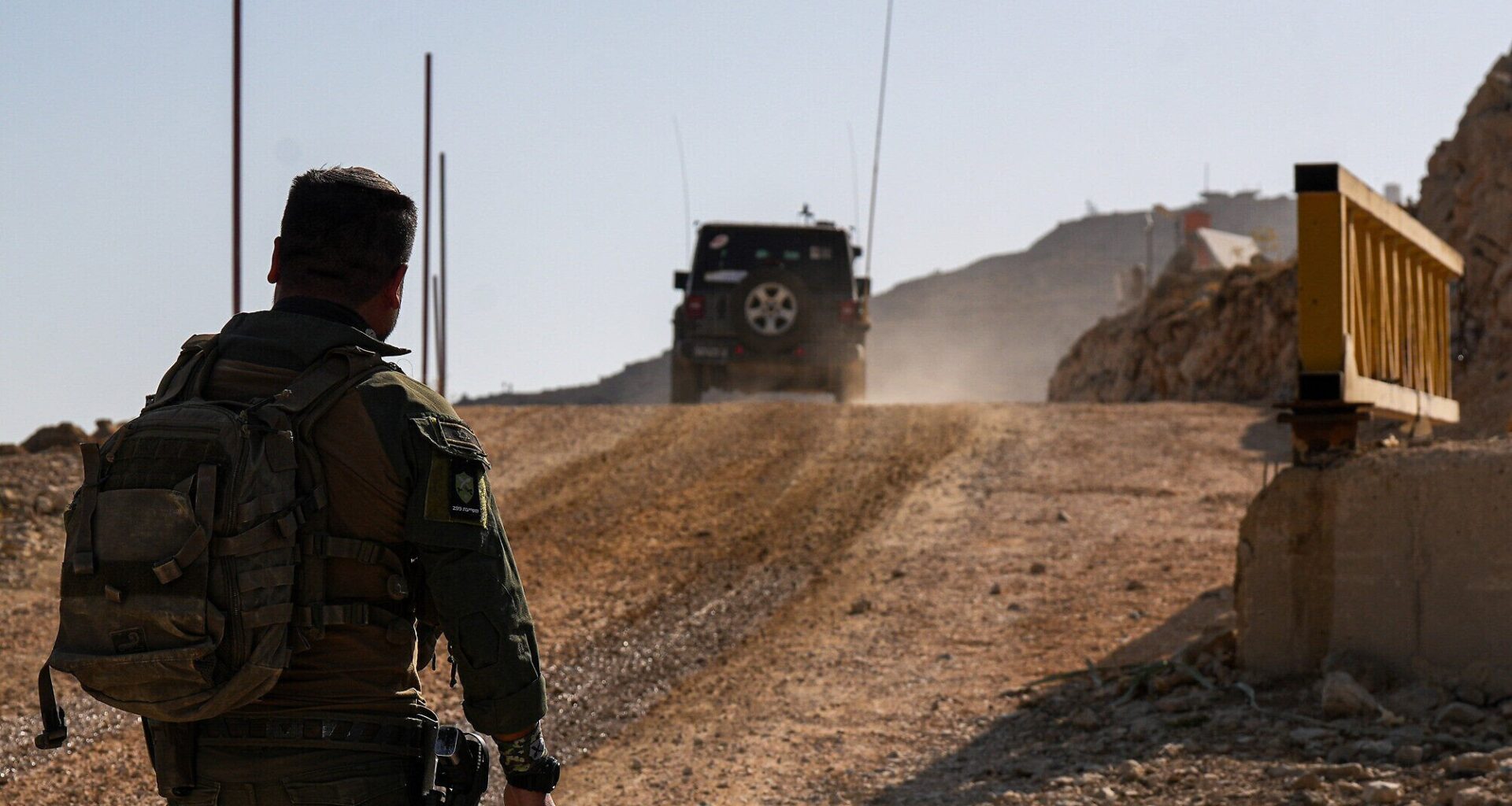
Syria on Monday said it “strongly condemns” what it said was an Israeli military incursion into an area in the country’s south, calling it a “dangerous escalation.”
According to Syria’s Foreign Ministry, dozens of soldiers and over 10 military vehicles were involved in a raid in the area of Beit Jinn, which sits near the border with the Golan Heights.
It also condemned Israel’s “control” of an area in the Mount Hermon foothills, saying it is a “blatant violation of the sovereignty and territorial integrity of the Syrian Arab Republic.”
The IDF has been deployed to nine posts inside southern Syria since the fall of the Bashar al-Assad regime in December 2024, mostly within a UN-patrolled buffer zone on the border between the countries.
Troops have been operating in areas up to around 15 kilometers (some nine miles) deep into Syria, including Beit Jinn, aiming to capture weapons that Israel says could pose a threat to the country if they fall into the hands of “hostile forces,” as Iranian-backed groups did during Assad’s rule.
Get The Times of Israel’s Daily Edition
by email and never miss our top stories
By signing up, you agree to the terms
It distrusts Syria’s new government, which is led by former jihadists.

Syria’s interim president, Ahmed al-Sharaa, receives Saudi Arabia’s foreign minister in Damascus, Syria, on May 31, 2025. (SANA / AFP)
There was no information from the Israeli military on any specific military raids on Monday.
The statement came hours after Syria’s President Ahmed al-Sharaa confirmed to Arab journalists that his government was in “advanced” talks with Israel on a security agreement, seeking to clinch an Israeli retreat back to the 1974 disengagement lines that previously formed the de facto border between the countries, according to Sky News Arabic.
Israel and Syria have technically been at war since 1948. Israel conquered around two-thirds of the Golan Heights from Syria during the Six Day War of June 1967, and annexed the territory in 1981, in a move not recognized by much of the international community, with the exception of the United States.
A year after the Yom Kippur War of October 1973, Israel and Syria reached an agreement on the disengagement line that Damascus is now pushing to restore.
Tensions soared between Jerusalem and Damascus when Israel took over the UN-patrolled buffer zone in Syria shortly after the Assad regime’s overthrow in December and carried out airstrikes on military sites, in what officials said was aimed at creating a demilitarized zone south of Damascus.
In July, the IDF conducted airstrikes on Syrian government forces to support Syrian Druze — who have close relations with Israel’s Druze community — during violent clashes with regime-allied forces in the Sweida area of southern Syria.
Is The Times of Israel important to you?
If so, we have a request.
Every day, even during war, our journalists keep you abreast of the most important developments that merit your attention. Millions of people rely on ToI for fast, fair and free coverage of Israel and the Jewish world.
We care about Israel – and we know you do too. So today, we have an ask: show your appreciation for our work by joining The Times of Israel Community, an exclusive group for readers like you who appreciate and financially support our work.
Already a member? Sign in to stop seeing this
You appreciate our journalism

You clearly find our careful reporting valuable, in a time when facts are often distorted and news coverage often lacks context.
Your support is essential to continue our work. We want to continue delivering the professional journalism you value, even as the demands on our newsroom have grown dramatically since October 7.
So today, please consider joining our reader support group, The Times of Israel Community. For as little as $6 a month you’ll become our partners while enjoying The Times of Israel AD-FREE, as well as accessing exclusive content available only to Times of Israel Community members.
Thank you,
David Horovitz, Founding Editor of The Times of Israel