
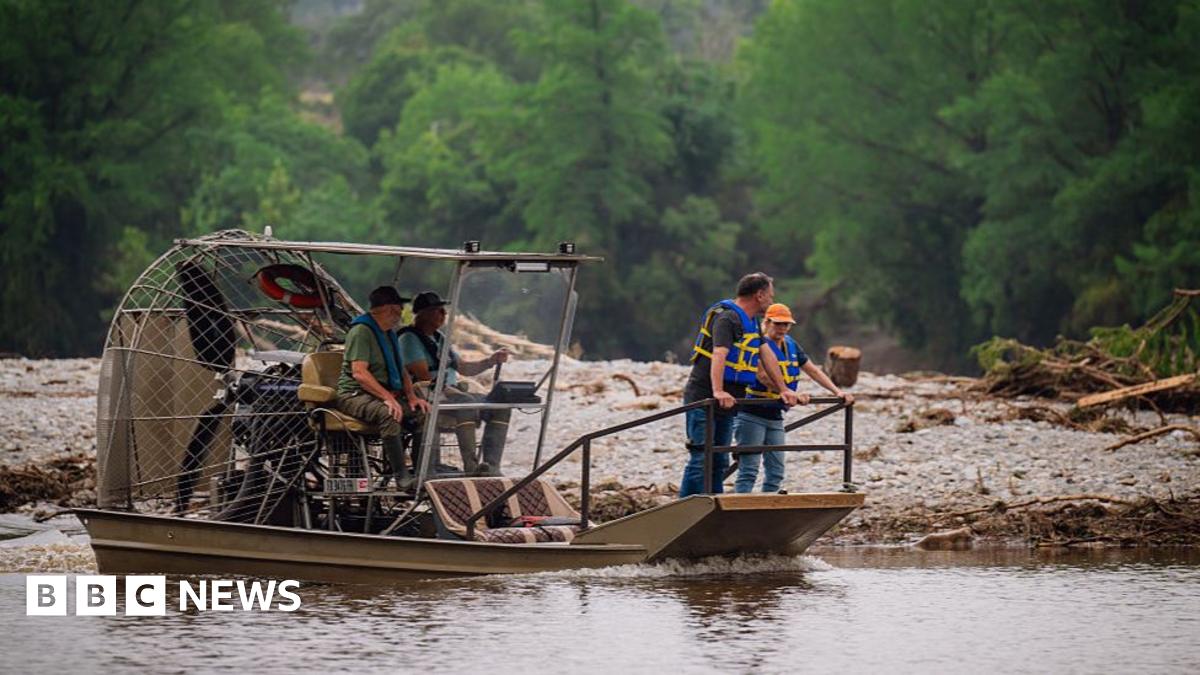
Multiple factors contributed to these devastating floodspublished at 15:02 British Summer Time
15:02 BST
 Matt Taylor
BBC Weather
Several factors came together to create the devastating outcome
we saw in Texas last week.
First there was the weather patterns at the time.
The remnants
of an ex-tropical storm had become embedded within a broader area of very
unstable air within the region. Unstable air is air which has the ability to
rise rapidly to form large storm clouds.
Tropical Storm Barry, that caused flooding across the Yucatan
Peninsula in Mexico a week earlier, had tracked across the Gulf of Mexico to decay
over north-east Mexico. This had meant there was already large supply of
moisture in the atmosphere.
Wind patterns across the region at the time also
resulted in a flow of humid, moisture-laden air from Gulf too.
The next factor was the geography and topography of the area: Kerr County, where the worst of the floods occurred, is a hillier area which forced moisture-laden
air upwards helping to build huge storm clouds.
The ones that formed over the area were so large they effectively became
their own weather system, producing huge amounts of rain over a larger area.
It was slow-moving, adding to the rain totals and creating further
thunderstorms along a zone that continued to affect the area containing the
Guadalupe River.