
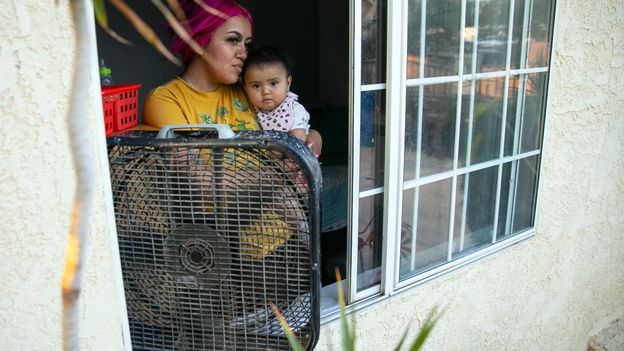
Emily Hilliard, a spokesperson at the US department of health and human services (HHS), which oversees Liheap, says the Administration for Children and Families (ACF) fulfilled its duties byreleasing the previously allocated roughly $4.1bn (£3bn) of Liheap funding to grant recipients in the 2025 financial year. It is the US Congress, she adds, which is responsible for determining the budget for the 2025-26 fiscal year.
“Decisions about whether and how much to fund the Liheap programme rest with Congress,” she says. “HHS remains committed to effectively administering the resources that Congress provides.”
Without Liheap, she says, states could use Temporary Assistance for Needy Families (TANF) and Social Services Block Grant (SSBC) money for energy assistance. (Currently, these grants focus on providing low-income families access to essential services such as childcare and early education.) Their budgets have been proposed at roughly $17.3bn (£12.8bn) and $1.7bn (£1.3bn) for the 2026 financial year respectively, according to Hilliard. (This is the same amount that they were allocated in the previous year, according to the non-profit Child Care Aware of America.)
Back in Chicago, Hamlin said she once relied on Liheap in 2018 to help get her electricity back on after she couldn’t afford her August bill. The programme gave her an emergency stipend of $780 (£577). She worries what will happen to herself and her neighbours if the federal programme is indeed zeroed out entirely.
“It’s devastating, because I know how many families depend on it,” she says. “I think of what I went through. …Families will definitely have to sacrifice something. Essentially, the necessities of life.”