
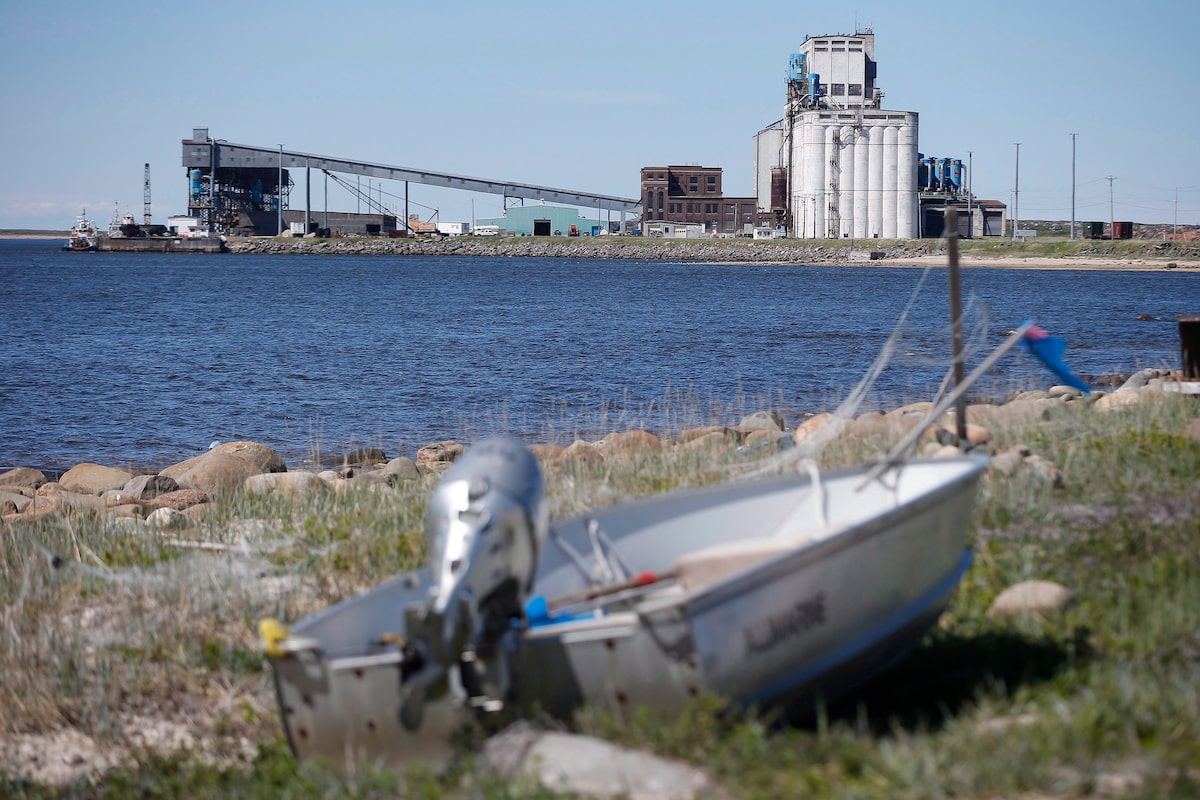
The Port of Churchill is one of the first major infrastructure projects Ottawa will support under Bill C-5.JOHN WOODS/The Canadian Press
New port facilities in Churchill, Man., plus an expansion of the Port of Montreal, are among the first major infrastructure projects Ottawa will support, Prime Minister Mark Carney said on Tuesday.
Speaking in Berlin at a news conference with Chancellor Friedrich Merz, Mr. Carney also announced an agreement with Germany to co-operate on critical minerals, including co-funding new projects. The agreement did not outline specific projects or timelines.
The Port of Churchill in Manitoba is ready for its global shipping moment, CEO says
Mr. Carney campaigned on a Liberal platform that promised to support major new infrastructure projects as a way of countering the negative economic consequences of U.S. President Donald Trump’s high-tariff trade policies.
The government introduced and passed Bill C-5, which sets up a process in which specific projects can receive faster approvals if they meet a host of conditions. But to date, no major projects have been announced.
“A number of those investments, the first of which we will be formally announcing in the next two weeks, are with respect to new port infrastructure,” Mr. Carney said.
Such infrastructure, Mr. Carney said without elaborating, “will include reinforcing and building on the Port of Montreal, Contrecœur; a new port, effectively, in Churchill, Man., which would open up enormous LNG [liquefied natural gas] plus other opportunities; and other East Coast ports for those critical metals and minerals” that Canada would export.
The Contrecœur expansion by the Port of Montreal is already on the books, with construction due to begin as early as September, though the operator has called for additional investment. The Port of Churchill has said trade tensions have made expansion more urgent and that such upgrades meet all the criteria for projects that take priority for Bill C-5.
Canada’s natural-resources-dominated economy has long depended on exports to the United States. With Trump waging a trade war, Ottawa has been under pressure to diversify.
Natural Resources Minister Tim Hodgson, who travelled with Mr. Carney, signed the critical minerals agreement with his counterpart in Berlin and met German business leaders.
“I looked around that room today and there were an awful lot of German companies that were pretty interested in working with us,” he told reporters.
Mr. Hodgson did not name the companies, though on Tuesday Ottawa did note a copper-concentrate supply agreement between Toronto’s Troilus Gold Corp. and Aurubis AG, based in Hamburg in Germany, and two memorandums of understanding involving other companies.
Indigenous-owned companies see both perks and pitfalls in Ottawa’s Bill C-5
Mr. Hodgson said one of Canada’s greatest opportunities lies in natural gas, especially amid geopolitical tensions with the Ukraine war. In June, Canada dispatched its first shipment of liquefied natural gas from the new LNG Canada export terminal in British Columbia.
Germany is Canada’s largest European trading partner, with trade in goods alone reaching $30.5‑billion last year.
As Germany attempts to reduce its reliance on Russia’s energy and China’s critical minerals, Canada could step in, Mr. Hodgson told reporters.
“Canada is in a position to develop the only mine-to-magnets supply chain – complete supply chain – outside of China,” Mr. Hodgson said. “It gives us a really great card with our like-minded allies and it takes a card out of the hands of people who might have a different perspective.”
Ottawa said the relevant industries under the critical minerals agreement include electric vehicle manufacturing, defence and aerospace. The agreement involves the appointment of special envoys, one each for Canada and Germany.
The two countries would co-operate in areas including project financing, technological development and supply chain integration. According to its text, the agreement is “not legally binding and does not create any financial commitment.”
Opinion: Canada can, and should, be the world’s elder statesman in critical minerals
“Canada has a golden opportunity to diversify away from the U.S. market,” said Rajshri Jayaraman, an associate professor of economics at ESMT Berlin. “With Europe’s know-how, it has an opportunity to climb the value chain, turning its natural endowments into a foundation for industrial development and economic growth.”
Tilman Kuban, a Bundestag legislator from the ruling Christian Democratic Union who serves on the committees of economic and European affairs, said Germany and Canada must co-operate even closer.
“Shared projects in hydrogen research, mining technology and battery production benefit both countries and strengthen our position globally,” he said. “We should also strike long-term LNG purchase agreements, as they provide certainty for Canadian exporters and energy-security for Europe.”
Mr. Carney’s trip to Germany is part of a European tour that has taken him to Ukraine and Poland, his fourth trip to the continent since he became Prime Minister in March.
After Germany, Mr. Carney’s last stop will be a meeting on Wednesday in Riga with Latvian Prime Minister Evika Silina. He will also visit members of the Canadian Forces at the Adazi Military Base.