
Unlock the Editor’s Digest for free
Roula Khalaf, Editor of the FT, selects her favourite stories in this weekly newsletter.
Israel’s defence minister has said his country’s military will remain on Syrian territory around Mount Hermon “to protect” Israeli towns and villages, vowing to hold land seized from its neighbour even as the pair engage in US-mediated talks over a security agreement.
The comments came after Damascus accused Israel, which has repeatedly intervened militarily inside Syria since the fall of Bashar al-Assad last December, of illegally seizing more territory in a military operation on Monday.
“The IDF will remain at the peak of Mount Hermon and in the security zone necessary to protect the Golan and Galilee settlements from threats looming from the Syrian side as the main lesson from the events of October 7,” Israel Katz wrote in a post on X.
Syria’s foreign ministry accused the Israeli military of carrying out an overnight incursion in the Beit Jinn area in the Damascus countryside — not far from Mount Hermon — using 11 military vehicles and about 60 soldiers.
The statement added that the IDF seized Tal Bat al-Warda, a strategic hilltop at the foot of Mount Hermon, in “flagrant violation of the sovereignty and territorial integrity of the Syrian Arab Republic”.
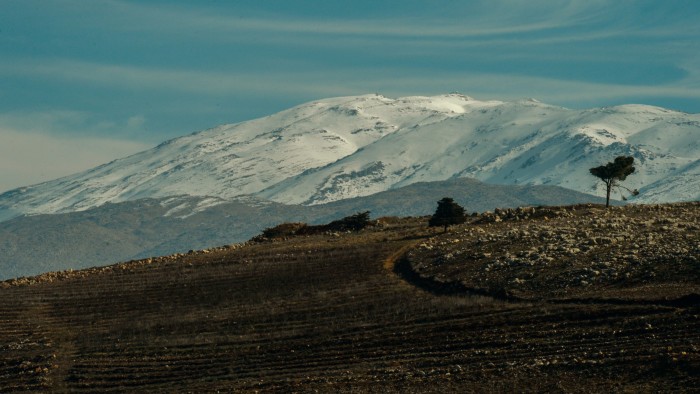
The peak of Mount Hermon — which sits on the border between Syria, Lebanon and a UN demilitarised buffer zone in the Golan Heights — holds strategic value for the Israeli military, allowing it to surveil deep into its neighbours.
Israeli troops started building fortifications on its peak last year, after encroaching into the previously demilitarised zone inside Syria that had separated the two country’s forces since an armistice in 1974.
The IDF denied entering Beit Jinn and said its troops had been operating in southern Syria when they fired a warning shot at “suspects”, who were then questioned and released after “any suspicion of danger” was ruled out.
 Defence minister Israel Katz, left, in January said Israeli troops would remain on the summit of Mount Hermon indefinitely © Chip Somodevilla/Getty Images
Monday’s incident followed an uptick in IDF activities in southern Syria the previous week, which the Israeli military said was “to locate weapons and apprehend suspects”.
It also came as the countries were engaging in US-mediated talks on de-escalating hostilities.
In an interview with Axios on Monday, US special envoy Thomas Barrack said while the two countries were discussing “in good faith . . . there is still more work to do”.
It followed comments by Syrian President Ahmed al-Sharaa to a group of Arab journalists on Sunday, where he reportedly said the current circumstances were not conducive to concluding a peace agreement with Israel.
Sharaa met Barrack in Damascus on Monday, a day after the US envoy was in Israel discussing Syria with Prime Minister Benjamin Netanyahu.
In the days following Assad’s fall last year, Israel took territory inside Syria and conducted repeated air raids targeting military infrastructure across the country.
Since then, it has continued to conduct air strikes on Syria, most notably last month, when it bombed the defence ministry in Damascus and struck near the presidential palace, killing three people.
Israel has portrayed its interventions as an attempt to protect the Druze minority in southern Syria, who were engaged in bloody clashes with Arab tribal fighters and government security forces.
Hundreds were reportedly killed in those clashes, with reports of atrocities on all sides. Syria’s new government, however, has neither threatened nor taken provocative action against Israel.
Recommended

In January, Katz said Israeli troops would remain on the summit of Mount Hermon indefinitely. Since then, the IDF has formed a de facto buffer zone in the area, where it regularly carries out raids in villages and has set up checkpoints.
Previous Israeli incursions have been limited to the southern Quneitra province.
Damascus has repeatedly called for an end to Israeli hostilities. “This dangerous escalation is considered a direct threat to regional peace and security,” the Syrian foreign ministry said.