
Stay informed with free updates
Simply sign up to the War in Ukraine myFT Digest — delivered directly to your inbox.
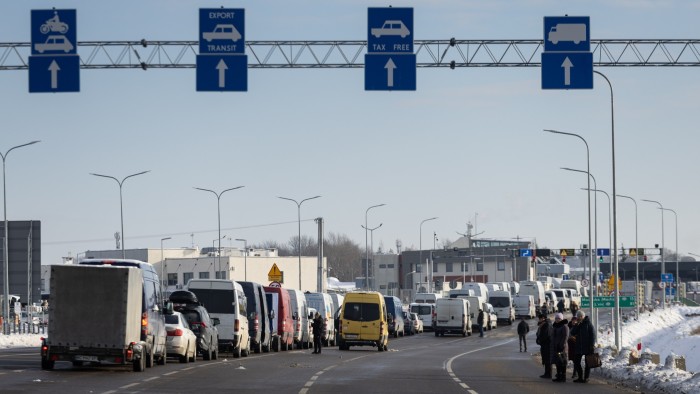
Young men will be allowed to leave Ukraine after the government changed its border crossing rules, modifying a law introduced after Russia’s full-scale invasion that forced adult males under 60 to stay in the country.
The new rules for men aged 18 to 22 will come into force soon, Ukrainian President Volodymyr Zelenskyy said on social media on Tuesday, adding that the changes had been “agreed with the military command”.
Prime Minister Yulia Svyrydenko said the new rule “also applies to citizens who, for various reasons, find themselves abroad”.
“We want Ukrainians to maintain their ties with Ukraine as much as possible,” she said on X. Martial law remains in place in the war-torn country.
The ban on men leaving has been a source of tension in Ukraine, with regular cases of males being given exemptions for a temporary stay abroad refusing to re-enter, or families remaining separated for months or years at a time.
Government officials have also become increasingly concerned with the high number of males under 18 being sent abroad by their parents in a bid to circumvent the ban.
“Graduating classes were made up almost entirely of girls — universities were lacking male applicants,” Oleksandr Fedienko, an MP from the president’s ruling Servant of the People party, told the Financial Times. “This kind of decision will help keep these young people in Ukraine, so that they contribute to their own country rather than to others.”
The exodus of males under 18 has occurred despite the fact that only men aged 25 and over can be conscripted into Ukraine’s armed forces. The US and several other western countries have pressured Kyiv to lower the minimum mobilisation age, in a bid to address an acute manpower shortage that has contributed to Russian territorial gains in recent months.
But Zelenskyy has repeatedly rejected those calls, arguing that lowering the mobilisation age could only come after western countries had significantly increased the pace of their weapons deliveries.
Lowering the mobilisation age remains overwhelmingly unpopular among Ukrainians, with 86.5 per cent of respondents opposing the idea, according to a poll published this year by the Socis agency.
Kyiv has tried to encourage voluntary service. At the beginning of the year it launched a one-year military contract specifically for 18-24-year-old applicants that features financial incentives such as a bonus of about 1mn hryvnia (around €20,000).
However, the initiative has so far failed to address the lack of frontline troops in combat brigades.
Critics of proposals to lower the mobilisation age have argued that Ukraine’s demographic trends, skewed by a plunging birth rate in the 1990s, leave only a small cohort of the youngest adults who should not be deployed on the frontline.
Between 60,000 and 100,000 Ukrainian soldiers have been killed since Russia’s 2022 invasion, according to a June estimate by the Center for Strategic & International Studies. The Washington-based think-tank puts the total number of Russian soldiers killed at 200,000-250,000.
The mass exodus that followed the beginning of the war disproportionately involved women and children: more than 31 per cent of the more than 4mn Ukrainians who received temporary refugee status in the EU were minors, according to Eurostat, the bloc’s statistics agency.