
Iran’s Islamic Revolutionary Guard Corps has been infiltrating Australia over years to surveil and harass members of the Iranian-Australian community, critics of the Tehran regime have consistently told the Australian government.
Hundreds of Iranian Australians made submissions to a Senate inquiry three years ago saying embassy officials and Revolutionary Guards were monitoring, intimidating and threatening members of the diaspora and begging the government to proscribe the IRGC.
The Coalition lashed Labor for not listing the IRCG as a terrorist organisation in 2023 and said it was ready to vote to do so today. In question time on Wednesday, the opposition leader, Sussan Ley, challenged Anthony Albanese over why he did not act sooner “when the warnings were so clear and the risks so grave”.
The shadow home affairs minister, Andrew Hastie, conceded though that while he had been “keen” to list the IRCG when he was chair of the intelligence committee before the 2022 election, there were mixed views within the Coalition government at the time.
On Tuesday, Asio said it had credible evidence that IRGC commanders were ultimately behind at least two – but likely more – antisemitic attacks in Australia last year: arson attacks on the Adass Israel synagogue in Melbourne and the Lewis Continental Kitchen kosher restaurant in Sydney. In response, the federal government expelled the Iranian ambassador and said it would legislate to proscribe the IRGC as a terrorist organisation.
There was no accusation current Iranian diplomats or embassy staff were involved.
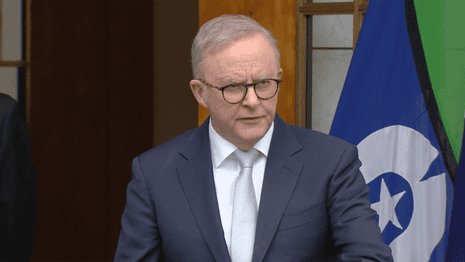 Australia expels Iranian ambassador over evidence Iran directed antisemitic attacks – video
Dr Kylie Moore-Gilbert, a British-Australian academic who had been held for 804 days by the IRGC, most of it in Tehran’s notorious Evin prison, told the Guardian that diaspora members lived their lives in Australia for years “looking over their shoulders”.
“We know that there are a number of agents of the IRGC and of the Iranian regime here in Australia, as well as sympathisers and informants, people who might not be paid, trained agents, but who are feeding information back to Tehran on the Iranian-Australian community.”
Moore-Gilbert said agents were monitoring dissidents and refugees who have been critical of the Iranian government, and were also watching and filming people participating in protests.
“I’ve experienced it,” Moore-Gilbert said, “and I know so many Iranian-Australians who have so many stories about threatening behaviour and being surveilled and followed”.
After the death of 22-year-old Kurdish woman Mahsa (Jina) Amini at the hands of Iran’s morality police in 2022 and the resulting worldwide protest movement, Woman Life Freedom, a Senate inquiry heard evidence of widespread surveillance and intimidation by the Iranian regime on Australian soil.
Sign up: AU Breaking News email
The Senate inquiry received more than 1,100 submissions, hundreds of which had to be put on the record anonymously, citing fear of reprisals.
One submitter said embassy officials were “likely to be involved in infiltration, intimidation and harassment of Australian residents or citizens, and acts of terrorism”.
“These individuals, under diplomatic cover, pose a threat to our security. Embassy personnel filmed protesters … in Australia during demonstrations, intimidated and harassed Australian citizens here, or their families in Iran.
“In one case, the consular sector of the Iranian embassy in Canberra denied providing service to an Iranian-Australian and threatened him about the consequences he would face for participating in the demonstrations in Canberra.”
Setareh Vaziri cited the case of one Iranian-Australian woman who “upon voicing opposition to the Iranian regime was faced with anonymous threatening text messages, and whose family – still in Iran – were threatened with violence if she did not remain ‘silent’.”
Vaziri gave evidence to the committee that Iranian-Australians critical of the Tehran government had had their emails hacked and their social media accounts duplicated “to manipulate the work of activists”.
Dr Behzad Molavi told the committee: “the Islamic Republic of Iran regime has planted informants, apologists, and infiltrators from among their family members, cronies and affiliates in Australia who are mostly active in the ‘cultural and religious centres’ or at the universities and scholarly institutes.
“They play a major role in harassing, intimidating, and silencing dissenting voices of dual nationals.”
skip past newsletter promotion
Sign up to Breaking News Australia
Get the most important news as it breaks
Privacy Notice: Newsletters may contain info about charities, online ads, and content funded by outside parties. For more information see our Privacy Policy. We use Google reCaptcha to protect our website and the Google Privacy Policy and Terms of Service apply.
after newsletter promotion
The Department of Home Affairs gave evidence to the committee it was “aware of reports that pro-Iranian government informants are surveilling former Iranian residents protesting against the regime in Australia and threatening their relatives in Iran as a result”.
Sara Zahedi, a lawyer and member of Woman Life Freedom Australia, told the committee members of the Iranian-Australian community had consistently reported incidents of harassment and intimidation.
“What we would really like to see is these concerns being taken a little bit more seriously by the AFP … we’re not getting a lot of follow-up on our questions and our concerns with regard to being harassed and being watched.
“I don’t think we should be waiting for incidents of violence before we see some serious action being taken.”
The Senate committee recommended that Australia list the IRGC as a terrorist organisation and said it should be prepared to expel any diplomats who are engaged in “intimidation, threats, or monitoring of Australians”.
Former senator and transparency advocate Rex Patrick obtained documents under freedom of information laws in January this year, showing the government sought legal advice on proscribing the IRGC in 2023 but determined that because the IRGC was a part of the Iranian state, it could not be banned under existing legislation.
The government is now moving to proscribe the IRGC as a terror group under changes to the federal criminal code to include state-linked organisations. Drafting is already under way but the home affairs minister, Tony Burke, says the government will take the appropriate time to amend the rules for groups like the IRCG to be prescribed.
The code defines terror groups as organisations that are directly or indirectly engaged in, preparing, planning, assisting or fostering terrorist acts.
Challenged over the delay in listing the IRGC, the prime minister, Anthony Albanese, told question time on Wednesday the government had acted “like adults” on the decision.
“On these issues, we take advice from the intelligence agencies, we go through our appropriate processes, including our national security committee,” he said.
Iran’s government finds itself further isolated in the wake of the revelations it was behind the arson attacks in Australia. But Moore-Gilbert told the Guardian that, from the perspective of the Revolutionary Guards, the attacks “have succeeded, to a certain extent, in creating division within the community in Australia and in heightening antisemitic sentiments in Australia”.
“And they’ve been doing this elsewhere as well. It’s not that it’s restricted to just Australia. It seems to be a broader strategy to do this throughout the western world.”
Moore-Gilbert said having spent hundreds of hours under interrogation by the Revolutionary Guard Corps, she had witnessed their virulent antisemitism.
“It’s difficult for them to target Israel, it’s difficult for them to go into Israeli territory, but Jewish communities in western countries who are just peacefully going about their lives, they’re an easy target.”