
Your support helps us to tell the story
From reproductive rights to climate change to Big Tech, The Independent is on the ground when the story is developing. Whether it’s investigating the financials of Elon Musk’s pro-Trump PAC or producing our latest documentary, ‘The A Word’, which shines a light on the American women fighting for reproductive rights, we know how important it is to parse out the facts from the messaging.
At such a critical moment in US history, we need reporters on the ground. Your donation allows us to keep sending journalists to speak to both sides of the story.
The Independent is trusted by Americans across the entire political spectrum. And unlike many other quality news outlets, we choose not to lock Americans out of our reporting and analysis with paywalls. We believe quality journalism should be available to everyone, paid for by those who can afford it.
Your support makes all the difference.Read more
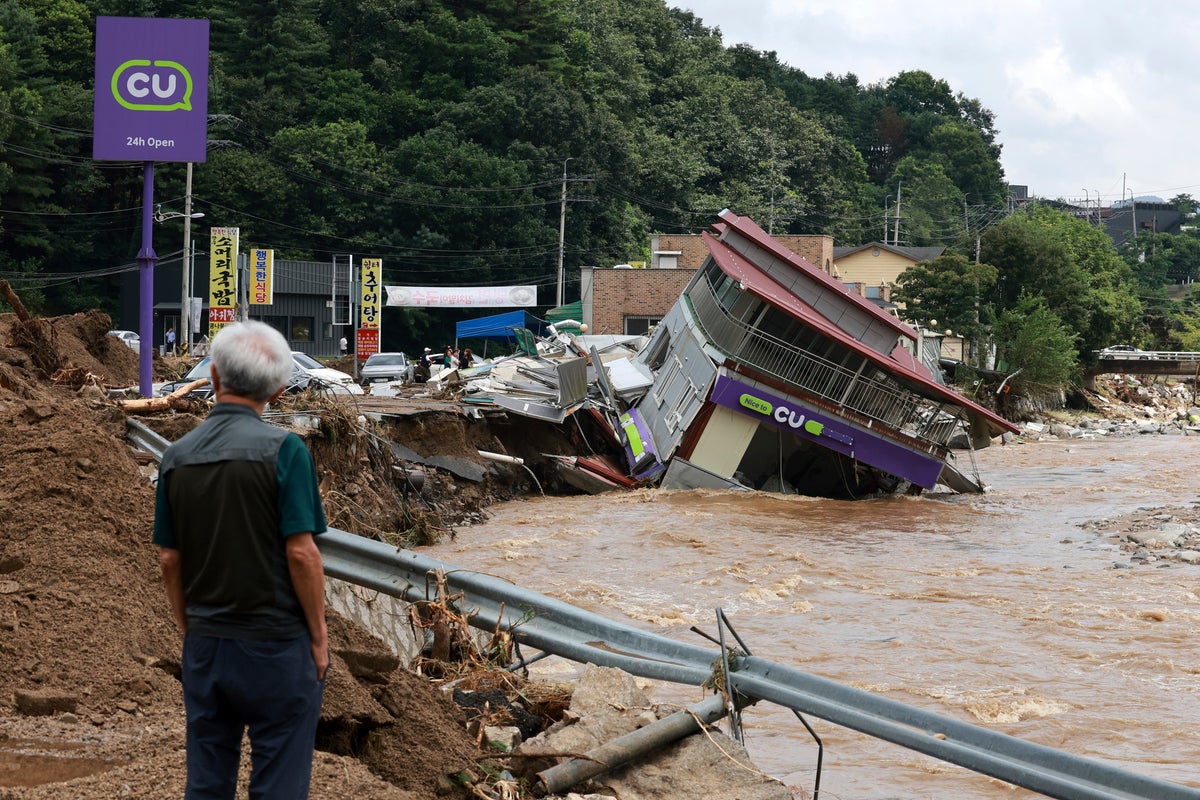
Heavy rainfall for five consecutive days has left at least 16 people dead across South Korea and another 10 missing.
Two people died and as many went missing in the resort town of Gapyeong on Sunday after a landslide engulfed houses and flooding swept away vehicles.
The interior ministry said eight people were discovered dead and six were reported missing in the southern town of Sancheong on Saturday after heavy rainfall caused flash floods and landslides.
The overall death toll stood at 16 as of 4pm local time on Sunday, The Korea Herald reported, citing fire authorities.
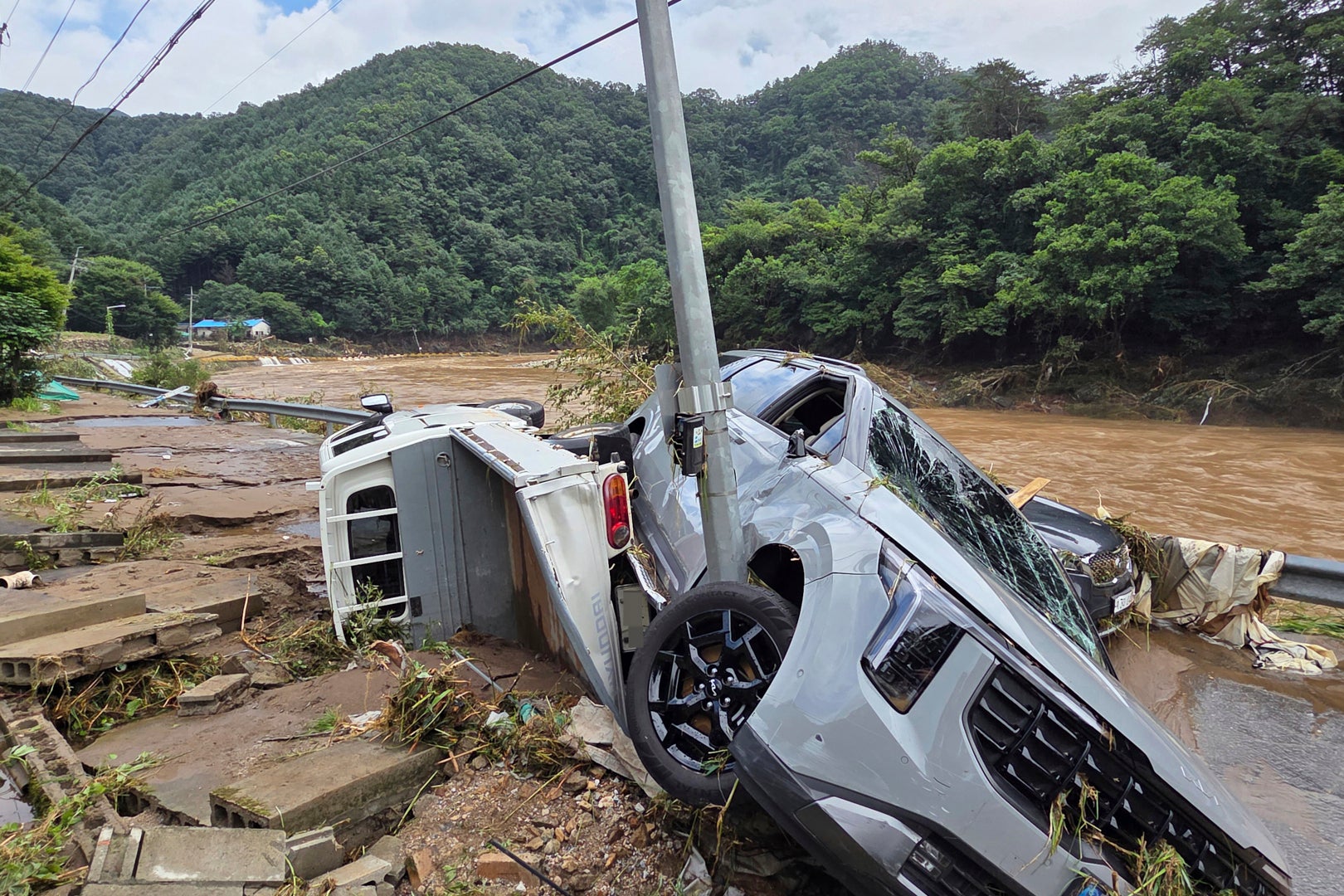
open image in gallery
Damaged vehicles are seen after heavy rainfall in Gapyeong, South Korea, on 20 July 2025 (AP)
President Lee Jae Myung ordered the worst-hit areas, mostly in the south of the country, to be declared special disaster zones, which would entitle them to government support for damage recovery and relief.
Interior minister Yoon Ho Jung asked local authorities to “mobilise all available resources” to carry out “swift emergency restoration work” after the government launched a multi-agency recovery effort.
Mr Yoon announced that a prompt damage assessment would be launched to develop restoration plans for damaged facilities, including homes, commercial buildings and roads.
“The ministry and local governments need to ensure that the displaced residents staying in temporary shelters do not face any inconvenience by providing a sufficient amount of relief supplies and making their utmost effort in emergency restoration to help evacuees return to their normal lives as quickly as possible,” he said.
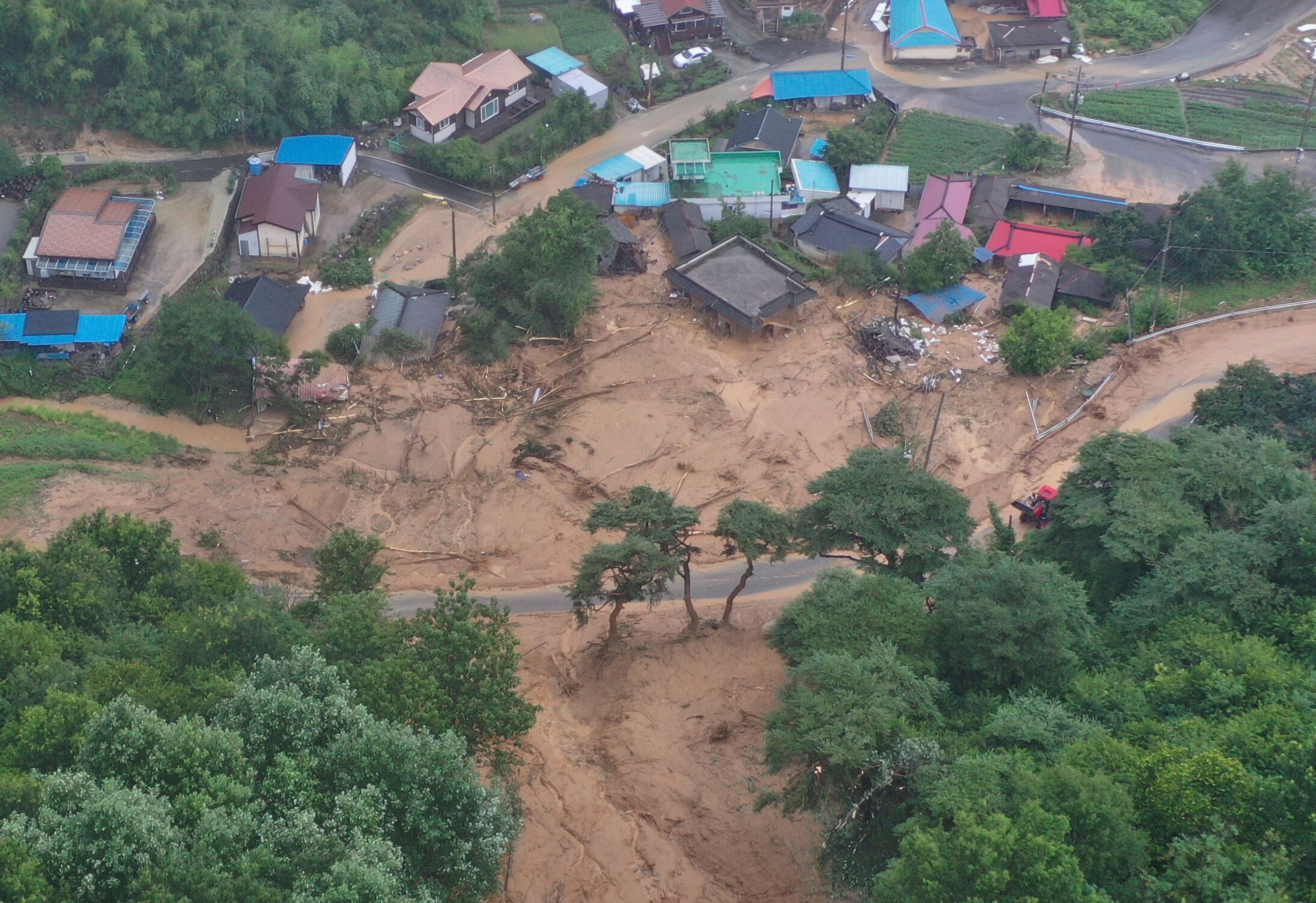
open image in gallery
Houses collapsed from a landslide are seen in Sancheong, South Korea, on 19 July 2025 (AP)
Last week, three people were found dead in a submerged car and another person was killed when their car was buried by soil and concrete after a retaining wall of an overpass collapsed in Osan, just south of Seoul. The saturated soil had increased the risk of landslides even in areas receiving relatively modest rainfall.
The downpours swept through South Chungcheong, South Jeolla and South Gyeongsang regions this past week, with rainfall exceeding 500mm breaking daily rainfall records in July and forcing the evacuation of at least 3,840 people from their homes, the interior ministry said.
The rain stopped in most of South Korea on Sunday and heavy rain alerts were subsequently lifted, the ministry added.
This period of heavy rainfall was expected to be followed by a heat wave, the country’s official weather forecaster said.