
A flurry of high-stakes diplomatic meetings over the past two weeks, including two major summits, have done little to reassure Kyiv about its long-term security. According to a former US ambassador to Ukraine, the chasm between what US President Donald Trump is prepared to offer and what Ukraine desperately needs has become dangerously apparent.
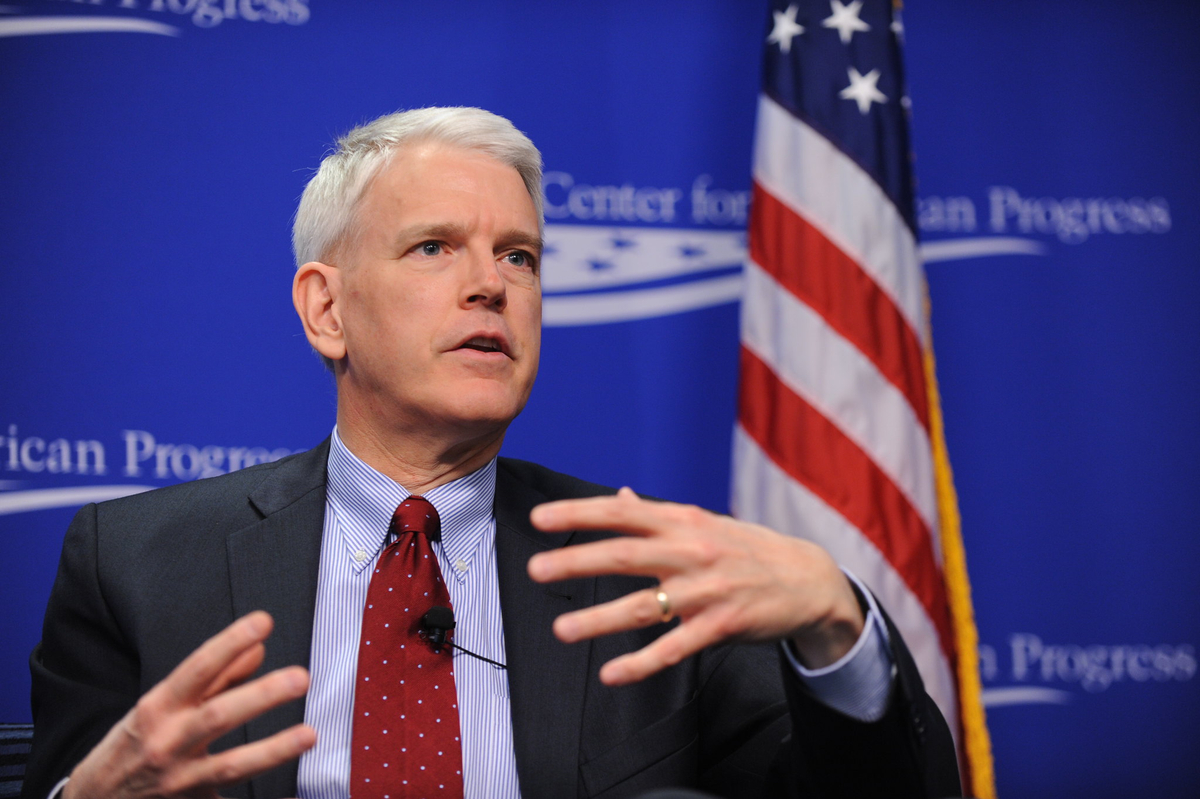
In an interview with Kyiv Post on Tuesday, Steven Pifer, a veteran American diplomat with a deep history in the region, offered a scathing assessment of recent events. He said recent diplomatic efforts have been a mix of failure and limited success, highlighting the enduring lack of a clear plan for Ukraine’s long-term security.
JOIN US ON TELEGRAM
Follow our coverage of the war on the @Kyivpost_official.
The Alaska disaster
Pifer, who served as US Ambassador to Ukraine from 1998 to 2000, did not mince words about President Trump’s recent trip to Alaska to meet Putin.
“I thought that Alaska was close to a disaster because President Trump went there saying he was going to seek a ceasefire or impose severe consequences on Putin. And Putin apparently rejected the ceasefire.
There were no consequences, and they talked about this so called understanding,” he said.
That “understanding’” Pifer revealed, was a non-starter for Ukraine. It reportedly hinged on Russia’s demand that Ukraine cede the Donetsk region simply to begin a negotiation, a condition that would have handed over the very “defensive lines that have stopped the Russian advance in Donbas now for three years.”
Other Topics of Interest
Witkoff ‘Hopeful’ About Ukraine-Russia Peace Deal by ‘End of This Year’
US President Donald Trump’s special envoy Steve Witkoff said in an interview with Fox News that he expects to meet with representatives from Ukraine in New York “this week.”
He concluded, “I thought that that went badly in the wrong direction.”
A course correction in Washington
By contrast, the Aug. 18 White House summit with President Zelensky and European leaders was a step in the right direction. Pifer noted that since “nobody was talking about the understanding in Alaska, that just seemed to kind of fall by the wayside, which was good.”
Instead, the focus was on a more critical and realistic goal: “a conversation on security guarantees, which I think was important.”
This conversation, Pifer explained, points to a potential three-part package of security guarantees for Ukraine.
The first element is the continued flow of Western weapons to build a formidable Ukrainian military.
“The West provides Ukraine with just a whole lot of weapons, and basically helps Ukraine build and maintain a modern military that the Russians would not want to take on,” he said.
The goal is to create a force that would be so costly for Russia to confront “in terms of Russian lives, equipment, losses, money” that it would act as a powerful deterrent.
Coalition of the willing and the NATO question
The second piece is the “coalition of the willing,” a military force proposed by Britain and France to deploy in Ukraine after a peace settlement.
Pifer stressed that while this is a promising idea, its effectiveness hinges on American participation. “The British defense both said they would want to have an American backstop,” he said.
This means two things: crucial US assets like intelligence and surveillance, and a political commitment to “get involved if that force came under attack,” perhaps by “using air power, which is what Trump was talking about last week.”
The central question, Pifer noted, is “what kind of a commitment of support does it have from the United States? And we don’t know that yet.”
The third element, NATO membership, is where the diplomatic tightrope becomes most precarious. Pifer acknowledged that Trump “rules it out,” a position quietly shared by other member states wary of a direct war with Russia.
However, Pifer maintains that this is Trump’s position alone, not the alliance’s. He pointed to the official NATO stance that “Ukraine will be in NATO, and Ukraine is on a, quote, irreversible path to NATO membership.”
Pifer said that while Trump can block it now, “Trump can’t reverse that policy, because NATO operates by consensus. And I would get there are a bunch of NATO members who remain committed to the idea that Ukraine will be a NATO. So it may not be possible now, but that door stays open.”
Military, not economic, leverage
Beyond the military and diplomatic maneuvering, Pifer believes the real leverage over Russia lies not in economic sanctions, but in ensuring Ukraine’s ability to wage a long war.
He was deeply skeptical of Trump’s threats of an “economic war,” noting that the US president has threatened “consequences, what, four or five times now, and given deadlines, and the Russians have missed the deadlines, and Trump has done nothing.”
Pifer dismissed the impact of tariffs, arguing that the real pressure would come from seizing the $300 billion in frozen Russian Central Bank assets and using the funds to help Ukraine buy weapons “for years.” He emphasized: “I don’t think Vladimir Putin changes course until Putin believes that he cannot achieve his objectives on the battlefield.”
“At some point Putin has to begin to ask himself, is this war really worth it? So that’s why I think that the real sanction would be taking steps that would make clear to Putin that the Ukrainian military will have all of the weapons it needs,” the ex-Ambassador said.
“Plan B” for Ukraine
Pifer’s final advice to President Zelensky was a stark reminder of the fragile nature of US support.
“Zelensky has a very volatile person doing in the White House,” he observed. While the Ukrainian president must continue to cultivate that relationship, he must also be thinking about “what’s plan B.”
That plan, Pifer believes, is Europe: “The Europeans have impressed me and they’ve surprised me,” he said.
“I wish Mr. Trump understood that what happens in Ukraine is going to impact American security, but he doesn’t seem to do that,” he said.
Pifer concluded that given the last seven months of Trump’s “flip-flops,” Ukraine must prepare for a future where it is Europe, not the US, that serves as its primary security partner.