
Unlock the Editor’s Digest for free
Roula Khalaf, Editor of the FT, selects her favourite stories in this weekly newsletter.
The UN Security Council voted to end nearly five decades of peacekeeping operations in southern Lebanon, after weeks of tense negotiations between the Trump administration and European allies.
Member states voted unanimously on the resolution, which would bring the UN Interim Force in Lebanon (Unifil) mission to an end on December 31, 2026.
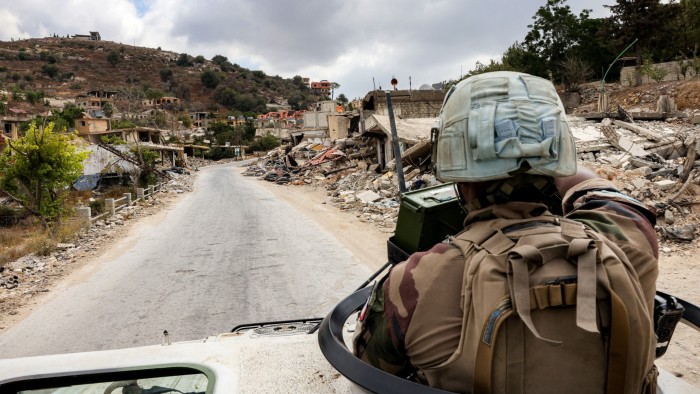
The vote came at a delicate time for Lebanon, which is still reeling from the war between Israel and the militant group Hizbollah last year that left large tracts of the south in ruins.
A November ceasefire formally ended the fighting, but Israel has continued to conduct air strikes across Lebanon, accusing Hizbollah of attempting to rebuild its positions.
Washington had previously demanded that Unifil end its operations within a year, saying the force was not doing enough to justify its continued existence, two senior Lebanese officials and western diplomats told the Financial Times.
But the US late on Wednesday dropped its objection to a French compromise that would end the mission at the end of 2026, the Lebanese officials and one western diplomat said, paving the way for Thursday’s resolution.
The resolution said the security council “decides to extend for a final time the mandate of UNIFIL” ahead of the “orderly and safe drawdown and withdrawal of its personnel” from the end of next year, according to a version seen by the FT prior to the vote and confirmed by the officials and diplomats.
The Lebanese Army must be the sole force ensuring security in southern Lebanon after that date, the resolution said.
November’s ceasefire stipulated that Hizbollah militants withdraw to north of the Litani river, which lies some 30km from the UN-drawn border, making room for the Lebanese Armed Forces (LAF) to move in.
Unifil has supported LAF troops in the south since November in dismantling at least 500 Hizbollah structures, including ammunition caches, explosive-laden bunkers and tunnels.
Speaking ahead of the vote, Andrea Tenenti, the peacekeeping force’s spokesperson said that “Unifil is more relevant now that it has been in the past”.
“Lebanon has a chance to have state authority back in southern Lebanon, and we’re assisting them with that mission,” Tenenti said. “But this is only the beginning, it takes time to build up an army.”
Created to oversee Israel’s withdrawal from southern Lebanon after its 1978 invasion, Unifil’s mission has in practice been to report on Israeli and Hizbollah activities in southern Lebanon, and any violations of the contested informal border.
The UN force has almost 11,000 troops and equipment from 48 countries stationed in Lebanon’s south.
Its role expanded after the Israel-Hizbollah war in 2006, when both sides agreed to withdraw and leave the LAF to control southern Lebanon — an agreement which was never fully implemented.
Unifil has often come under criticism from both Hizbollah and Israel, which has accused it of ignoring militants’ activities.
At the peak of hostilities between Israel and Hizbollah last year, the Israeli army attacked Unifil’s bases, injuring peacekeepers and damaging infrastructure. Peacekeepers have also been killed and injured by Hizbollah.
Trump administration officials have pushed hard to shutter Unifil and slashed funding from Washington, the UN’s biggest donor. They argue the operation is a waste of money that is delaying replacing Hizbollah with the LAF in the south.
The US state department did not respond to a request for comment on Thursday.
But Lebanese officials say the LAF is not yet capable of securing Lebanon on its own and it needs more funding from the international community, which they say has not been forthcoming.
Earlier this month, Lebanon’s government agreed to disarm Hizbollah — something its officials say will be harder to do without Unifil.
“The US is asking us to take control of the south and push out Hizbollah but at the same time, they’re taking away one of the key allies who’ve been helping us do that,” another senior Lebanese official said.
The Israeli military has continued to occupy at least five positions on the Lebanese side of the de facto border. According to Amnesty International, diplomats, Lebanese officials and Unifil, the bulk of the destruction in the country’s south took place after the November ceasefire.
Additional reporting by Abigail Hauslohner in Washington