
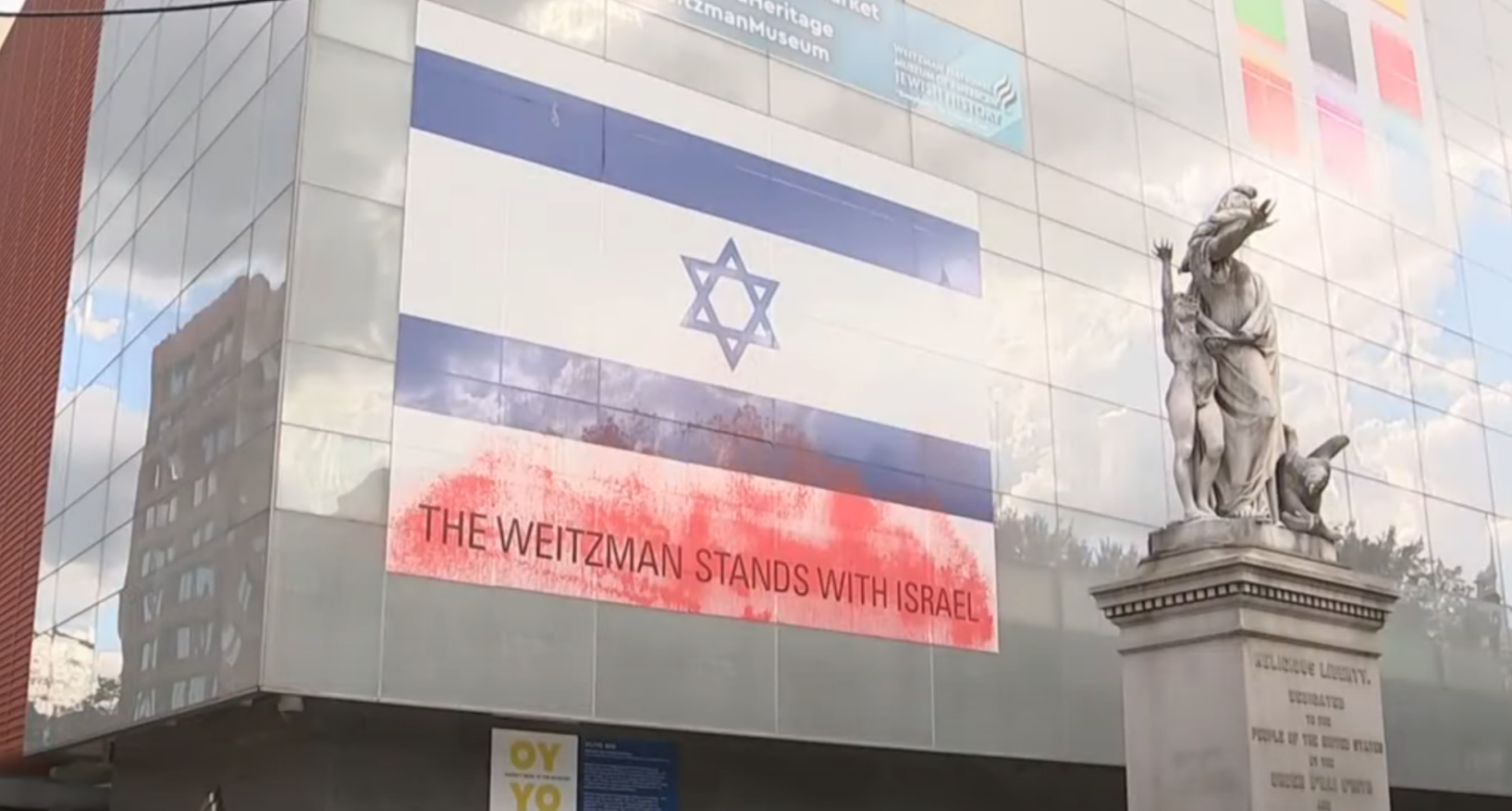
Philadelphia’s Jewish museum was vandalized Monday for the second time in two weeks, with red paint splattered across the large Israeli flag that hangs on the building’s facade.
The museum said passersby won’t be seeing the Israeli flag in the immediate future as it works on refreshing the facade signage to mark the second anniversary of the October 7, 2023, Hamas attack on Israel, which started the ongoing Gaza war.
The Israeli flag stretched across the facade of the Weitzman National Museum of American Jewish History, with text below reading “The Weitzman stands with Israel.”
It’s noticeable to anyone visiting the Liberty Bell, Independence Hall and the National Constitution Center, all situated nearby in Philadelphia’s Old City.
It’s also a fairly new addition for the museum.
Get The Times of Israel’s Daily Edition
by email and never miss our top stories
By signing up, you agree to the terms
“This is the climate we’re living in,” said Dan Tadmor, the Israeli CEO of the museum. “Now the Weitzman is part of the growing statistic of antisemitic acts reported in America on a daily basis. I don’t delude myself that we will ever fully eradicate antisemitism. But I do see the role we have in countering that part of it that is based on misinformation, disinformation, and myth.”
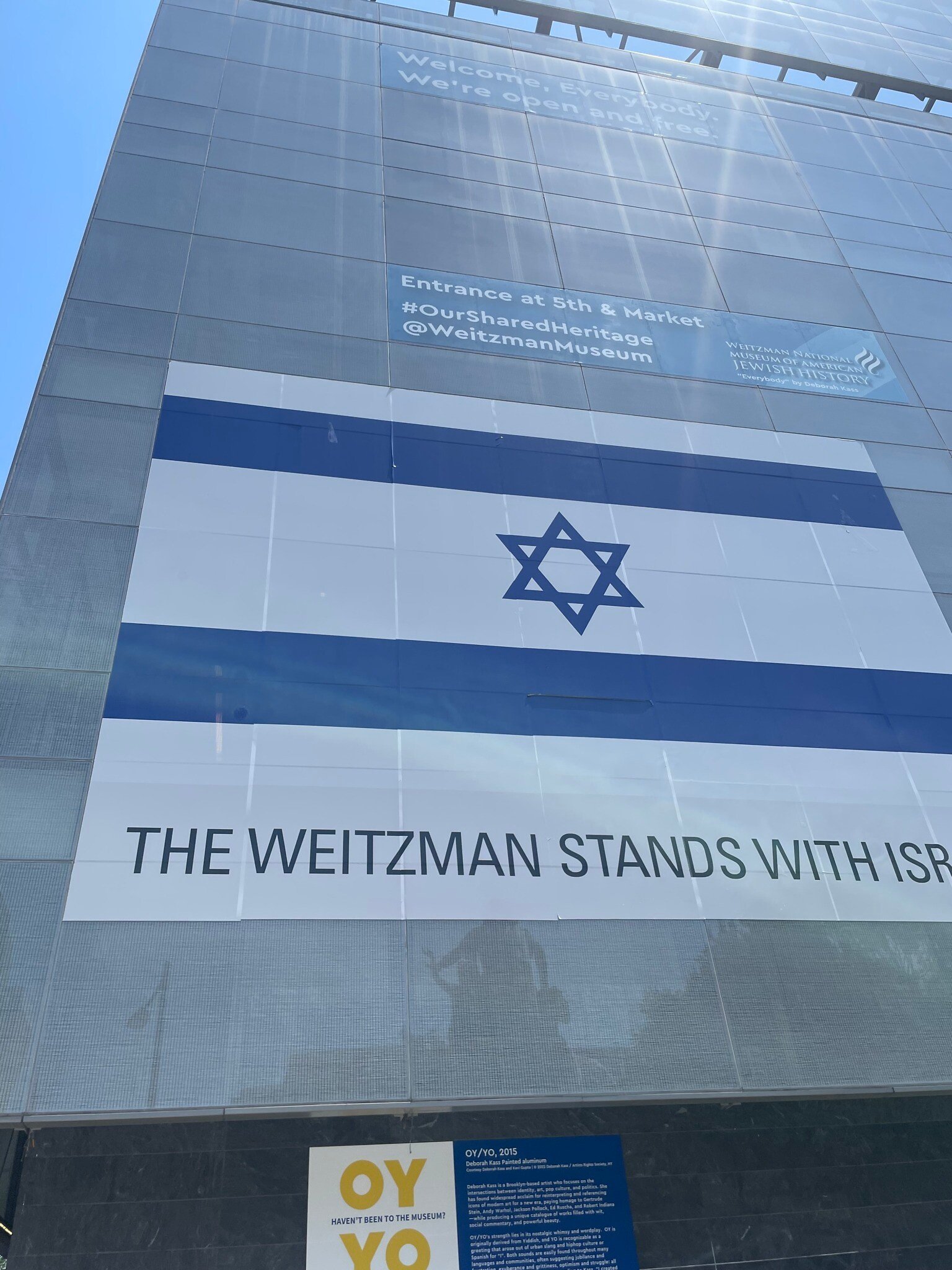
The Israeli flag on the facade of the Weitzman National Museum of American Jewish History in Philadelphia’s Old City in July 2025 (Jessica Steinberg/Times of Israel)
The museum hung the flag after the Hamas terror attack of October 7, as an immediate reaction to the trauma and despair.
The massacre was a watershed moment for Israelis, but it was a critical moment for American Jews as well, said Tadmor, who shepherded Tel Aviv’s Anu Museum of the Jewish People for 12 years.
Since then, Jews in America have sought places and activities where they can engage with their Jewish identity and connect with other Jews, said Tadmor during a recent conversation with The Times of Israel.
He noted a resurgence of visitors at the museum in the last two years, particularly from so-called October 8th Jews — those who are engaging more with their Jewish identity since the October 7 attack.
“It’s a real thing,” he said. “And I think it’s having a lasting effect. It may be unfortunate circumstances that brought this sense of peoplehood about, but it does mean that it’s a turning point, I think, for Jewish identity in America.”
Tadmor, who relocated from Israel to Philadelphia in January 2025 for the job, is paid to think about American Jewry. Along the way, he discovered that Israelis tend to be ignorant of everything that happens to Jewry outside of Israel.
He also found that American Jews care about what’s happening in Israel far more than Israelis care about what’s happening with American Jews.
“Since October 7, many, many more people understand intuitively the term ‘Jewish people.’ You know why? Because they felt it,” he said. “And suddenly they understand it. It’s intuitive at this point for people.”
Tadmor shepherded Anu, formerly known as Beit Hatfutsot, through a $100 million renewal, expansion, and rebranding. In Philadelphia, he will lead a similar reimagining process for the Weitzman, named for Jewish shoe designer Stuart Weitzman, who rescued the museum from bankruptcy in 2021.
He is tasked with helping the museum move forward in the coming decades, since set of permanent exhibits has fallen out of sync with the American Jewish experience.
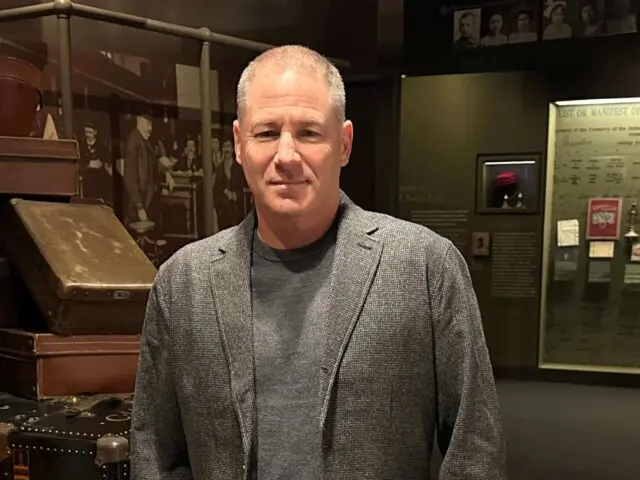
Dan Tadmor, the Israeli CEO of the Weitzman National Museum of American Jewish History in Philadelphia’s Old City, who began his job in January 2025 (Courtesy)
“Thematic museums age, and they do not age gracefully,” said Tadmor. “Technology changes, narratives change, the way in which we tell stories — all of that changes.”
For example, the Weitzman doesn’t address contemporary antisemitism in its current exhibit makeup.
“Why would it?” said Tadmor, pointing out that when the museum was planned, between 2005 and 2010, antisemitism in America appeared to be a thing of the past, a cautionary tale.
Now the museum has to address contemporary antisemitism in a myriad of ways.
The museum was initially founded in 1976 as an annex of Mikveh Israel, the Spanish Portuguese synagogue known as the oldest functioning shul in North America, located just up the block. Then in 2010, it reopened in a brand-new, 10,000-square-foot building.
The museum is now in the process of trying to become a Smithsonian, which would offer a stream of federal funding.
“There’s a reason why the museum is on Independence Mall, and the reason isn’t that it’s the cheapest real estate in town,” said Tadmor. “It’s because there’s a statement in putting the national Jewish museum here; the Jewish-American story is what happens when Jewish immigrants arrive at a place that affords them the opportunity and liberty to thrive.”
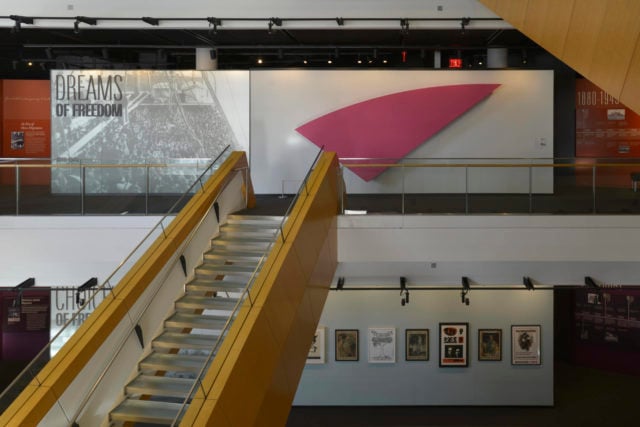
Inside the Weitzman National Museum of American Jewish History in Philadelphia’s Old City (Courtesy)
Tadmor was charged with reinventing the museum, a particularly sensitive task in the post-October 7 world.
“Something really happened fundamentally, and we need to be there to answer that call,” he said.
The museum will open three new exhibits in 2026, and then will reimagine its entire core collection.
One of the three exhibits will grapple with America’s 250th birthday, known as the semiquincentennial, which will be marked in 2026, 50 years after the 1976 bicentennial.
That exhibit will examine Jewish contributions to the American Revolution and the intersection of Jewish values with the values of the Founding Fathers.
“It’s going to be a big moment for this entire mile and for us as well,” said Tadmor, gesturing outside to the historic square. “And we will underscore the context. That’s why we’re here, to emphasize the fact that Jews are part of the fabric of this country.”