
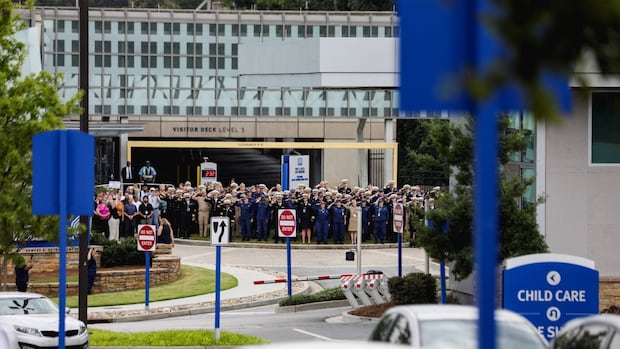
The top U.S. public health agency was left reeling and leaderless as the White House works to expel its handpicked director from the U.S. Centers for Disease Control and Prevention (CDC) and three senior officials were escorted from its headquarters on Thursday.
The turmoil triggered rare bipartisan alarm as U.S. President Donald Trump’s health secretary, Robert F. Kennedy Jr., tries to advance anti-vaccine policies that are contradicted by decades of scientific research.
The chaos comes weeks before a key advisory committee, which Kennedy has reshaped with vaccine skeptics, is expected to meet to issue new recommendations on immunizations.
Two Republican senators called for congressional oversight and some Democrats said Kennedy should be fired. He is scheduled to testify on Capitol Hill on Sept. 4.
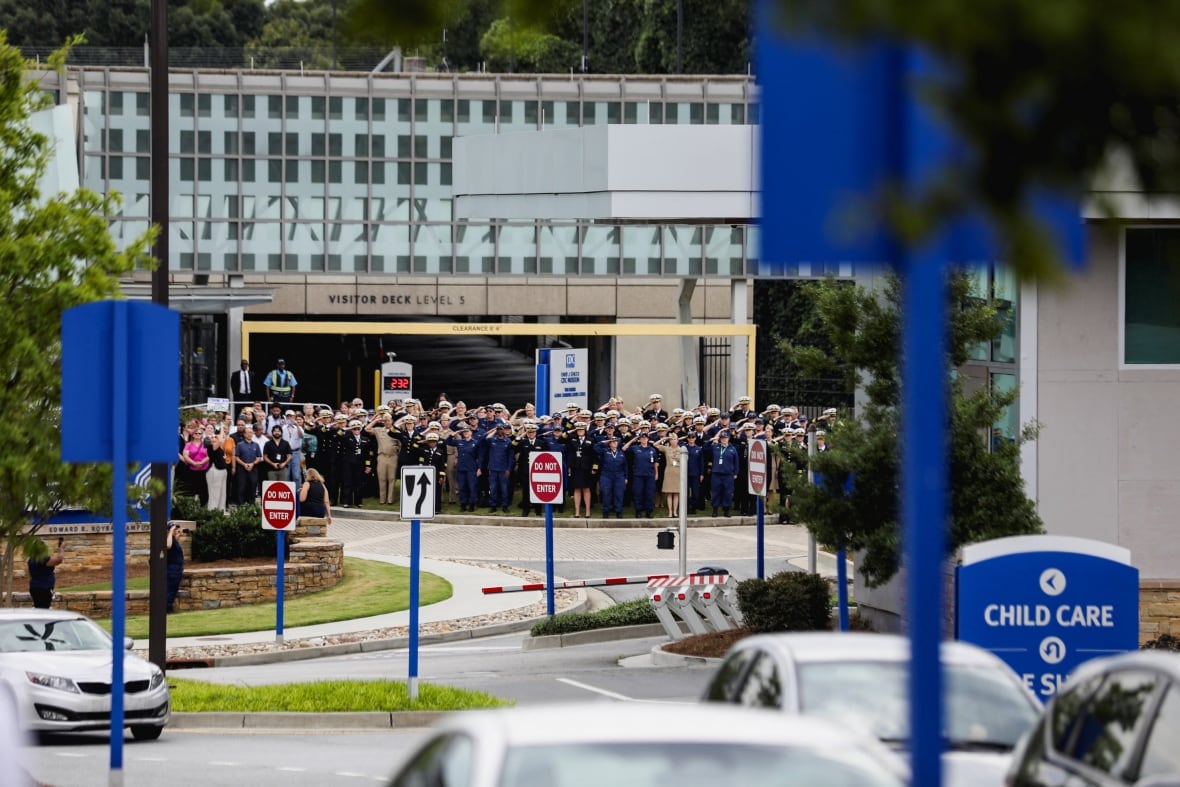 High-ranking members of the CDC, dressed in uniform, salute their departing colleagues in Atlanta Thursday, a day after the White House fired the head of the CDC and several top officials resigned. (Alyssa Pointer/Reuters)No explanation given
Kennedy has not explained the decision to oust Susan Monarez as CDC director less than a month after she was sworn in, but warned that more turnover could be coming.
“There’s a lot of trouble at the CDC and it’s going to require getting rid of some people over the long term, in order for us to change the institutional culture,” Kennedy said at a news conference in Texas.
The White House has only said that Monarez was “not aligned with” Trump’s agenda. There is no word on when a replacement could be named.
Monarez’s lawyers said that she refused “to rubber-stamp unscientific, reckless directives and fire dedicated health experts.” She is fighting her dismissal, saying the decision must come directly from Trump, who nominated her in March.
The U.S. president has not said anything publicly about the matter.
The saga began Wednesday night with the administration’s announcement that Monarez would no longer lead the CDC. In response, three officials — Dr. Debra Houry, Dr. Demetre Daskalakis and Dr. Daniel Jernigan — resigned from senior roles at the agency.
WATCH | White House says CDC Director Susan Monarez has been fired: 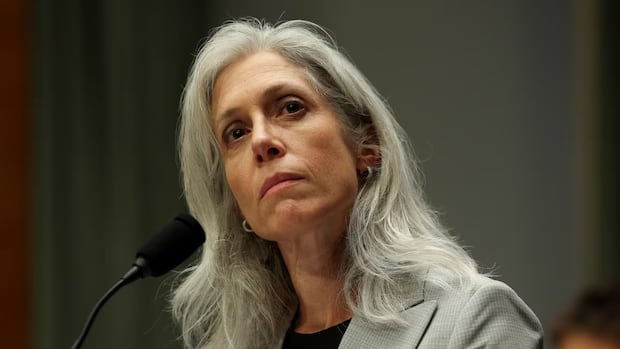
White House says it has fired newly installed CDC director
The White House is ousting Susan Monarez, director of the U.S. Centers for Disease Control and Prevention, just weeks after she was confirmed into the job. However, her lawyers say she remains CDC director, saying only U.S. President Donald Trump can fire her and the White House announcement is insufficient. Monarez fought political interference
The officials returned to the office Thursday to collect their belongings, and hundreds of supporters gathered to applaud them as they left the Atlanta campus. There were bouquets of flowers, cheers and chants of “U.S.A. not RFK.”
Daskalakis, who resigned as head of the National Center for Immunization and Respiratory Diseases, said, “I fear that children will be hurt by poor decision making around vaccines.”
“You cannot dismantle public health and expect it to still work,” he said.
Jernigan stepped down as director of the National Center for Emerging and Zoonotic Infectious Diseases and Houry quit her post as the agency’s deputy director and chief medical officer.
Houry told The Associated Press that Monarez had tried to guard against political meddling in scientific research and health recommendations.
“We were going to see if she was able to weather the storm. And when she was not, we were done,” Houry said. She had been the agency’s deputy director and chief medical officer.
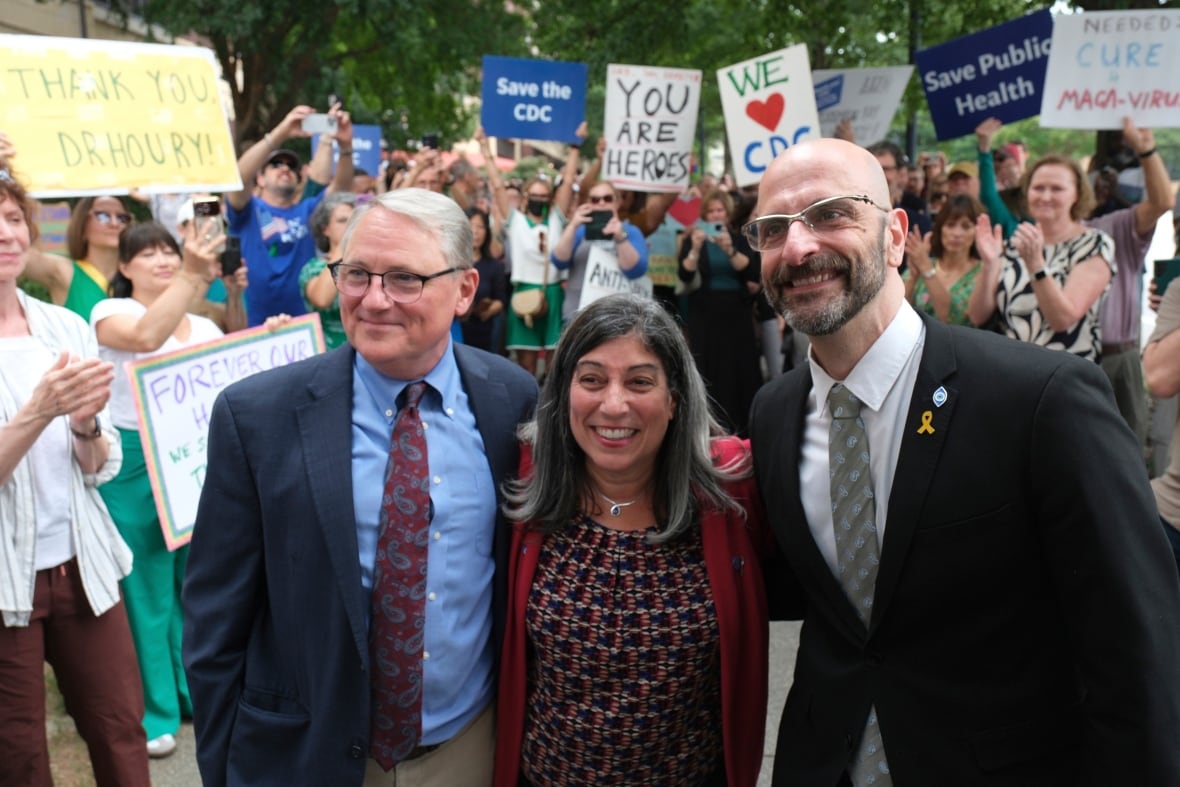 From left, former National Center for Emerging and Zoonotic Infectious Diseases director Daniel Jernigan, former CDC chief medical officer Debra Houry, and former National Center for Immunization and Respiratory Diseases director Demetre Daskalakis, gather as CDC workers and supporters stage a rally for the departing scientific leaders at the agency’s Atlanta headquarters on Thursday. (Ben Gray/The Associated Press)
Dr. Richard Besser, a former CDC acting director, said Monarez told him she had refused orders to fire her management team. He also said she refused to automatically sign off on any recommendations from Kennedy’s handpicked vaccine advisers.
“Dr. Monarez was one of the last lines of defence against this administration’s dangerous agenda,” said Besser, now president of the Robert Wood Johnson Foundation, which helps support The Associated Press Health and Science Department.
The CDC has long been the target of controversy, particularly during the COVID-19 pandemic, as the agency struggled to balance politics and public health.
The strife only increased this year, with Kennedy elevating unscientific ideas at the U.S. Department of Health and Human Services (HHS), which oversees the CDC, while pushing waves of layoffs.
Earlier this month, a police officer was killed when a man opened fire at the agency’s Atlanta headquarters because of anger over COVID-19 vaccines, which have been the subject of falsehoods and conspiracy theories. A memorial to the officer remains outside the building, close to where staff members gathered Thursday.
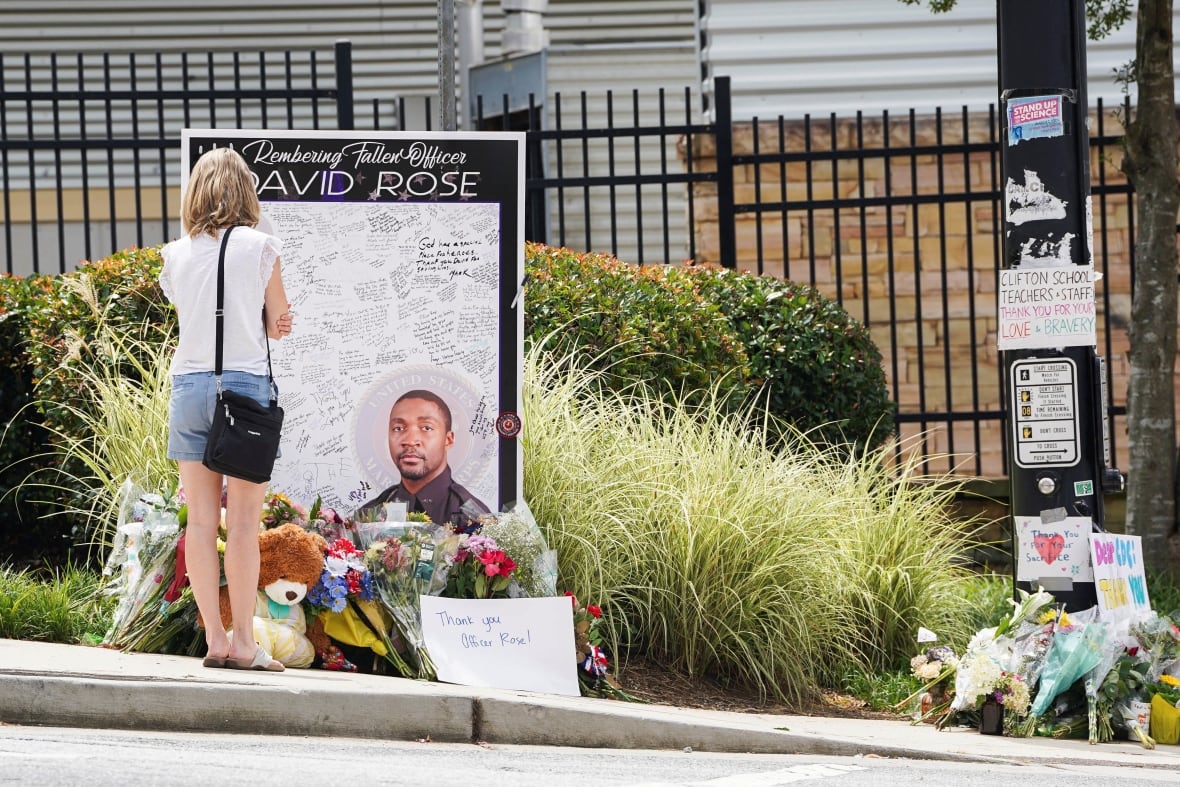 On Aug. 11, people pay their respects at a memorial for David Rose, an officer killed while stopping a gunman who shot at the CDC’s Atlanta campus earlier this month. (Megan Varner/Reuters)
If removed, Monarez will be the shortest-serving director since the CDC was founded in 1946, exacerbating a leadership vacuum that has persisted since Trump took office. He initially chose David Weldon, a former Florida congressman who is a doctor and vaccine skeptic, but yanked the nomination in March.
Monarez, a longtime government scientist, was tapped next to lead the $9.2-billion US agency while she was serving as interim director. But questions immediately emerged within Kennedy’s circle about her loyalty to the “Make America Healthy Again” movement, especially given her previous support of the COVID-19 vaccines that Kennedy has routinely criticized.
Demands for new oversight
Kennedy rarely mentioned Monarez by name in the way he did other health agency leaders such as Mehmet Oz of the Centers for Medicare and Medicaid Services or Marty Makary of the U.S. Food and Drug Administration.
A flashpoint has been Kennedy’s handling of the CDC’s advisory vaccine committee, which he has tried to reshape since taking over HHS.
The panel is expected to meet next month, and Republican Sen. Bill Cassidy of Louisiana said any recommendations issued then will be “lacking legitimacy.”
“Serious allegations have been made about the meeting agenda, membership, and lack of scientific process being followed,” said Cassidy, who heads the Senate committee overseeing Kennedy’s department.
WATCH | Expert says vaccine advisory panel changes risk eroding public trust: 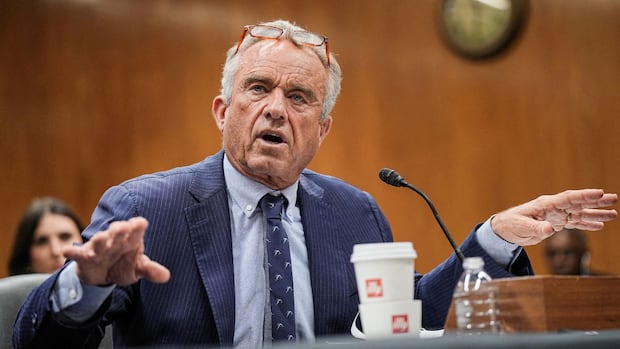
RFK Jr. ‘gutting’ vaccine advisory panel could erode public trust, says expert
U.S. Health Secretary Robert F. Kennedy Jr. has removed every member of a scientific committee that advises the Centers for Disease Control and Prevention on vaccination. Infectious diseases specialist Dr. Isaac Bogoch says the move lacks transparency and risks eroding the public’s trust in vaccines.
He added that “these decisions directly impact children’s health and the meeting should not occur until significant oversight has been conducted.”
Cassidy, a doctor, provided crucial support for Kennedy’s nomination after saying Kennedy had assured him that he would not topple the nation’s childhood vaccination program.
The Advisory Committee on Immunization Practices is a group of outside experts who make recommendations to the CDC director on how to use vaccines. The recommendations are then adopted by doctors, school systems, health insurers and others.
Kennedy is a longtime leader in the anti-vaccine movement, and in June, he abruptly dismissed the entire panel, accusing members of being too closely aligned with manufacturers.
He replaced them with a group that included several vaccine skeptics and then he shut the door to several doctors’ organizations that had long helped form vaccine recommendations.
 Daskalakis described the situation at the CDC as ‘untenable’ and said he believed it would reach a point where the agency’s science would be compromised. (Ben Gray/The Associated Press)The scientific community’s ‘line in the sand’
Houry and Daskalakis said Monarez had tried to make sure scientific safeguards were in place.
For example, she tried to replace the official who co-ordinated the panel’s meetings with someone who had more policy experience. Monarez also pushed to have slides and evidence reviews posted weeks before the committee’s meetings and have the sessions open to public comment, Houry said.
HHS officials nixed that and called Monarez to a meeting in Washington on Monday, Houry said.
Daskalakis described the situation as untenable.
“I came to the point, personally, where I think our science will be compromised, and that’s my line in the sand,” he said.
Medical and public health organizations have said they are worried about the future of the CDC without Monarez in charge.
“The scientific community is beginning to draw a line in the sand and say, ‘No way,’ ” said Dr. Georges Benjamin, executive director of the American Public Health Association.