
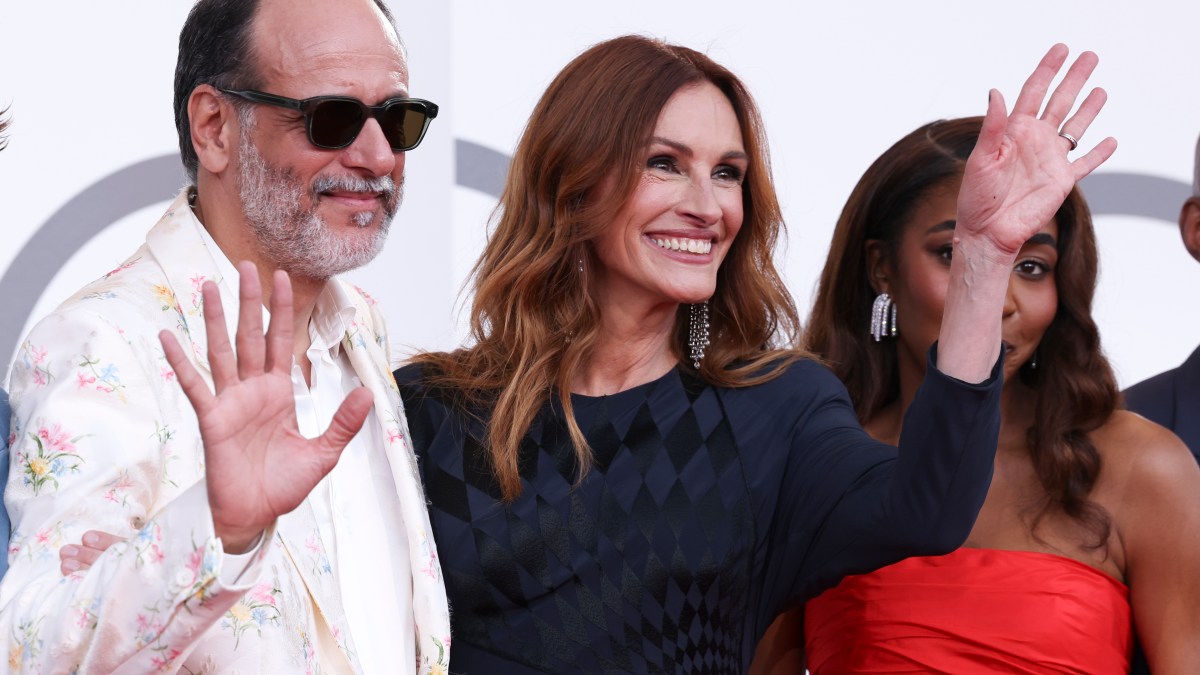
Another year, another Venice film festival. This edition has been a good one, and it’s not even over yet. Compared with the last two festivals, the films have been mostly high quality: interesting, provocative and even, whisper it, award-worthy (see my reviews of Park Chan-wook’s No Other Choice, Luca Guadagnino’s After the Hunt and Noah Baumbach’s Jay Kelly). And yet that’s not why it’s different. Even on my umpteenth Venice tour, I made discoveries. Here are five of them.
Hollywood stars ducked politics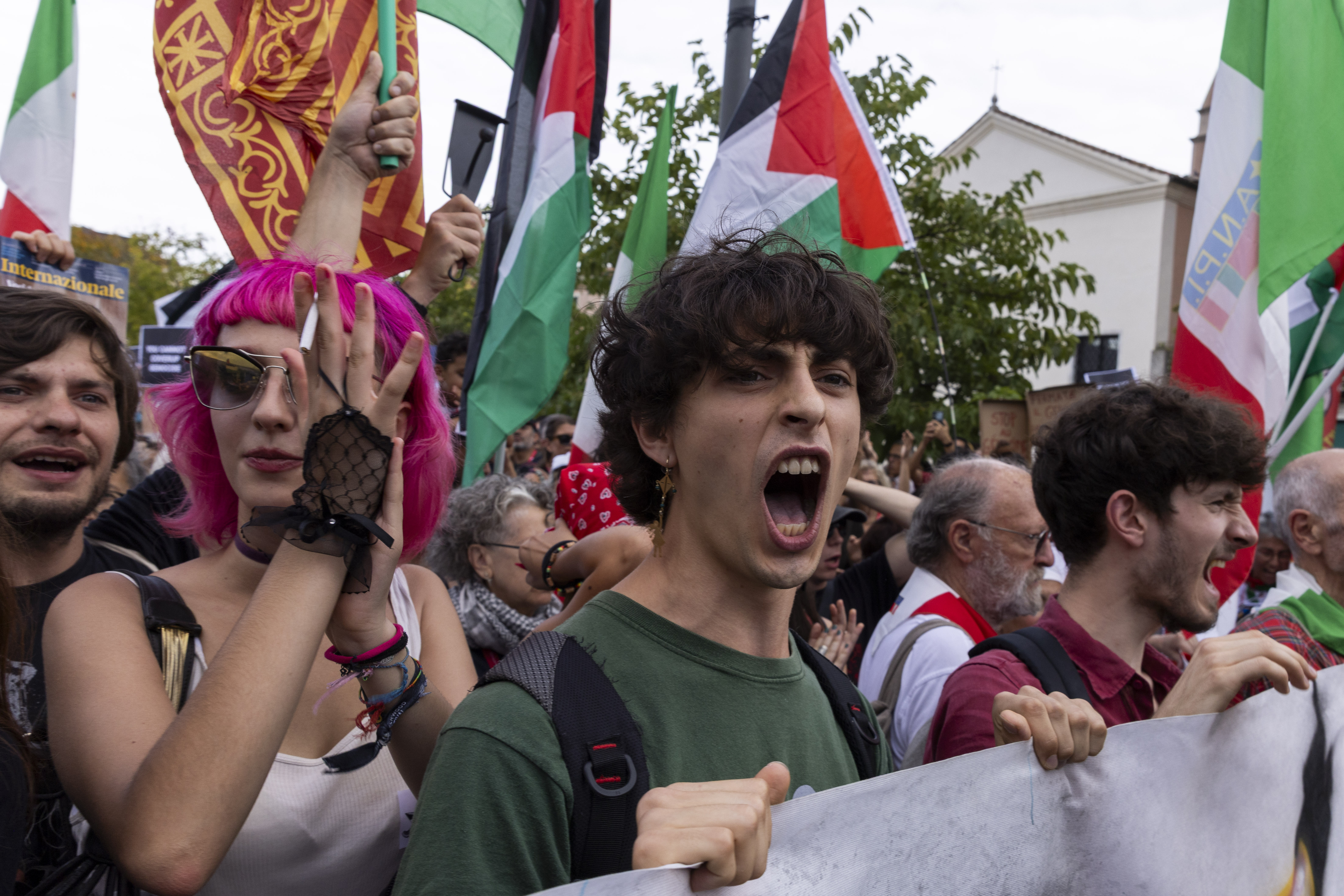
Pro-Palestine protesters in Santa Maria Elisabetta Square, Venice
PRIMO BAROL/ANADOLU VIA GETTY IMAGES
It was bound to happen. There was the “say no to genocide” graffiti scribbled over the official Venice Film Festival posters. There was an open letter of protest about media coverage of Gaza. There was a huge pro-peace rally on Saturday, at the midpoint of the schedule. And still Hollywood’s finest seemed allergic to the prospect of expressing an actual opinion. When the jury head Alexander Payne (director of Sideways) was asked his thoughts about Gaza on the festival’s first day, he positively baulked. “Quite frankly I feel a little bit unprepared for that question,” he said, wildly flustered. “I’m here to judge and talk about cinema.”
• Venice Film Festival 2025 reviews: the best and worst films
George Clooney lost the power of speech
Clooney arrived in Venice looking typically debonair, yet nursing an infection. He was here to promote his awards season film, Noah Baumbach’s Jay Kelly (I’m tipping him for an Oscar) but alas, the journalists assembled for his press conference were told: “George Clooney cannot be with us because he has a very bad sinus infection, but we hope he’s going to be on the red carpet tonight.” He did indeed appear on the red carpet, but when the screaming fans clamoured for his attention he merely clutched his throat and mouthed, “I can’t speak!” At least he didn’t have to answer any of the questions that Payne had been avoiding.
Jacob Elordi unveiled the purest form of himself
Festival press conferences are extraordinary places where entertainment journalists and starry-eyed lickspittles hurl gooey plaudits at gullible actors and are treated, in turn, to verbal nonsense. On playing the dopey monster in Guillermo Del Toro’s underwhelming Frankenstein (I gave it two stars), the dreamboat Jacob Elordi cooed that the character was: “A vessel that I could put every part of myself into. Everything that’s unconscious from the moment I was born to being with you here today? All of it is in that character. The creature that’s on screen is the purest form of myself. He’s more me than I am.” Oh dear.
Woody Allen returned, sort of
After the Hunt is the provocative new drama from Call Me By Your Name director Luca Guadagnino, which uses a fictional abuse case at Yale University to warn against the dangers of intellectual intransigence. It opens with a title sequence that deliberately borrows the font made famous by Woody Allen (Windsor Light). Guadagnino said that he wanted the titles to set the movie’s tone, so that viewers would ask themselves questions about their attitudes to problematic artists whose work they nonetheless love, “like Woody Allen”. The font, alas, should have come with a trigger warning, because the movie was deemed by swathes of critics as anti-MeToo and politically incorrect. Intellectual intransigence, anyone? I thought it was five-star extraordinary.
Shailene Woodley’s new film was speechlessly awful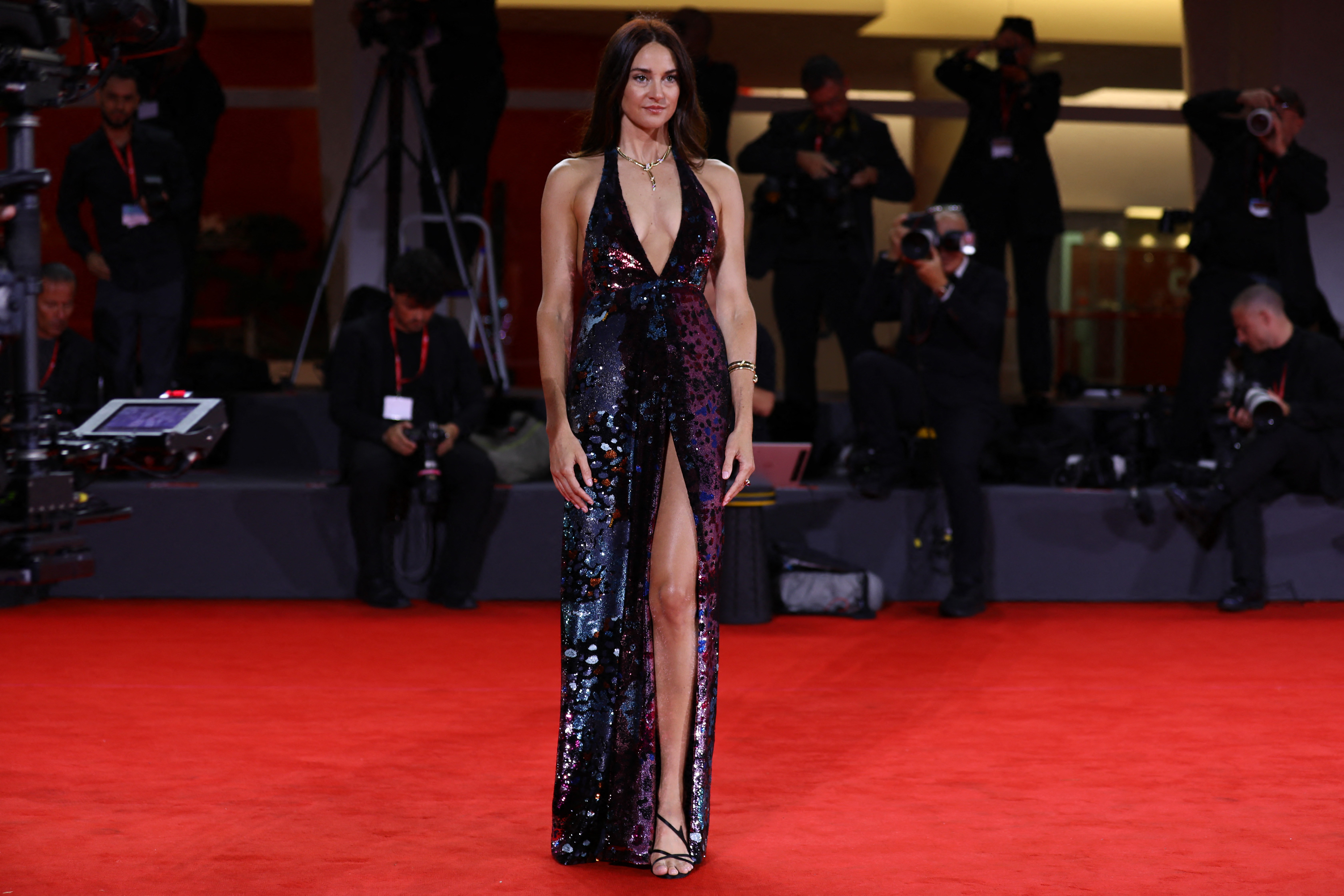
Nobody speaks in the bonkers crime caper, Motor City, starring Shailene Woodley
THE MEGA AGENCY
There’s isn’t always a festival folly. And, in fact, there hasn’t been one in Venice since Roman Polanski’s ghastly hotel “comedy” The Palace premiered in 2023. But this year, the award for fundamentally awful entry went to a bonkers crime caper called Motor City. The film, which stars Shailene Woodley and Alan Ritchson as luckless lovers in 70s Detroit, has a unique concept: nobody speaks. That’s it. But it’s not a silent film: you can hear everything else, from screeching cars to exhaled breaths and grunts. They just try to tell a convoluted crime story without dialogue. It’s a jaw-dropping misfire, and almost has to be seen to be believed. On second thoughts…