
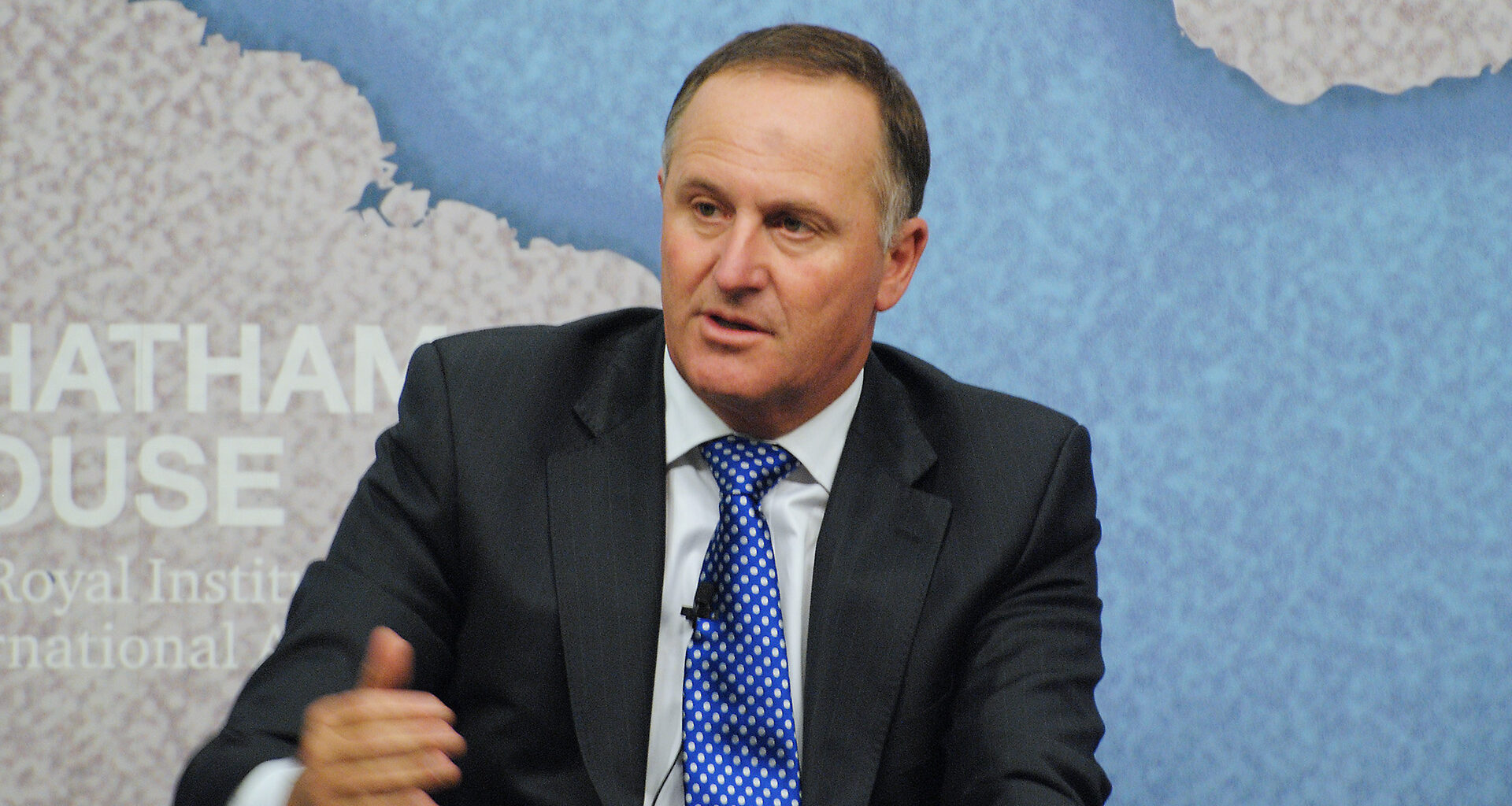
The Reserve Bank should cut its benchmark interest rate to 2.25% to reignite the housing market and construction sector, former Prime Minister John Key says.
Key told Auckland business leaders that the central bank had held rates too low during the pandemic and then too high once inflation began to cool, according to a story in NZ Herald.
“Interest rates are too high. I don’t want to sound like Donald Trump telling off Jerome Powell but they should be 100 basis points lower,” Key reportedly said.
The RBNZ held the Official Cash Rate at 3.25% after its July meeting, pausing after six consecutive cuts from a high of 5.5% a year ago.
Financial markets imply traders expect another 25 basis point cut this year and a strong chance of a further cut by early 2026.
Some economists think the central bank will need to go further, forecasting the key rate will eventually fall to 2.5%. Others believe high headline inflation could prompt the RBNZ to stop at 3% after its next meeting.
High frequency indicators suggest New Zealand’s economy hit a road-bump in the June quarter after six months of steady recovery. RBNZ’s real-time GDP forecast predicts a 0.3% contraction over the past three months.
Monetary policy typically takes 12 to 18 months to fully affect the real economy, but many expected a quicker response as more households had shifted to short-term mortgage rates.
The housing market has barely budged with prices actually still falling in real-terms. Key pointed to this as being a potential cause of the weak recovery.
“If you want to get things going, the core of what’s wrong is the housing market. The guts of what’s wrong is that the housing market is going down, not up,” Key said.
Homeowners claimed they wanted houses to become more affordable, but in reality were only willing to borrow and spend their own money if values were rising.
“When house prices go up, everybody tells the pollsters, ‘Oh that’s terrible, my son or daughter can’t buy a house. I feel really bad. The technical term for that is ‘bulls***’,” Key said.
Conscious uncoupling
This all puts the former Prime Minister at odds with the new generation of National Party leadership, which has resolved to bring down the cost of housing relative to wages.
Housing Minister Chris Bishop said he wants to decouple house prices from economic growth.
Both rents and purchase prices have been declining, although this may be more related to the economic downturn and net migration than policy reforms.
Various economists told interest.co.nz it was possible for the economy to bounce back without house prices climbing significantly, but it would be a slower recovery.
This is not just because of the link between asset values and consumer spending, but also the impact it has on the construction sector.
Malcolm Fleming, the chief executive of NZ Certified Builders Association, said the sector was only now nearing the bottom of the cycle. Almost half of respondents to a recent survey still expected conditions to worsen.
Work on new homes had largely dried up, and most members were focused on alterations and additions. Just 33% of firms reported less work than a year ago, down from 55% in the previous survey, suggesting the slowdown was easing.
Construction firms have expressed frustration at the Coalition Government for cancelling many of Labour’s infrastructure and housing projects without having alternatives ready.
Only $10.2 billion was spent on physical assets such as roads, hospitals and schools in the first nine months of this fiscal year, 21% less than planned. Money committed to projects in the full year was $16.1 billion, down from $18.9 billion the prior year.
On Sunday, Government ministers announced $6 billion of infrastructure work set to start before the end of the year, which may help address the underspend, though not the overall budget.
Lanyards vs hard hats
This was likely aimed at fending off opposition attacks which blame the Coalition for the prolonged downturn in construction activity.
During a debate last Wednesday, Labour Party leader Chris Hipkins asked Prime Minister Christopher Luxon if he stood by the promise of “fewer lanyards and more hard hats” — a reference to cutting policy jobs in Wellington.
“If so, why does the Builder Sentiment report show a consistent decline in demand under his leadership, resulting in 15,000 fewer construction jobs?”
Luxon responded by saying it was high interest rates which had negatively impacted the construction and building industry. But there were $125 billion of projects currently under construction and a pipeline worth $207 billion to come.
John Key also had an indirect political warning for his successor. Many tradespeople were working three-days a week and none of them could afford Christmas holidays.
“To win an election, you have to win where the tradies live … Don’t worry about Remuera, don’t worry about anywhere else,” he said.