
Australians are split right down the middle on the question of teaching religion in public schools, with half in favour and half opposed.
Pollster Roy Morgan found that attitudes had shifted dramatically across a generation, with Australians in 2022-2023 for the first time leaning against teaching religion in government schools at least once a week – albeit by the slimmest of margins at 51 per cent “no” to 49 per cent “yes”.
In the year to June 2025, the result had shifted to be dead even at 50-50, according to the latest published polling.
But it’s a dramatic reversal from 1997-1998, when 72 per cent of Australians answered the question with a “yes”.
Roy Morgan found now the question largely mirrors a person’s political leanings.
Labor voters’ historic strong support for religious teaching has fallen to 44 per cent in favour and 56 per cent opposed.
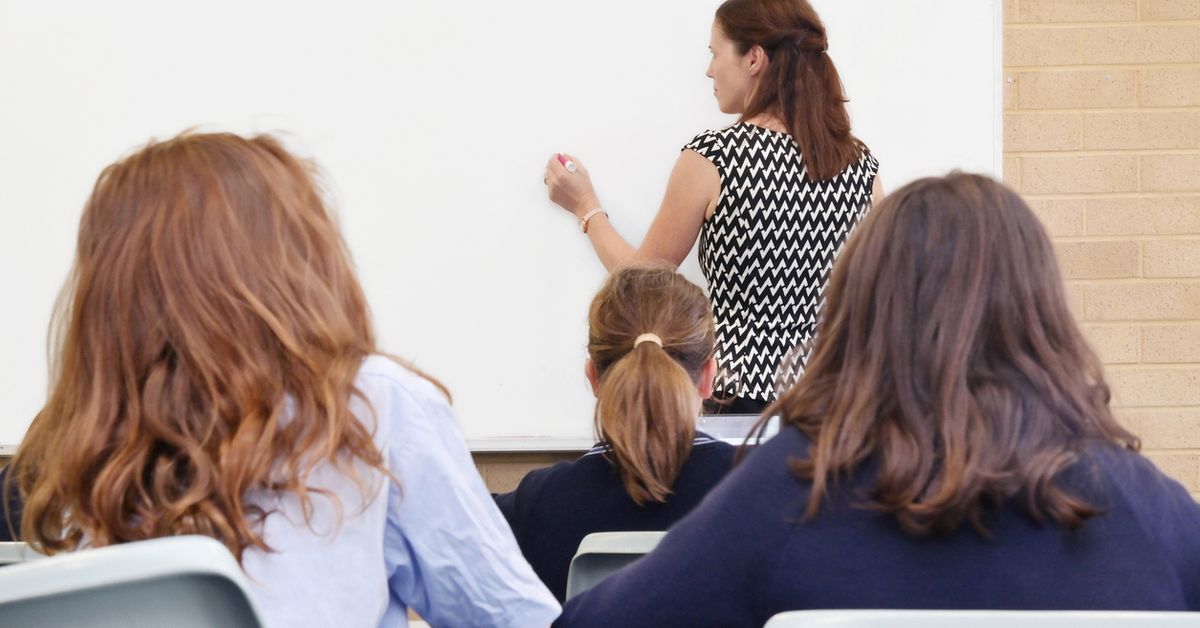
 Australians are split on whether religion should be taught in schools. (Getty)
Coalition voters remain in favour, with 61 per cent in favour – though that has fallen from 79 per cent in 1997-98.
About 61 per cent of Greens voters supported religious teaching in 1997-98, compared to just 31 per cent in 2024-2025.
One Nation voters remain in favour overall, though between 1997-1998 and now, support dropped from 75 per cent to 57 per cent.

Chaos on the roads as every driver switches lanes at once
About 52 per cent of independent and other minor party voters now oppose the teaching of religion, compared to 30 per cent in 1997-1998.
“What was once a bipartisan consensus has become a deeply partisan divide that reflects Australia’s broader shift towards secularism and changing expectations about the role of religion in public life,” Roy Morgan chief executive Michele Levine said.